
How to Question a Thought Without Invalidating Your Feelings: The CBT Way
By BetterMindClub.com
One of the most common misconceptions about Cognitive Behavioral Therapy (CBT) is that it is a cold, purely analytical process designed to “police” your brain or force you into a state of relentless positive thinking. Many people resist the tools of CBT because they fear that by questioning their thoughts, they are essentially telling themselves that their feelings don’t matter, that their pain is “wrong,” or that they are being “irrational.”
At Better Mind Club, we believe that validation and verification must go hand-in-hand. You can acknowledge that a feeling is 100% real while simultaneously recognizing that the thought triggering that feeling is only 50% accurate.
Learning how to question a thought without invalidating your feelings is the foundational key to CBT emotional regulation and stability. This comprehensive guide explores how to navigate the delicate balance between honoring your internal experience and seeking the objective truth, allowing you to move through the world with both empathy and clarity.
The Philosophy of the “Middle Path”: Feelings vs. Facts
In the modern world, we are often told two conflicting things: “Trust your gut” and “Be logical.” CBT offers a third option: Trust the feeling as an experience, but verify the thought as a narrative.
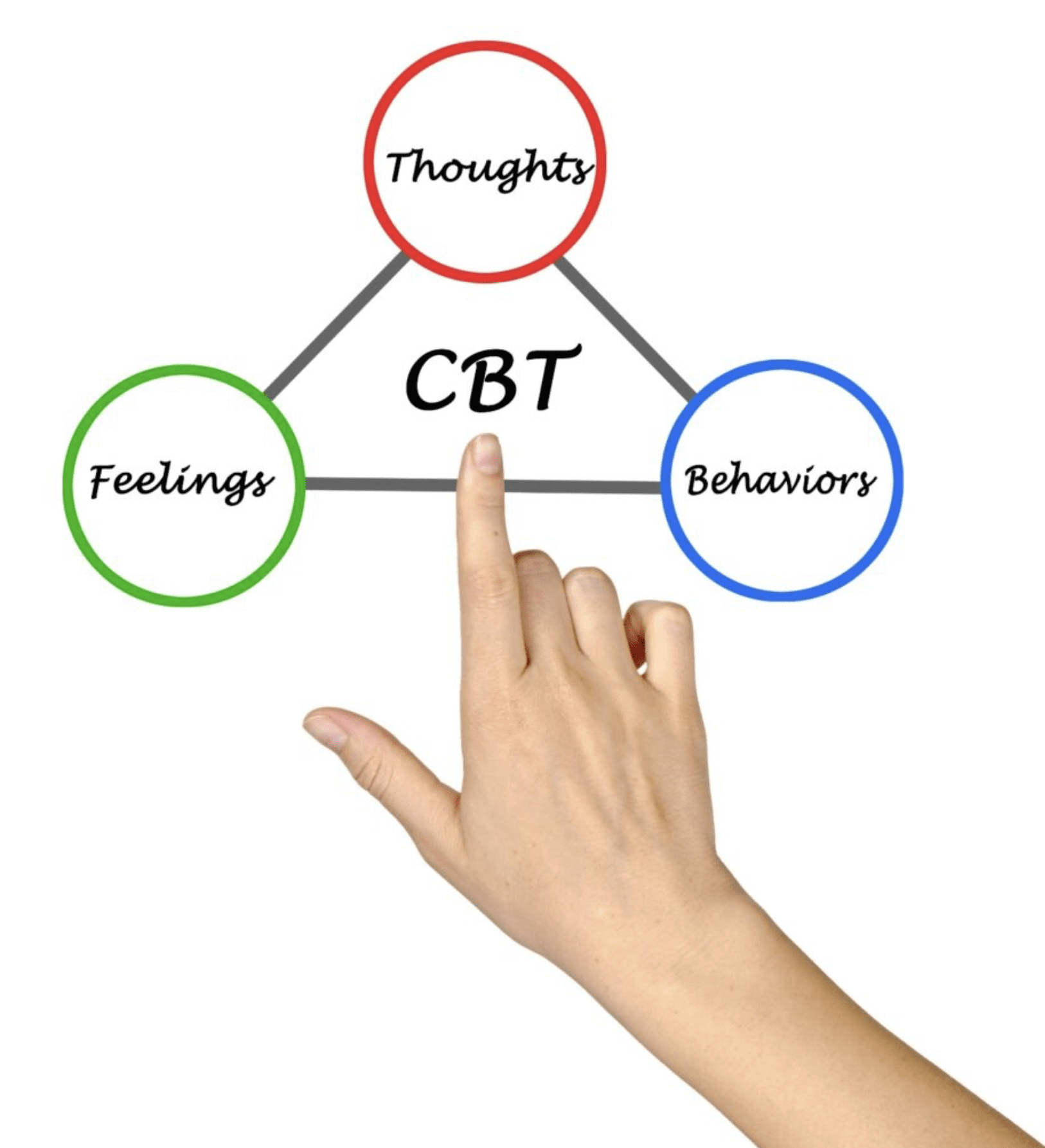
The first step in healthy cognitive restructuring is understanding a fundamental CBT principle: Feelings are valid, but they are not always facts. To master this, we must dive deep into the biological and psychological distinction between these two internal events.
A Feeling is a Physiological Experience
If you feel lonely, that “loneliness” is a real event happening in your nervous system. Your heart might feel heavy; your chest might feel tight. This experience is 100% valid and deserves compassion. As explained by the NIH NCBI Bookshelf, CBT is built on the idea that our thoughts, behaviors, and emotions are all interconnected. Acknowledging the emotion is the starting point of the cycle. You cannot “argue” your way out of a physiological state; you must first accept that the state exists.
A Thought is a Cognitive Interpretation
The thought “Nobody loves me” is not a feeling. It is a narrative interpretation of the feeling. While the loneliness is real, the narrative that “nobody loves you” might be a cognitive distortion—a glitch in the way your brain is processing data. Our brains are meaning-making machines; they hate ambiguity. When we feel a raw emotion, the brain quickly assigns a story to it to explain why it’s happening. Often, that story is based on past trauma or fear rather than present reality.
According to the NIH Emotional Wellness Toolkit, being aware of your internal dialogue is a core component of resilience. When we bypass validation, we fall into “toxic positivity.” When we bypass questioning, we fall into “emotional reactivity.” The “CBT Way” is the middle path of internal honesty and authenticity.
Step 1: Start with Radical Validation
Before you pull out the “judge’s gavel” to examine your thoughts, you must act as your own “supportive witness.” If you jump straight into questioning, your brain perceives a threat and becomes defensive. This is why many people find traditional “positive thinking” so frustrating—it feels like lying to yourself.
The Power of “It Makes Sense”
The most powerful phrase in self-validation is: “It makes sense that I feel this way.” This doesn’t mean your thought is correct; it means your reaction is understandable given your history, your biology, or the current stressor.
Try this script:
“I am feeling incredibly anxious right now. My heart is racing and I feel a sense of dread. It makes sense that I feel this way because I am perceiving a threat to my job security, and my career is vital to my sense of safety. This feeling is real, it is here, and I am allowed to sit with it without trying to fix it immediately.”
The Science of Affect Labeling
By naming the emotion—a practice known as Affect Labeling—you reduce the intensity of the stress response in the amygdala. Research from the National Institute of Mental Health (NIMH) shows that CBT actually alters brain activity, helping the logical prefrontal cortex “cool down” the emotional centers. This is the essence of mindfulness-based CBT and decentering.
Phase 1 Insight: Validation is the essential lubricant for the cognitive gears. Without it, the mind remains locked in a defensive posture, viewing any attempt at logic as an attack on its safety. By starting with validation, you are not agreeing that your fears are true; you are simply agreeing that your body is currently experiencing them. This physiological acknowledgment creates the mental space required for the higher brain functions to engage without the static of constant alarm bells.
Step 2: Identify the “Automatic Thought” (The Narrative)
Once the emotion has been validated, you can gently look at the narrative driving it. We call these Automatic Negative Thoughts (ANTs). According to the National Institute of Justice, recognizing these distorted thinking patterns is central to changing unhelpful behaviors.
Catching the “Inner Critic”
Most ANTs happen so fast we don’t even realize they are thoughts; we just experience them as “the truth.” To catch them, you have to slow down the movie of your mind.
Ask yourself:
- “What is the specific sentence running through my mind?”
- “If this feeling had a voice, what would it be saying?”
- “What is the worst-case scenario my brain is currently projecting?”
Identifying these patterns is the first step in healing overthinking.
Phase 2 Insight: These “Automatic Thoughts” function like a background operating system, influencing your life without your conscious permission. They are often inherited from past experiences, childhood conditioning, or high-stress environments, and they tend to speak in “absolutes”—using words like always, never, or everyone. Identifying the specific sentence in your mind strips the thought of its invisible power, turning a vague, crushing weight into a specific hypothesis that can be tested.
Step 3: Use “Gentle Socratic Questioning”
Now, we move to the “verification” phase. The goal isn’t to prove yourself “wrong,” but to move toward Accurate Thinking. This is a pillar of CBT mindset and growth. Socratic questioning is a form of disciplined inquiry that uncovers the underlying assumptions of our beliefs.
4 Key Socratic Questions:
- What is the evidence for this thought? Be a lawyer for the thought. What hard, observable facts support it?
- What is the evidence against this thought? Now be a lawyer for the defense. What facts have you been ignoring or minimizing?
- What would I tell a best friend in this exact situation? This is the ultimate test of cognitive empathy. We are often 10 times harder on ourselves than we would ever be on a loved one.
- Is this thought helpful? Does this thought empower you to take a constructive step, or does it paralyze you?
To make this easier, use free downloadable CBT thought records to track your evidence in real-time.
Phase 3 Insight: Socratic questioning acts as a filter for your mental data, separating the wheat of reality from the chaff of distortion. It encourages a healthy skepticism toward your own brain’s first impressions, fostering a “curiosity-first” approach to mental health. This process isn’t about winning an argument against yourself, but rather about gathering enough context to see the full 360-degree picture that the narrow lens of emotion often obscures.
Common Cognitive Distortions: The “Glitches” in Our Logic
To deepen your CBT practice, you must recognize the common patterns of distorted thinking. These are the predictable ways our brains twist reality when we are under stress.
1. Catastrophizing (The “What If” Trap)
Catastrophizing is when you jump to the worst possible conclusion. If your partner is 10 minutes late, your brain tells you they’ve been in an accident. In CBT, we validate the fear (“I feel scared because I care about them”) and then check the probability.
2. Black-and-White Thinking
Also known as “All-or-Nothing” thinking. If you aren’t perfect, you’re a failure. If a friend makes one mistake, they are a bad person. This distortion erases the “gray area” where most of life actually happens.
3. Personalization
This is the belief that you are responsible for events outside your control. If a party is boring, you believe it’s because you are boring. If your boss is in a bad mood, you assume it’s because of something you did.
4. Emotional Reasoning
This is the heart of why validation and verification are so important. Emotional reasoning is the mistake of saying, “I feel like a loser, therefore I am a loser.” CBT teaches us that the feeling is a symptom, not a verdict.
The “Validation + Reframe” in Action: Detailed Examples
To master this skill, you must learn to pair a validating statement with a cognitive reframe. This is a core component of Emotional Intelligence (EQ) training.
Scenario 1: The Social “Cold Shoulder”
- The Context: You wave to an acquaintance, and they walk past without looking.
- The Feeling: Hurt and social shame.
- The Automatic Thought: “I am socially awkward and everyone secretly dislikes me.”
- The CBT Reframe:
- Validate: “It’s okay to feel hurt. Social inclusion is a basic human need, and feeling ignored triggers a biological pain response.”
- Question: “Do I have proof they saw me? Could they have been wearing headphones or looking at their phone?”
- Balanced Thought: “I feel rejected, but I don’t actually know why they didn’t wave back. It is more likely they were distracted than it is that they were conducting a public snub.”
Scenario 2: The Parenting “Failure”
- The Context: You lose your temper after a long day of work and household chores.
- The Feeling: Deep guilt and inadequacy.
- The Automatic Thought: “I’m a terrible parent. I’m damaging my kids forever.”
- The CBT Reframe:
- Validate: “I feel guilty because I care deeply about my kids. I am also exhausted, and exhaustion lowers my emotional threshold.”
- Question: “Does one bad moment erase years of care? What is the evidence that I am a loving parent?”
- Balanced Thought: “I am a loving parent who had a human moment of frustration. I can apologize and use this as a lesson in emotional repair.” (As the CDC notes, therapy helps parents and children alike evaluate these thoughts and behaviors).
Scenario 3: The Unproductive Day
- The Feeling: Anxiety and self-loathing.
- The Automatic Thought: “I’m a lazy person and I’ll never be successful.”
- The CBT Reframe:
- Validate: “I feel frustrated because I have high ambitions. I am allowed to be disappointed that I didn’t meet my goals today.”
- Question: “Was I actually lazy, or was I burnt out? Is my success really determined by this one 24-hour period?”
- Balanced Thought: “I had a low-productivity day, which is part of being a human. My worth is not my output.”
Step 4: Create a “Balanced Thought”
A balanced thought is not a “happy thought.” It is the “Synthesis” of your emotional truth and the objective data.
- Invalidating Thought: “I’m being stupid, stop worrying.” (Ignores the feeling).
- Reactive Thought: “Nobody likes me and I’ll be alone forever.” (Ignores the facts).
- CBT Balanced Thought: “I feel lonely right now (Validation), and my brain is telling me I’m unlovable. However, the facts show I have several friends who have reached out this week. I am feeling a temporary emotion, not a permanent reality (Verification).”
Phase 4 Insight: The balanced thought serves as your new “Internal Anchor.” It is a statement that feels true to both your heart and your head, providing a stable foundation to stand on when the winds of emotion pick up again. Over time, these balanced thoughts replace the old ANTs, effectively “rewiring” your brain’s default narrative.
The Role of Journaling in Thought Questioning
While you can do CBT in your head, the most effective way to separate feelings from facts is on paper. When a thought stays in your mind, it feels like a universal truth. When you write it down, it becomes an object you can examine.
The “Three-Column” Technique
- Column 1: The Feeling/Trigger. (e.g., “I feel invisible at work.”)
- Column 2: The Automatic Thought. (e.g., “I am going to get fired.”)
- Column 3: The Balanced Perspective. (e.g., “I feel overlooked, but my last review was positive. I can ask for a feedback meeting.”)
This simple act of externalizing the internal dialogue is a proven way to increase CBT emotional regulation and stability.
CBT for Anxiety vs. Depression: A Nuanced Approach
While the “Questioning Thoughts” method works for both, the focus often shifts depending on the primary emotion.
Questioning Anxiety
Anxiety is usually about the future. The thoughts are often “What if?” statements. The goal here is to question the probability of the event and your ability to cope if it does happen.
- Validation: “It makes sense I’m anxious; I want to be safe.”
- Verification: “Even if the worst happens, I have handled hard things before.”
Questioning Depression
Depression is often about the past or the self. The thoughts are “I am…” or “It’s always been…” statements. The goal here is to question the permanence and pervasiveness of the negative state.
- Validation: “It makes sense I feel heavy; this has been a hard season.”
- Verification: “The thought ‘it never gets better’ is a symptom of the low mood, not a historical fact.”
Frequently Asked Questions
Isn’t questioning my thoughts just a fancy way of gaslighting myself?
This is a vital distinction. Gaslighting involves a third party (or yourself) denying your reality to make you feel “crazy.” CBT does the opposite. It starts by fully accepting your emotional reality. If you feel sad, you are sad. CBT only asks: “Is the story you’re telling yourself about why you’re sad the only perspective?”
What if my thought is actually true?
Sometimes the facts are grim. “I did lose my job.” In these cases, CBT moves to Problem-Solving and Radical Acceptance. You still validate the pain: “It makes sense that I am devastated.” But you challenge the additional catastrophic thoughts: “Because I lost my job, I will never work again.”
How do I do this when I’m in a “Down Spiral”?
When you are in the heat of a spiral, your logical brain is “offline.” In those moments, double down on Step 1: Validation. Just keep telling yourself, “It makes sense that I’m spiraling. I’m safe, and I’m just having a big reaction.” Wait for the “cool down” before trying to be a scientist.
Conclusion: Becoming a Supportive Scientist
Questioning a thought is an act of self-kindness, not self-criticism. By refusing to believe every negative story your brain tells you, you are protecting your peace of mind. You are saying: “My feelings are important enough to be heard, and my life is important enough to be lived in the truth.”
When you master this, you shift from being a victim of your “Auto-Pilot” to being the architect of your own character. As Shawni explains in the Better Mind Club mission, this journey is about moving toward an authentic, empowered life where you are the primary authority on your own experience.
