
Building Inner Safety: Mindfulness-Based CBT for Emotional Triggers and Recovery
Introduction: From Reaction to Resilience
For many, life feels like a constant state of being on edge, reacting to unexpected triggers that pull them back into old patterns of anxiety, anger, or addiction. This state of chronic reactivity is often rooted in an overloaded and defensive nervous system, which perceives the world as fundamentally unsafe.
This article introduces an integrated, powerful framework for achieving inner safety and lasting recovery: Mindfulness-Based Cognitive Behavioral Therapy (MB-CBT). While traditional CBT helps you change unhelpful thoughts, adding mindfulness teaches you to observe and accept the presence of difficult emotions and triggers without immediately reacting to them. This dual approach retrains your brain to choose resilience over reaction, building a reliable sense of internal security.
Phase 1: Understanding Emotional Triggers and the Nervous System
Emotional triggers are events, words, or sensations that cause an immediate, disproportionate emotional response. For those in recovery, these triggers often initiate the cycle of relapse or destructive behavior.
1. The Trigger-Response Loop
The emotional trigger loop operates instantaneously, bypassing rational thought:
- Trigger: An external or internal event (e.g., a specific song, a tone of voice, a feeling of boredom).
- Automatic Thought: A learned, quick interpretation (e.g., “This feeling is intolerable,” or “I must escape”).
- Survival Response: The body activates the stress system, often leading to lashing out, avoidance, or substance use/compulsion.
2. Identifying the Need for Inner Safety
The goal of recovery is to create a secure, predictable internal environment. When your nervous system is calm, you don’t need external substances or behaviors to cope. The chronic feeling of being “unsafe” is what MB-CBT addresses directly.
3. The Role of the Vagus Nerve
Healing requires calming the body’s control center. The Vagus nerve is the main component of the Parasympathetic Nervous System (rest and digest). Traumatized or hyper-vigilant systems are dominated by the Sympathetic Nervous System (fight or flight). MB-CBT uses mindful practices to actively regulate the Vagus nerve, signaling safety to the brain. For more scientific information on stress and the nervous system, you can visit the National Institute of Mental Health (NIMH) website.
Phase 2: The CBT Pillar: Cognitive Restructuring and the Triad
The first step in gaining control over triggers is dismantling the immediate, distorted thoughts that fuel the emotional response.
1. Recognizing Unhelpful Thinking Styles
Before a trigger leads to a negative behavior, it passes through a cognitive distortion. Understanding these is the basis of CBT:
| Cognitive Distortion | Trigger-Based Example | CBT Reframe (Challenging the Thought) |
| Emotional Reasoning | “I feel overwhelmed, so I must be in immediate danger.” | “Feelings are not facts. The emotion is strong, but my physical environment is safe.” |
| Catastrophizing | “If I don’t stop this craving, my whole recovery will fail.” | “A craving is temporary and manageable. It does not define the success of my entire journey.” |
| Mind Reading | “My friend didn’t respond; they must be abandoning me.” | “I cannot know their mind. I can tolerate this uncertainty until I have facts.” |
| All-or-Nothing Thinking (Splitting) | “I had one drink; I’ve completely ruined all my progress.” | “One slip is a setback, not a failure. I can choose to return to my plan immediately. My progress still counts.” |
| Should Statements | “I should never feel angry or anxious if I am truly recovered.” | “Recovery means learning to process difficult emotions safely, not eliminating them. It is okay and human to feel strong emotions.” |
2. The Thought Record and The CBT Triad
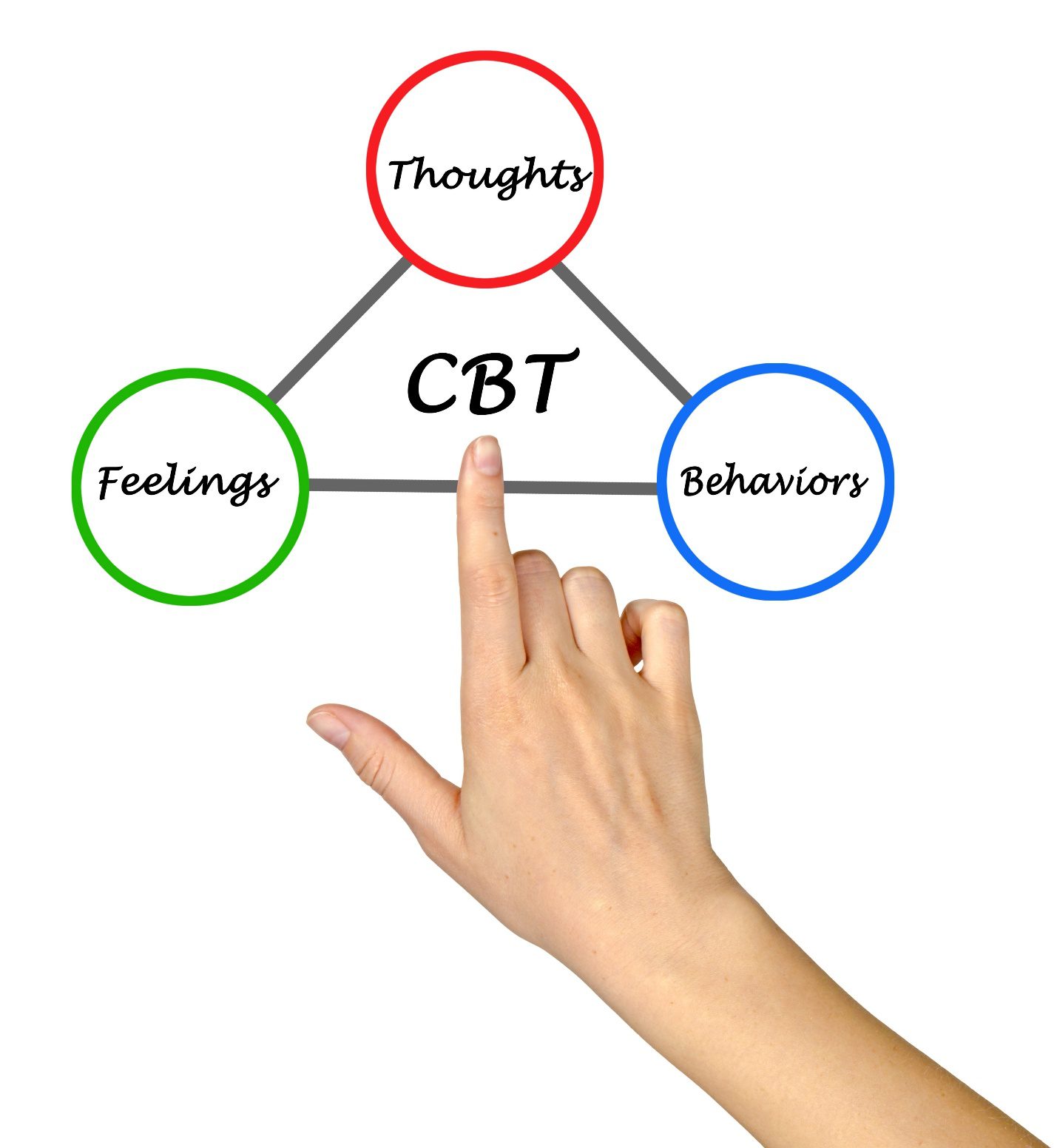
The core CBT tool for creating inner safety is the Thought Record. By writing down the trigger, the automatic thought, and the rational response, you build “evidence” that your distorted thoughts are unreliable. This process reinforces the understanding that Thoughts, Feelings, and Behavior are interconnected.
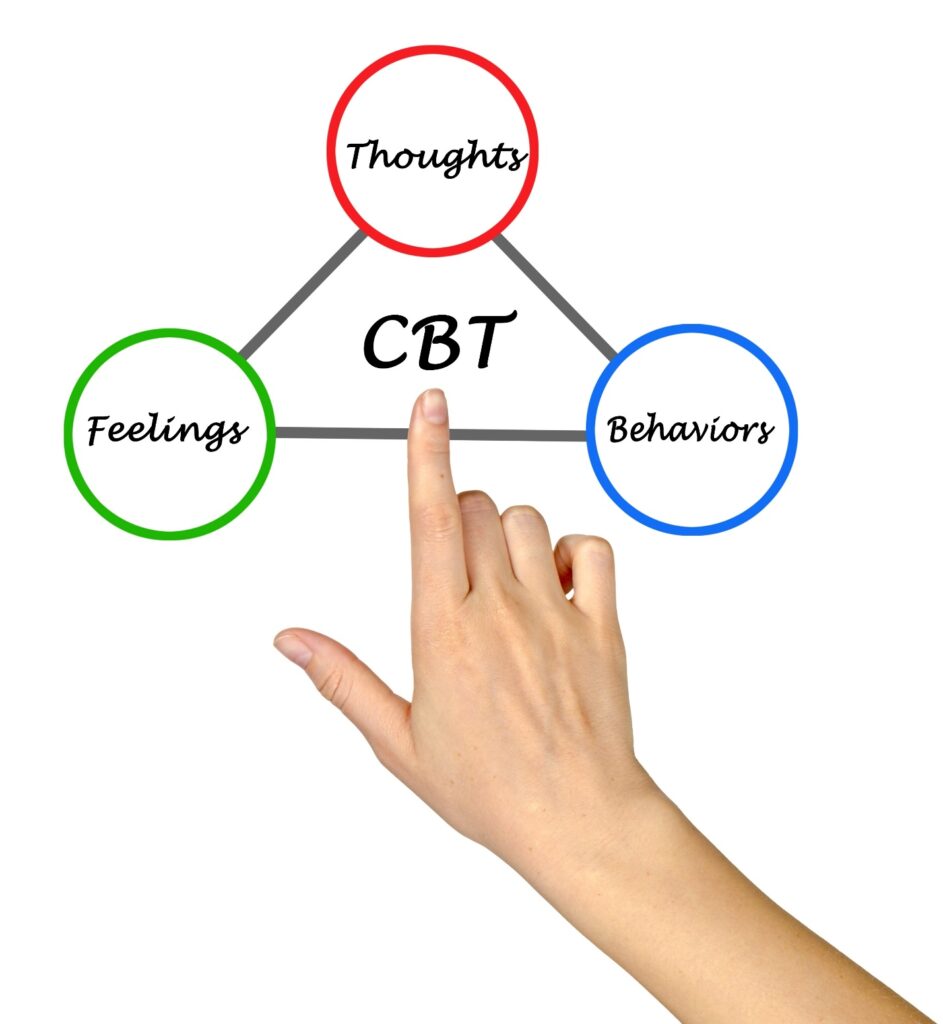
This shifts the brain’s reliance from emotional reactivity to rational assessment.
Phase 3: The Deeper Work: Challenging Core Beliefs
Automatic negative thoughts often spring from deep, trauma-based core beliefs that destroy inner safety. These beliefs were learned in high-stress environments.
1. Identifying Core Safety Beliefs
The most common core beliefs that sabotage recovery and emotional stability include:
- “I am fundamentally defective/unlovable.”
- “The world is perpetually unsafe.”
- “I must be perfect to be worthy of care.”
- “My emotions are dangerous and uncontrollable.”
2. Evidence Collection and Affirmation
MB-CBT uses mindfulness (non-judgmental observation) to gather factual evidence against these toxic beliefs, replacing them with reality-based affirmations.
| Old Core Belief | Current CBT Evidence (Factual Data) | New Core Belief (Inner Safety) |
| “I am defective.” | I held my boundary today; my friend relied on me; I completed a task I started. | “I am capable and worthy. My worth is inherent, not based on my mistakes.” |
| “The world is unsafe.” | I am in a safe home; I have three reliable people I can call; I successfully navigated the anxiety attack. | “I am safe right now. I have the tools to protect myself and manage my environment.” |
Export to Sheets
Phase 4: The Mindfulness Pillar: Acceptance and Decentering
Mindfulness adds the crucial skill of observing without judgment. This is what allows you to break the instantaneous link between the trigger and the destructive response.
1. Decentering: Thoughts Are Not Commands
Decentering is the ability to see your thoughts and feelings as passing mental events, rather than as literal truths or commands. Learn more about this technique in our guide: Mastering Decentering and Thought Observation.
- Practice: When triggered, mentally label the experience: “I am noticing a thought of unworthiness,” or “I am feeling a sensation of tightness in my chest.”
- Action: By labeling, you create space between you (the observer) and the trigger (the event). This space is where the choice for resilience is made.
2. Mindful Exposure to Discomfort (The 90-Second Rule)
MB-CBT utilizes mindfulness to teach emotional tolerance. Intense emotions and cravings are physiological surges that peak and subside relatively quickly (often cited around 90 seconds).
- Strategy: When a trigger arises, commit to non-action for 90 seconds. Focus solely on observing the physical sensations of the craving or emotion (e.g., heat, pressure, tingling) without trying to fight it or distract from it.
- Outcome: This teaches the nervous system that the discomfort is survivable and does not require a behavioral escape (such as relapsing or exploding in anger). For further reading on emotional tolerance, consult the National Institute of Mental Health (NIMH) resources on trauma and anxiety.
Phase 5: The Science of Change: Neuroplasticity and the Habit Loop
MB-CBT is fundamentally about leveraging neuroplasticity—the brain’s ability to reorganize itself by forming new neural connections. The chronic reactivity loop is a deeply etched habit, and we must build a stronger, sober habit to override it.
1. Rewiring the Brain’s Default Mode
The addiction or emotional reactivity cycle is a powerful, well-worn pathway. Every time you successfully choose a new MB-CBT response, you physically strengthen the new, healthier pathway and weaken the old one.
- CBT’s Role: Provides the new thought (the rational alternative) to insert into the old loop.
- Mindfulness’s Role: Provides the pause (decentering) necessary to bypass the emotional reflex and activate the prefrontal cortex (the rational, problem-solving part of the brain).
2. Consistency Over Intensity
For neuroplasticity to work, consistency is more important than the intensity of the effort. Small, daily wins documented in your Triumphant Log build durable, reliable inner safety over time. This principle scientifically validates the necessity of sustained practice in MB-CBT.
Phase 6: Behavioral Activation for Safety and Trust
Cognitive change must be cemented by behavior. Behavioral activation involves proactively choosing actions that reinforce your new, safer identity.
1. The Value of Consistent Small Actions
Consistency is the language of inner safety. When you consistently follow through on small, positive commitments to yourself, you build self-trust, which directly combats the core belief that you are unreliable.
- Action: Create a daily list of three small, self-care behaviors (e.g., drink water, take a 10-minute walk, complete your Thought Record). Consistently executing these acts builds concrete proof of competence.
2. Assertiveness and Boundary Work
Inner safety is impossible if your boundaries are weak. High-risk situations are often caused by the fear of saying “No.”
- Practice: Use Behavioral Scripting (a CBT technique) to write down and rehearse three assertive statements for high-risk situations (e.g., politely declining a tempting invitation or setting a limit with a demanding family member). For guidance on setting boundaries, read our dedicated article: CBT Guide to Assertiveness and Boundaries.
- Mindful Discomfort: Use mindfulness to tolerate the anxiety or guilt that arises after setting the boundary. See the discomfort as proof that you are breaking the old, unsafe pattern.
Phase 7: Integrating Skills for Inner Safety
The combined power of CBT, Mindfulness, and Behavioral Activation creates the true feeling of inner safety.
1. Anchor Yourself to the Present
When a trigger pulls you toward the past (shame) or the future (anxiety), use grounding techniques to secure yourself in the present moment, which is the only place you are actually safe.
- Vagus Nerve Toning: Utilize humming, singing, or gargling to stimulate the Vagus nerve and quickly calm the fight-or-flight response.
- 5-4-3-2-1 Grounding: Name five things you see, four things you touch, three things you hear, two things you smell, and one thing you taste. This immediately directs attention away from the emotional trigger and toward factual sensory input.
2. Developing Safety Scripts
Instead of letting old patterns run the show, use CBT to pre-plan your reaction to high-risk situations (HRS).
| Trigger (HRS) | Old Pattern (Unsafe) | New MB-CBT Script (Safe) |
| Receiving harsh criticism | Automatic defensive anger/withdrawal | “I will breathe using the 4-6 count (Mindfulness), validate my feelings (‘This is uncomfortable’), and respond only with facts (CBT).” |
| Feeling bored and restless | Seeking immediate escape/compulsion | “I notice the restlessness (Decentering). I will engage in the planned, values-aligned activity on my list (Behavioral Activation).” |
| Hearing an aggressive tone | Hypervigilance, freezing | “I am safe now. I will calmly excuse myself from the room and use a Vagus nerve calming technique (Anchor).” |
3. Self-Compassion: The Foundation of Security
Inner safety is built on self-compassion. If you punish yourself for being triggered, you undermine the safety you are trying to create.
- The Practice: Treat your triggered self like a scared friend. Acknowledge the pain, remind yourself that the experience is part of being human (Common Humanity), and redirect attention to the tools that keep you safe. For more information on self-compassion, consult the Substance Abuse and Mental Health Services Administration (SAMHSA) for recovery resources and helplines.
Phase 8: Sustaining Long-Term Resilience
MB-CBT is a practice, not a cure. Sustaining inner safety requires daily commitment.
- Non-Negotiable Routine: Start and end the day with a short mindfulness practice (even 5 minutes). This strengthens the neural pathways dedicated to calm and non-reactivity.
- Triumphant Log: Continue to track and celebrate successful non-reactions. Every time you are triggered and choose the MB-CBT response, you build undeniable evidence of your resilience and competence.
- Community and Connection: Safety is reinforced through healthy external relationships. Use your new skills (boundaries, assertiveness) to deepen connections with reliable, safe individuals, further contradicting the old narrative that the world is hostile.
Frequently Asked Questions (FAQs)
Q: How long does it take to feel inner safety using MB-CBT?
A: This process varies greatly, but most individuals report feeling a noticeable difference—specifically, the ability to create a “pause” between trigger and reaction—within 4 to 8 weeks of consistent daily practice. True, sustained inner safety (where the nervous system defaults to calm) typically requires several months of dedication to both the cognitive restructuring (CBT) and mindful presence techniques.
Q: Is MB-CBT suitable for people with trauma history?
A: Yes, MB-CBT is highly effective for trauma-related issues because it focuses on regulating the nervous system (Vagus Nerve Toning) and gently increasing tolerance for discomfort (Mindful Exposure), which are crucial for overcoming hyper-vigilance caused by trauma. However, it should ideally be practiced under the guidance of a therapist trained in both mindfulness and trauma-informed care.
Q: What is the difference between Mindfulness and simple relaxation?
A: Relaxation is a goal—a state of reduced tension. Mindfulness is an active skill—the non-judgmental awareness of the present moment. While mindfulness often leads to relaxation, its primary purpose in MB-CBT is to help you observe emotional and physiological intensity without trying to change or escape it, which builds long-term tolerance and resilience, not just temporary calm.
Q: Can I practice MB-CBT on my own without a therapist?
A: Yes, you can begin implementing many MB-CBT principles (like Thought Records, Decentering, and Grounding Techniques) using self-help resources like the ones provided below. However, working with a qualified therapist is highly recommended, especially when dealing with deeply ingrained negative core beliefs or severe trauma, as they can provide personalized support and prevent overwhelming emotional flooding.
Conclusion: You Are Your Own Safe Place
Building inner safety through Mindfulness-Based CBT is the ultimate act of self-care and recovery. It moves you from a life dictated by triggers to a life guided by choice. By mastering the art of observing your mind and gently regulating your body, you learn that no matter what chaos occurs outside, you always have a dependable, safe place within yourself.
For a deeper dive into these techniques, explore our CBT Worksheets for Emotional Regulation and our guide to Mindfulness Practices for Anxiety.
