
Awareness: Why It Is the Essential First Step of Change in CBT
By BetterMindClub.com
In the world of personal development and mental wellness, we often rush toward the “fix.” We are a results-oriented society; when we feel pain, we want it gone. We want to stop the anxiety, silence the inner critic, or break the stubborn habit of procrastination immediately. However, in Cognitive Behavioral Therapy (CBT), jumping straight to the solution without establishing a solid foundation of awareness is like trying to repair a complex jet engine while the hood is still closed. You might be turning wrenches, but you aren’t actually touching the problem.
At Better Mind Club, we teach that Awareness is the absolute first step of change. It is the prerequisite for every other intervention. Before you can restructure a thought, you must be able to catch it in mid-air. According to the CDC, emotional well-being is a core component of overall health, and developing this awareness is the key to managing how we think, feel, and act. This deep dive explores how to cultivate the “Observer Mindset” to reclaim your emotional sovereignty and move toward healing and happiness through the science of positive change.
Phase 1: The “Auto-Pilot” Problem
Most of our psychological distress does not happen because we are “broken”; it happens because we are on auto-pilot. The human brain is a masterpiece of efficiency. To save energy, it creates neural shortcuts—heuristics—that allow us to navigate the world without constant conscious thought. While this is helpful for driving a car, it is incredibly destructive when applied to our emotional lives.
When you are on auto-pilot, a trigger occurs and you move straight to a reaction. You bypass the “thinking” part of your brain entirely. This is why you might find yourself snapping at a loved one before you’ve even realized you’re stressed.
This auto-pilot state is governed by the basal ganglia, the part of the brain responsible for habit formation. When we operate here, we are essentially living out “scripts” written during past experiences. Breaking these scripts requires shifting the cognitive load back to the prefrontal cortex—the seat of conscious decision-making—which can only happen once we acknowledge that the auto-pilot is currently in control.
Furthermore, being stuck in this reactive mode robs us of our agency. When we lack awareness, we aren’t truly making choices; we are simply executing pre-programmed responses to external stimuli. Shifting out of auto-pilot is the fundamental act of reclaiming your life from your history, allowing you to stop being a victim of circumstance and start being the architect of your own character.
The Gap Between Stimulus and Response
The primary goal of awareness in CBT is to widen the gap between what happens to you and what you do about it. When we lack awareness, the stimulus and the response are fused together. Awareness acts as a wedge, creating space.
As the renowned psychiatrist Viktor Frankl famously noted:
“Between stimulus and response there is a space. In that space is our power to choose our response. In our response lies our growth and our freedom.”
Phase 2: Identifying the Three Streams of Awareness
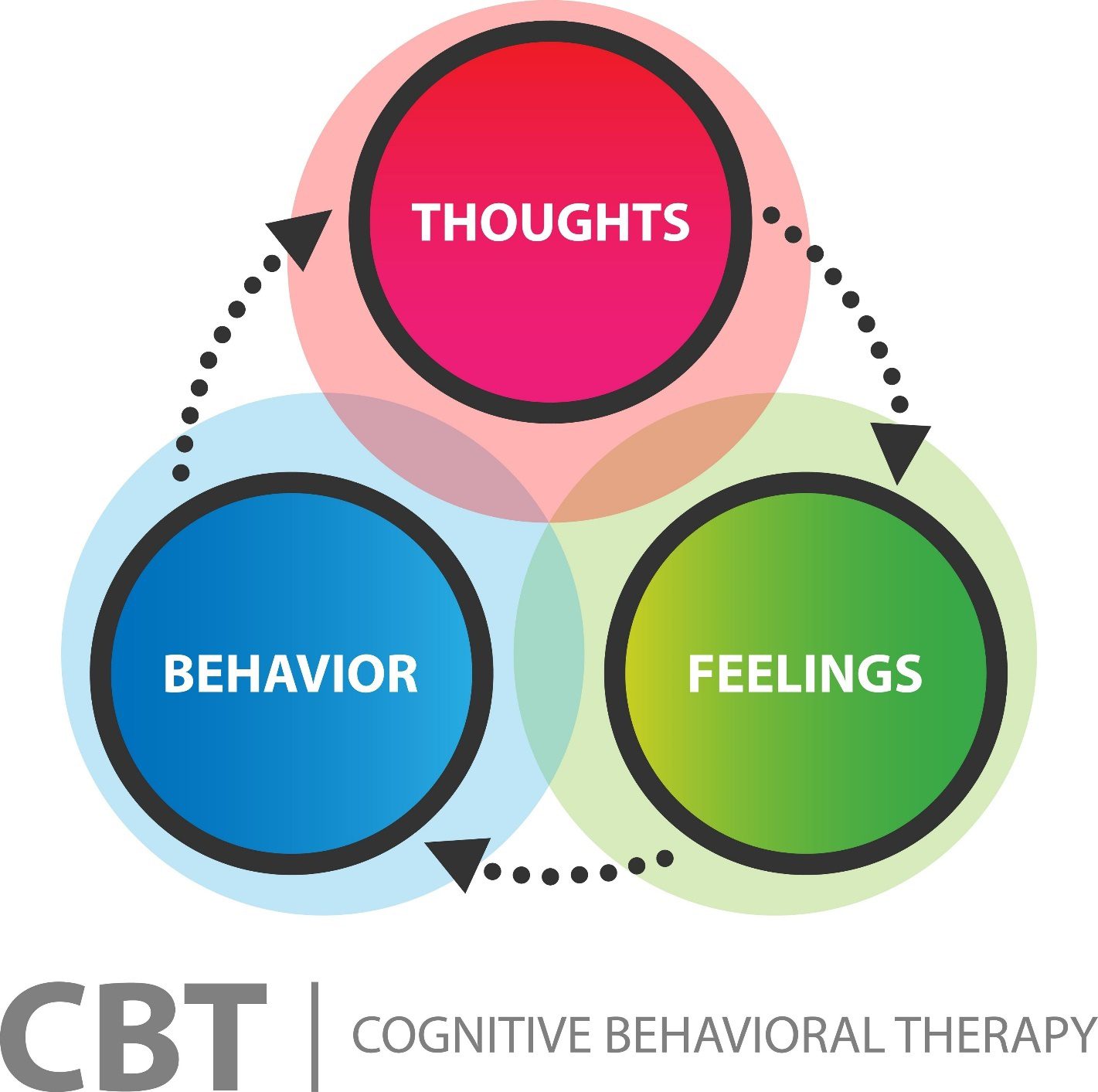
To master your internal world, you must learn to monitor three distinct streams of information simultaneously. In the CBT model, these three streams form the “Cognitive Triangle.”
- The Cognitive Stream (Thoughts): The “Automatic Thoughts” (ANTs) that narrate your life.
- The Emotional Stream (Feelings): Developing “Emotional Granularity” to identify specific shades of emotion, a practice supported by the NIH Emotional Wellness Toolkit.
- The Somatic Stream (Physical Sensations): Reading your “Internal GPS” or interoception—catching tight jaws or shallow breaths.
Think of these streams as three different instruments in an orchestra. Often, we only hear the “loudest” one—usually the overwhelming emotion. However, by practicing awareness, you learn to hear the subtle violin of a physical sensation or the quiet woodwind of a fleeting thought. Identifying which stream is currently leading the “performance” allows you to intervene before the symphony becomes a discordant mess.
By differentiating these streams, you gain the ability to “de-clutter” your mental state. Instead of experiencing a vague, heavy cloud of distress, you can say, “My heart is racing (Somatic), I feel anxious (Emotional), because I’m thinking I’ll be late (Cognitive).” This precision transforms an overwhelming “vibe” into manageable data points that can be addressed individually.
Phase 3: The Tool of “Self-Monitoring”
In clinical CBT, the primary tool for building this skill is Self-Monitoring. You cannot change what you do not measure. This involves keeping a “Thought Record” or an “Activity Log.”
The Neurology of Writing It Down
Research suggests that naming an emotion (affect labeling) forces activity to move from the amygdala(the alarm center) to the prefrontal cortex (the logic center). This simple act immediately reduces physiological distress.
Beyond the neurological benefit, the physical act of documentation creates an external “data set” that you can review with objectivity. When these thoughts stay inside your head, they feel like absolute facts; when they are written on paper, they look like hypotheses. This externalization allows you to spot “repetition compulsion”—the tendency to cycle through the exact same negative scripts—which is the first step toward choosing a new narrative.
Self-monitoring also serves as a crucial bridge between your therapy sessions and your real-world life. It acts as a “black box recorder” for your mind, ensuring that you don’t forget the nuances of your triggers when you are in a calmer state later. By reviewing these logs, you develop the pattern recognition required to anticipate future stressors before they escalate into full-blown crises.
Phase 4: Awareness as “Cognitive Defusion”
True awareness is the practice of Cognitive Defusion. You see the thought as an object passing through your consciousness rather than a literal fact.
The Mirror Analogy
Imagine your mind is a clear mirror. A negative thought is a smudge of grease.
- Without Awareness (Fusion): You look at the mirror and think, “I am a smudge.”
- With Awareness (Defusion): You realize you are the mirror, not the smudge.
Cognitive Defusion teaches us that the mind is a “thought-producing machine.” Just as a heart beats, the mind produces thoughts—some useful, many garbage. Awareness allows you to watch the “garbage” thoughts float by like clouds, acknowledging their presence without feeling the need to believe in their validity.
This process essentially breaks the “hypnotic spell” that negative self-talk can cast over us. When we are fused with a thought, we are under its command; when we are defused, we are merely observers of a mental event. This shift doesn’t necessarily make the thought go away, but it renders the thought powerless to dictate our behavior, granting us the freedom to act according to our values rather than our fleeting impulses.
Phase 5: Deep-Dive Examples: Awareness in Action
Scenario 1: The Social Comparison
- The Trigger: Scrolling social media and seeing a peer’s promotion.
- The Awareness Step: “I am catching the thought that my life is a waste because of one photo. This is ‘Comparisonitis.'”
- The Reframe: “Social media is a highlight reel. Their success does not diminish my path.”
By catching the specific cognitive distortion of “Comparisonitis,” you cut the power to the emotional spiral. Awareness acts as a circuit breaker; the moment you name the distortion, the “automatic” nature of the shame response is interrupted. This gives your logical brain the few seconds it needs to remember that your value is intrinsic.
When you master this awareness, you stop letting pixels on a screen dictate your self-worth. You begin to see the digital world as a series of curated signals rather than a definitive yardstick for your personal progress. This allows you to engage with technology more mindfully, using it for connection rather than as a tool for self-sabotage.
Scenario 2: The “Critical” Feedback
- The Trigger: A partner asks for help with the dishes.
- The Awareness Step: “I notice my heart rate rising. I am practicing ‘Mind Reading’ by assuming they think I’m lazy.”
- The Reframe: “They are expressing a need for help, not a judgment on my soul.”
In this scenario, awareness prevents a “defensive-offensive” loop. When you are aware of your “Somatic Stream” (the rising heart rate), you can use it as a signal to pause. Instead of lashing out, you recognize that the perceived attack is actually an internal interpretation.
By applying this awareness to your relationships, you foster a culture of clarity rather than conflict. You learn to ask clarifying questions—”Are you upset with me, or do you just need a hand?”—which bypasses the guesswork that fuels most arguments. This transforms your home from a minefield of misunderstood intentions into a space of collaborative support.
Scenario 3: The Unfinished To-Do List
- The Trigger: It’s 5:00 PM and tasks remain unfinished.
- The Awareness Step: “I am catching the ‘All-or-Nothing’ thinking. I am noticing a ‘lump in my throat’ which signals shame.”
- The Reframe: “I am a human with finite time. Completing 70% of my tasks is progress, not failure.”
This reframe is powered by the awareness of “All-or-Nothing” thinking. By labeling the distortion, you transition from a “Fixed Mindset”—where output determines worth—to a “Growth Mindset.” Awareness helps you see that your productivity is a variable, not a constant.
This level of self-awareness also helps you recognize the physical toll of perfectionism. When you catch that “lump in your throat,” you are identifying a somatic boundary. Respecting that boundary by choosing rest over a frantic “final push” ensures you don’t burn out, protecting your long-term ability to be productive and happy.
Phase 6: Practical Exercises to Increase Awareness
| Technique | How to Do It | The Goal |
| 3-Minute Breathing Space | Set a timer 3x a day. Scan thoughts, breath, and body. | To “check in” before a stress cycle becomes a storm. |
| The ABC Model Log | Write down: Activating Event, Beliefs, and Consequences. | To see the “Interpretation” causing the pain. |
| Somatic Scanning | Hourly, scan your body for “micro-tensions” (jaw, shoulders). | To catch physical signals of stress early. |
Consistency is far more important than intensity. Think of these as “micro-sessions” that rewire your brain. Over time, these practices lower your baseline stress level because you are no longer storing “unseen” tension in your body or “unprocessed” thoughts in your mind.
As you perform these exercises, you are essentially training your brain to keep a background process running that monitors your well-being. Much like an antivirus program scans a computer in the background, these check-ins become semi-automatic. Eventually, you won’t need a timer; your mind will instinctively ping you the moment you begin to deviate from your emotional baseline, allowing for instant course correction.
Phase 7: Overcoming “Awareness Fatigue”
It can be exhausting to suddenly realize how many negative thoughts you have. Remember: these thoughts were always there. According to the NIMH, CBT actually alters brain activity related to emotion regulation, but this “rewiring” takes energy.
This fatigue occurs because the brain is doing a high level of work it isn’t used to—actively monitoring itself. It is helpful to treat this stage like a sore muscle after a new workout. Give yourself permission to have “low-awareness” periods where you just rest. Awareness is a tool to serve your life, not a prison sentence.
It is also vital to recognize that awareness fatigue is often a sign of progress. It means you are successfully challenging years of habitual thinking. When you feel drained, view it as a signal to engage in self-compassion. Take a walk, listen to music, or simply sit in silence—this gives your prefrontal cortex the “recharge time” it needs to continue the hard work of cognitive restructuring tomorrow.
Phase 8: Awareness, Safety, and Community
Awareness cannot thrive in an environment of judgment. This is why we advocate for a safe space for resilient growth. Sharing observations in a non-judgmental community provides a “Reality Check” and helps spot “Blind Spots.”
In a group setting, you benefit from “universalization”—the realization that your negative cycles are shared by others. This reduces the shame that often keeps us from looking at our patterns. When you see that a peer is also struggling with “Mind Reading,” it becomes easier to treat your own mind with curiosity.
The social dimension of awareness also acts as an accountability mechanism. When we articulate our patterns to others, they become more real and less escapable. A supportive community doesn’t just watch you grow; they provide the reflective surface you need to see parts of yourself that are hidden in your own blind spots, accelerating your journey toward emotional sovereignty.
Conclusion: The Power of the Observer
Awareness is the “check engine light” of the human experience. Once you become aware of a cycle, it loses its “invisible” power. By shifting from the Actor to the Observer, you reclaim your sovereignty. You are the sky—vast, stable, and capable of containing any weather that passes through.
Ultimately, the goal of awareness isn’t to create a mind that is perfectly silent or always positive. It is to create a mind that is managed. When you are the observer, you are no longer threatened by the storms of your own thoughts. You are no longer a victim of your history or your biological wiring; you are the conscious architect of your future.
Frequently Asked Questions
What is the “Observer Mindset” in CBT?
It is the ability to view your thoughts objectively. Instead of being “fused” with an emotion (e.g., “I am angry”), you observe it (e.g., “I am noticing a feeling of anger rising”).
Why can’t I just change my behavior without all this awareness?
Behaviors are driven by Automatic Negative Thoughts. If you don’t “catch” the thought, the habit will continue to repeat on auto-pilot.
Does labeling my emotions really make a physical difference?
Yes. Research shows that labeling emotions decreases amygdala activity and increases prefrontal cortex activity, biologically cooling your stress response.
Take Your Next Step Toward Awareness
- Immediate Support: Visit our Emergency Support Page if you are in crisis.
- Personalized Growth: Contact me to start mapping your cycles together.
👉 BetterMindClub.com – Empowering Your Journey to Authentic Living
