
Creating Space Between You and the Substance: The Power of Cognitive Defusion
By: BetterMindClub.com
Introduction: The Grip of the Automatic Thought
When struggling with substance use or compulsive behaviors, the greatest challenge often isn’t the physical craving but the automatic thought that precedes it. These thoughts sound like absolute truths: “Just one won’t hurt,” “I need this to relax,” or “I can’t cope without it.” They instantly trigger a rush of emotion and propel you toward the unhelpful behavior.
In Cognitive Behavioral Therapy (CBT) and its third wave variation, Acceptance and Commitment Therapy (ACT), this process of fusing with or believing every word your mind says is called Cognitive Fusion. To explore how these modalities fit into the broader field of treatment, see our guide on Types of Therapy, Goals, and Methods: CBT, ACT, DBT, EMDR, and IPT — What Is the Right Modality for You?. Cognitive Fusion leaves no space for rational choice.
Cognitive Defusion is the powerful skill of creating space between you and your thoughts. It means seeing thoughts for what they are—just words, sounds, or mental events—rather than facts or commands. This skill is critical for Addiction Relapse Prevention and shifting the recovery focus, as highlighted by specialized sources like the NCBI Bookshelf / StatPearls.
This guide explores the mechanisms of Cognitive Defusion and provides practical techniques you can use right now to loosen the thought-craving connection.
Phase 1: Understanding Cognitive Fusion (The Problem)
What is Cognitive Fusion?
Cognitive Fusion occurs when your mind and your language intertwine to the point that your thoughts appear to be reality.
| Fusion State | Example | Effect on Behavior |
| Fusion as Fact | You have the thought: “I am a failure.” | You behave as if you are factually a failure (e.g., giving up on recovery goals). |
| Fusion as Command | You have the thought: “You must drink now.” | You treat the thought as a directive that must be obeyed, leading directly to the substance use behavior. |
| Fusion as Danger | You have the thought: “This anxiety will kill me.” | You panic and perform the unhelpful behavior (using the substance) to escape the perceived danger. |
When fused, there is no “you” separate from the thought; the thought drives the bus. This is the moment where relapse begins.
The Role of Thoughts in Cravings
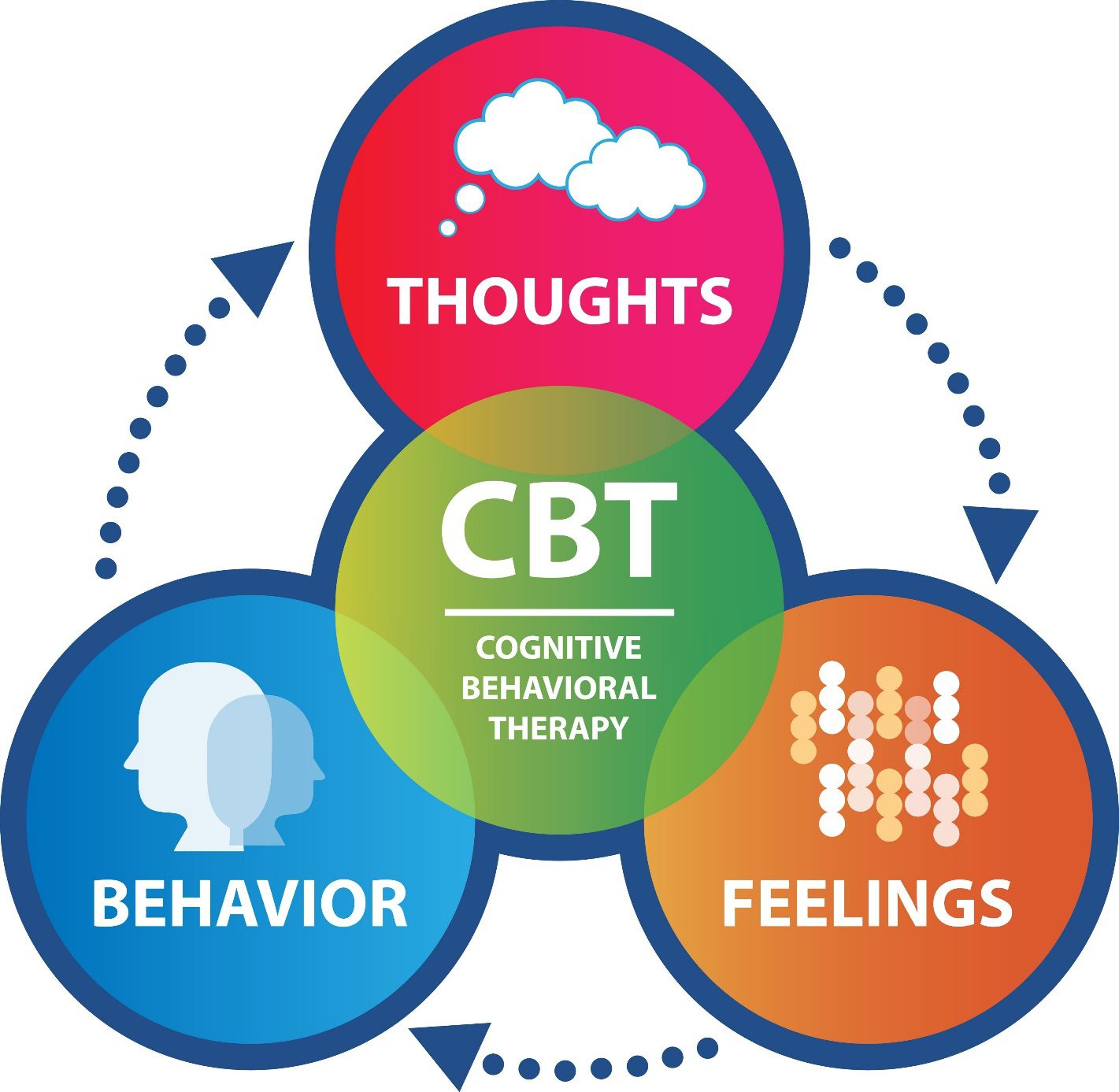
A craving is not just a physical sensation; it is a complex reaction driven by cognitive processes. The thought (“Need a drink”) creates the emotional fuel (Anxiety/Urge), which leads to the behavior (Substance Use). Defusion targets the thought link, which is the most vulnerable part of the chain. This ability to break the chain is central to Counseling Approaches to Promote Recovery From Problematic Substance Use and Related Issues, as detailed by the NCBI Bookshelf/U.S. Government (NIH).
Phase 2: The Core Skill of Cognitive Defusion (The Solution)
Cognitive Defusion changes your relationship with the thought, not the thought itself. You don’t try to eliminate the thought; you simply stop treating it as important or true.
Cognitive Defusion vs. Thought Suppression
| Strategy | Goal | Technique | Result |
| Suppression (Unhelpful) | To make the thought go away. | Arguing with it, pushing it down, or saying “Stop!” | Increases the thought’s strength (the “rebound effect”). |
| Defusion (Helpful) | To make the thought harmless. | Observing it, labelling it, or giving it a silly voice. | Reduces the thought’s influence on your behavior. |
The ultimate goal is to maintain the space between the thought and your action, allowing you to choose recovery-focused behaviors instead of reactive, substance-focused ones. This intentional self-management is a form of emotional regulation critical for long-term stability, relating back to CBT and Emotional Control: How Cognitive Behavioral Therapy Helps You Avoid Crashing Out.
Phase 3: Three Practical Cognitive Defusion Techniques
Use these techniques the moment you notice the urge-inducing thought (“I need to quit this meeting and go home to use”).
1. The “I Am Having the Thought That…” Technique
This simple reframing exercise shifts the thought from an identity statement (Fusion) to a process statement (Defusion).
- Fusion Statement (Command): “I am going to relapse tonight.” (You believe it is fact.)
- Defusion Statement (Observation): “I am noticing that I am having the thought that I am going to relapse tonight.”
The result: By adding the phrase “I am having the thought that,” you insert a tiny psychological distance. You are the observer, not the subject, of the thought. This separation is key to Reducing Relapse Risk, a core strategy outlined by the VA — Whole Health Library.
2. The Mental Rehearsal or Singing Technique
This technique uses humor and absurdity to strip the thought of its perceived power and gravity.
- Action: When a destructive thought arises (e.g., “This is too hard; give up”), try mentally singing the thought to the tune of “Happy Birthday” or the theme from a cartoon.
- Alternative: Write the thought on a piece of paper, put it in your pocket, and tell yourself you will read it later.
The result: You are treating the thought as an object or sound event, not a meaningful instruction. When the mind is occupied with observing the form of the thought, it cannot simultaneously be driven by the content of the thought.
3. Labeling and Categorizing Thoughts
Instead of engaging with the thought’s content, label its function immediately.
| Thought Content | Immediate Label (Defusion) |
| “I hate myself for doing this.” | “Ah, that’s the Self-Criticism Story.” |
| “My friends would judge me if they knew.” | “That’s the Judgment Prediction.” |
| “I need that high right now.” | “That’s a Craving Thought.” |
| “I can’t handle this feeling.” | “That’s Emotional Reasoning.” |
The result: By labeling, you acknowledge the thought exists without accepting its premise. You are simply saying, “Hello, old story,” which prevents you from buying into its narrative and allowing it to control your actions. This approach supports comprehensive programs for Treatment of Substance Use Disorders endorsed by the Centers for Disease Control and Prevention (CDC).
Phase 4: Practical CBT Reframe Examples
While defusion techniques create distance, the CBT component involves reframing the original, unhelpful thought (the one that fuels the craving) into a Balanced Thought based on reality and recovery goals.
| Fused/Unhelpful Thought (T) | Cognitive Distortion | Defused/Balanced Thought (Reframe) |
| “I am too anxious to do anything unless I use.” | Emotional Reasoning | “Anxiety is just a feeling, not a dictator. I can choose to take one small, positive step even if I feel anxious.” |
| “My life is boring now that I’m sober. It’s not worth it.” | All-or-Nothing Thinking | “My life is currently challenging, not boring. I am building a foundation for sustainable joy, which takes time and effort.” |
| “I deserve this treat/break after such a tough day.” | Justification/Self-Pity | “I deserve self-care, not self-harm. Using this substance will make tomorrow worse, not better.” |
| “If I try and fail again, everyone will know I’m weak.” | Catastrophizing/Mind Reading | “Failure is a learning point, not a verdict on my character. My strength comes from continuing to try, regardless of setbacks.” |
Phase 5: Defusion and the Nervous System
The thought-craving loop is deeply wired into your nervous system. When you fuse with a thought like “I need this now,” your body instantly enters a state of panic or arousal (Sympathetic Nervous System), making rational choice nearly impossible.
Defusion as a Physiological Tool
Cognitive Defusion acts as a crucial pause button for the nervous system. By shifting your attention from the content (what the thought says) to the process (the fact that you are having a thought), you prevent the immediate activation of the stress response.
- Fusion Panic/Urge Action (Use)
- Defusion Pause/Observation Slower Heart Rate/Calm Intentional Choice
This pause allows the Parasympathetic Nervous System (the “rest and digest” mode) to engage, bringing down the emotional intensity of the craving. Techniques that pair defusion with physiological regulation, such as deep, paced breathing, are the most effective.
Phase 6: Advanced Defusion—The Mindfulness Approach
While the mechanical techniques in Phase 3 are excellent for crisis moments, true long-term defusion requires cultivating Mindfulness, which is the non-judgmental awareness of the present moment.
The Observer Self
Mindfulness strengthens the concept of the “Observer Self”—the part of you that watches your thoughts, feelings, and sensations without being them. This distance is the essence of defusion.
- Practice: When a difficult craving thought arises, instead of acting on it, dedicate 60 seconds to a Mindful Observation exercise:
- Observe the thought: Notice its speed, its tone, and the number of words, without evaluating its truth.
- Observe the location: Where do you feel the craving sensation in your body (e.g., tension in the chest, knot in the stomach)?
- Observe the urge: Rate the intensity of the urge (1-10) and watch it change, noting that it is temporary and always passes.
The result: This practice treats the entire craving experience—the thought, the emotion, and the physical feeling—as passing mental and physical events, reinforcing the separation between you (the observer) and the experience (the observed).
Phase 7: Using Metaphors for Defusion (The Bus Driver)
Metaphors are powerful tools in ACT because they make complex cognitive processes easily understandable and memorable during times of high stress.
The Bus Driver Metaphor
Imagine you are the driver of a bus (your life). Your thoughts and feelings (especially the craving and self-critical ones) are passengers shouting commands from the back seat: “Turn here! Go get the substance! You’re a terrible driver!”
- Fusion State: You believe the shouting passengers are the boss. You turn the wheel, obeying their commands, even if they drive you off course (relapse).
- Defusion State: You acknowledge the passengers are loud, perhaps even painful, but you remember you are the driver. You notice them shouting, but you keep your hands firmly on the wheel, steering the bus toward your chosen destination (recovery values).
The Action: The next time a craving thought shouts at you, mentally picture it as a loud, demanding passenger on your bus. Acknowledge its presence (“Hello, Craving Passenger!”), but then consciously keep steering toward your goal.
Phase 8: Integration and Long-Term Recovery
Cognitive Defusion is not a one-time fix; it is a practice that develops the mental muscle necessary for long-term behavior change.
Building Defusion Into Your Toolkit
The more intensely the urge for a substance hits, the faster you need to apply a defusion technique. Having a plan—your Trigger Map—is essential for applying these skills effectively.
Remember that substance use disorder recovery relies on a multi-faceted approach. Defusion is often used within broader therapeutic frameworks that employ Brief Interventions and Brief Therapies for Substance Abuse, as recommended by the Substance Abuse and Mental Health Services Administration (SAMHSA) / U.S. Department of Health and Human Services.
By consistently applying Cognitive Defusion, you shift your identity from someone who is controlled by addictive thoughts to someone who is observing them, allowing space for values-driven actions and spiritual growth, relating to Spiritual‑Growth Alignment: CBT Techniques for Wellness.
Frequently Asked Questions (FAQs)
Here are answers to common questions about using Cognitive Defusion in substance use recovery:
Q1: Is Defusion the same as positive thinking?
- A: No. Positive thinking requires you to actively replace a negative thought with a positive one (e.g., replacing “I am a failure” with “I am successful”). Defusion does not change the content of the thought; it only changes your relationship with it. You simply observe the thought “I am a failure” and say, “I am having the thought that I am a failure,” which makes the thought harmless, whether it’s positive or negative.
Q2: How fast will Defusion make my cravings go away?
- A: Defusion is designed to reduce the power of the craving thought, not necessarily its presence. In fact, fighting the thought (suppression) often makes it stronger. When you use defusion, you allow the thought to be there without obeying it. Cravings operate on a wave-like pattern—they peak and then subside naturally—and defusion helps you ride that wave without acting on it.
Q3: Can I use Defusion on intense physical symptoms of withdrawal or anxiety?
- A: Yes, the principles apply. For physical symptoms, you shift from fusing with the sensation (e.g., “My heart is racing, I must be having a medical emergency”) to observing the sensation (e.g., “I am noticing the feeling of tightness in my chest. It is intense, but I know this is a body sensation.”). You can label it: “Hello, Anxiety Symptom.” This brings distance and physiological calm (Phase 5).
Q4: Does Defusion mean I’m ignoring my problems?
- A: Absolutely not. Defusion is the opposite of avoidance. It requires you to consciously acknowledge the painful or challenging thought/feeling, but without getting tangled up in its narrative. It creates the mental clarity needed to address your problems constructively, instead of reacting impulsively to them.
Final Call to Action
Stop struggling against your automatic thoughts. Start creating space. Master the skill of Cognitive Defusion today to loosen the grip of the craving thought and restore your power of choice.
Explore our collection of Free Downloadable CBT Tools and Guides to help integrate this technique into your daily routine.
