The Habit Replacement Blueprint: CBT Methods to Build Healthier Reward Systems
Introduction: Why Willpower Always Fails
We often mistakenly believe that breaking a bad habit—like procrastination, emotional eating, or excessive scrolling—is a matter of sheer willpower. The reality is that habits are deeply wired neurological loops tied to the brain’s natural reward system. When we try to simply stop a habit, we create a vacuum of unmet reward, leading to anxiety, frustration, and eventual relapse.
The Problem with Quitting
- Quitting a behavior doesn’t address the underlying need the habit was fulfilling (e.g., stress relief, distraction, comfort).
- The brain’s reward centers crave the predictable hit of dopamine associated with the old habit, resulting in intense cravings. You can read more about the [science of addiction and the brain’s reward system](https://nida.nih.gov/publications/drugs-brains-behavior-science-National Institute on Drug Abuse (NIDA) addiction/treatment-recovery) from the National Institute on Drug Abuse (NIDA).
- This reliance on negative self-talk (“I must resist”) ignores the core mechanism of change: replacement, not deletion.
The Solution: The Habit Replacement Blueprint
To achieve lasting change, we must use Cognitive Behavioral Therapy (CBT) to construct a Habit Replacement Blueprint. This strategy involves actively identifying the function of the bad habit and systematically replacing it with a new, healthier behavior that fulfills the same reward but with positive outcomes. This process builds a new, adaptive reward system.
Phase 1: Deconstruct the Habit Loop (CBT Analysis)
Every habit, good or bad, follows a three-part neurological loop. Understanding this loop is the first step in successful habit replacement. If you are looking for free tools and worksheets to help with this analysis, explore the free CBT tools downloadable on our site.
1. The Cue (The Trigger)
This is the environmental, emotional, or time-based stimulus that initiates the habit.
- Examples: The alarm clock going off, feeling bored, seeing a specific app icon, or walking into the kitchen.
- CBT Focus: We must be mindful of the specific cue. What immediately preceded the moment you started the unwanted behavior?
2. The Routine (The Behavior)
This is the action itself—the bad habit you want to change (e.g., smoking, drinking, doomscrolling).
- CBT Focus: Be specific. Instead of “emotional eating,” define the routine as “eating directly from the carton while standing in front of the open fridge.”
3. The Reward (The Function)
This is the psychological or physical payoff the brain registers, which ensures the loop repeats. This is the most critical element to identify.
- Examples: Relaxation, escape from stress, feeling comfortable, social connection, or mental stimulation.
- CBT Focus: Ask: “What feeling do I get from this behavior, and what does it help me avoid?” The answer informs the replacement behavior.
| Bad Habit Example | Cue (Trigger) | Routine (Old Habit) | Reward (Function) |
| Procrastination | Feeling overwhelmed by a large task. | Opening social media or gaming. | Reward: Distraction, temporary sense of competence, escape from anxiety. |
| Binge Eating | Feeling isolated after work. | Rapidly consuming comfort food. | Reward: Temporary comfort, numbness, emotional regulation. |
Phase 2: Design the Replacement Routine (The CBT Substitution)
The goal is not to stop the Cue or the Reward; it is to replace the Routine. This is the Habit Replacement Blueprint in action.
The “Same Reward, Different Action” Principle
The replacement behavior must deliver a reward that is functionally similar to the old habit’s reward, but achieved through a healthy action. This is key to building strength and growth through self-help therapy.
- Isolate the Reward: Identify the core psychological function of the old habit (e.g., escape, competence, soothing).
- Brainstorm New Routines: Create a list of 2-3 new, healthy actions that can deliver that same reward.
- Ensure Low Friction: The new routine must be easier to start than the old one, especially in the beginning.
| Old Reward (Function) | Old Habit (Routine) | New Replacement Routine (CBT Solution) |
| Escape from Anxiety | Binge drinking or smoking. | Replacement: 5 minutes of box breathing, followed by a walk outside. |
| Temporary Numbness/Comfort | Emotional eating. | Replacement: Holding a cup of warm tea and calling a friend (seeking connection/comfort). |
| Sense of Competence/Stimulation | Mindless web surfing/gaming. | Replacement: Completing the easiest 5-minute task on the to-do list (small win builds competence). |
This substitution is the cornerstone of CBT behavioral activation, where positive actions reinforce healthier reward pathways.
Phase 3: Neuroplasticity and the New Reward System
The CBT replacement strategy works because it leverages the brain’s capacity for neuroplasticity—the ability to reorganize neural pathways.
1. The Power of Dopamine
Dopamine isn’t the pleasure chemical; it’s the anticipation chemical. When you perform an old habit, dopamine surges before the action, creating a powerful craving.
- The Blueprint Intervention: By consistently linking the Cue to the New Routine, you slowly redirect the dopamine anticipation signal. The brain begins to expect the reward from the new, healthier action instead of the old, destructive one.
2. The Two-Minute Rule
To solidify the new neural pathway, make the new routine so simple that it takes less than two minutes to start. The brain is much more likely to choose the path of least resistance.
Example: If your desired habit is to exercise for 30 minutes, your replacement routine is to put on your workout clothes (takes 2 minutes). If the desired habit is to write for an hour, your replacement routine is to open the document and type one sentence (takes 2 minutes).
3. The Reinforcement Schedule
Unlike the instant gratification of a bad habit, the reward for the new, healthy habit may be delayed (e.g., feeling better later). You must create artificial, immediate rewards to cement the new behavior initially:
- Immediate (After 1 Repetition): Acknowledge the positive choice with a non-food, non-destructive reward (e.g., a mental “Good job,” 30 seconds of enjoyable music).
- Delayed (After 5-10 Repetitions): A larger reward (e.g., buying a new book, taking a long bath).
This structured approach is how CBT techniques systematically reprogram the habit loop from the bottom up. For those dealing with substance abuse, structured therapy like this is referenced by the Office of Inspector General (OIG) as a critical part of disorder services.
Phase 4: Integrating Cognitive Restructuring (CBT Challenge)
If you only change the behavior without changing the thoughts that support the old habit, the blueprint will eventually crumble. This requires Cognitive Restructuring, which helps in developing a Growth Mindset with CBT Techniques.
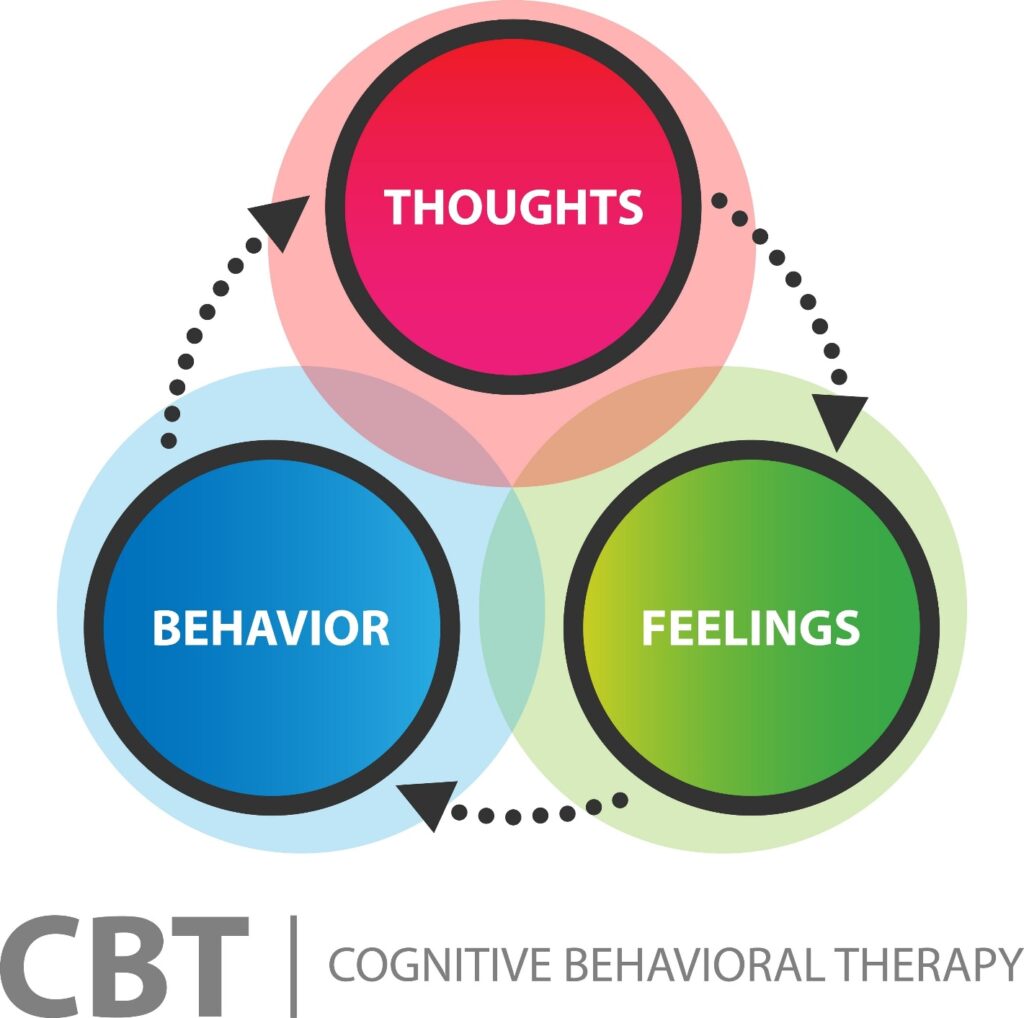
We also offer CBT courses for personal development that delve deeper into these restructuring methods.
| Unhelpful Automatic Thought | Cognitive Distortion | Challenging/Balanced Thought (CBT) |
| “I can’t handle this stress, I need a drink to relax.” | Emotional Reasoning | Challenge: “The drink is a temporary escape, not a solution. I am capable of using my new breathing skill for true relaxation.” |
| “I missed my workout, so the whole day is a waste.” | All-or-Nothing Thinking | Challenge: “Missing one workout is not failure. My goal is consistency, not perfection. I will still choose a healthy lunch.” |
| “If I don’t check my phone now, I’ll miss something important.” | Catastrophizing | Challenge: “No emergency will unfold in the next hour. I can schedule a dedicated time to check messages without disrupting my focus.” |
| NEW: “I deserve this whole dessert because I had a hard week.” | Global Labeling / Justification | Challenge: “I deserve to feel healthy and good. Treating myself means giving my body what it truly needs, not what is temporarily comforting. I can choose a small portion or a different reward.” |
| NEW: “I’m just naturally a disorganized person, I’ll never stick to a schedule.” | Labeling | Challenge: “Organization is a skill, not a personality trait. I successfully followed my plan yesterday, which is evidence that I can learn and improve. I’ll focus on practicing one small skill today.” |
| NEW: “My friend got promoted faster than me, so I should just give up trying.” | Comparison / Discounting the Positive | Challenge: “My worth is not tied to someone else’s timeline. Comparing my journey only creates unnecessary distress. I will focus on the progress I have made in the last three months and what step is best for me next.” |
By challenging the thoughts, you weaken the Cue and make the New Routine choice much easier. The three-part CBT process is:
- Stop the old Automatic Thought.
- Examine the evidence for the thought.
- Replace it with a Balanced Thought.
This dual approach of behavior change (replacement) and thought change (restructuring) creates a robust and sustainable new reward system. The federal government, through the U.S. Department of Health and Human Services (HHS), supports programs focused on Mental Health & Substance Use Disorder treatment.
Phase 5: Environmental Control (Controlling the Cue)
While CBT focuses heavily on internal processes (thoughts and behaviors), the most immediate and powerful way to break a habit is through stimulus control, a core CBT tool. This phase is about changing your environment to make the old habit impossible or highly inconvenient.
1. Making the Old Cue Invisible or Difficult
The simplest way to avoid the unwanted Routine is to eliminate or hide the Cue. This leverages pre-commitment—making the hard choice now for your future self.
- For Emotional Eating: Move unhealthy snack foods from easily visible cabinets to an inaccessible location (e.g., the top shelf in the garage).
- For Excessive Scrolling: Delete social media apps from your phone and only access them on a computer where you must type the URL.
- For Procrastination/Gaming: Place the work item (e.g., a book or specific document) on your desk before you leave for the day, making it the first thing you see in the morning.
2. “Friction” as a Self-Control Tool
Increase the effort (friction) required to perform the unwanted behavior. This gives the prefrontal cortex a critical window of time to engage the new, healthier replacement routine (Phase 2).
- High Friction Example: If you tend to buy coffee every morning, pre-program your coffee maker at home and keep your wallet in a different room when you wake up. The effort of finding the wallet may be enough to prompt the home routine.
3. Creating a Dedicated Space
Designate specific areas for specific behaviors. This helps train the brain to associate a space only with the desired action, avoiding cue contamination.
- Example: Only work on your laptop at your desk; the couch is strictly for reading or relaxing (no work emails or doomscrolling).
Frequently Asked Questions (FAQs)
Q: How long does it take for a new habit to feel automatic?
A: Research suggests that a new habit can take anywhere from 18 to 254 days to become automatic, with the average being around 66 days. The key factor is consistency—perform the replacement routine every single time the Cue appears, even if imperfectly.
Q: What should I do if the replacement habit fails and I relapse?
A: Do not use the Inner Critic. This is the time to apply Self-Compassion (see related articles). Instead of judgment, treat the lapse as data. Go back to Phase 1 and ask: Did my new routine truly satisfy the underlying reward? Was the new routine too difficult?Then, adjust the replacement routine and immediately restart the blueprint. A lapse is a lesson, not a failure.
Q: Can I change multiple bad habits at once using this blueprint?
A: It is highly recommended to focus on only one keystone habit at a time (e.g., the habit you feel is most critical or provides the most emotional relief). Once that replacement routine is consistently established (after 4–6 weeks), the confidence and skills learned can be easily transferred to the next habit.
Q: What if I can’t identify the core “Reward” of my bad habit?
A: If the reward is unclear, try using a simple CBT technique called “5 Whys.” When you perform the bad habit, ask yourself why you did it. Take the answer and ask why again, five times. The final answer will usually reveal the deeper, core function (e.g., “Why did I eat? Because I felt stressed. Why did I feel stressed? Because I felt overwhelmed. Why? Because I don’t feel in control… Reward: Sense of control/safety.”)
Q: How is temptation linked to the reward system?
A: Temptation is not a moral failing; it is a neurobiological event. When a Cue appears, the brain’s limbic system (associated with emotion and instinct) triggers the dopamine anticipation signal much faster than the prefrontal cortex (associated with logic and control) can respond. Temptation is the moment of this delay. The Habit Replacement Blueprint works by training the prefrontal cortex to interrupt the limbic system, allowing you to choose the new, pre-planned behavior during that critical delay window. You can read all writings and books on the subject for a more complete understanding.
Final Call to Action
The Habit Replacement Blueprint proves that you don’t need endless willpower to change. You only need a smart strategy. Start today by identifying one Cue, determining the true Reward, and designing a New Replacement Routine.
To learn more about the author, visit the About Me page. For compassionate support and guidance and resources to help you through any crisis, remember You Are Not Alone; visit our emergency support page. For more comprehensive resources on this and related topics, visit the main BetterMindClub website.
You can find authoritative guidance and resources on effective methods for the treatment of substance use disorders from the Centers for Disease Control and Prevention (CDC), and comprehensive resources on therapies like CBT in guides such as the one on Brief Interventions and Brief Therapies for Substance Abuse from SAMHSA/NCBI.
