The Science of Letting Go: How CBT and Spiritual Acceptance Heal Addiction Patterns
Introduction: The Dual Nature of Addiction and Recovery
Addiction, whether to substances, behaviors, or unhelpful thought patterns, creates a powerful cycle of compulsion and reward. For years, recovery focused almost exclusively on behavioral change. However, truly breaking free requires addressing both the mind’s cognitive traps and the spirit’s deep need for peace and meaning.
This article explores a powerful, integrated approach: combining the pragmatic, evidence-based tools of Cognitive Behavioral Therapy (CBT) with the profound tranquility found through Spiritual Acceptance (a core concept often found in practices like mindfulness, self-compassion, and 12-step programs).
We are not victims of our thoughts; we are simply stuck in a loop. By using scientific CBT techniques to restructure thinking and spiritual practices to cultivate acceptance, we can find genuine freedom from addiction patterns.
Phase 1: CBT – Deconstructing the Addiction Cycle
CBT is highly effective because it treats addiction not as a moral failure, but as a learned behavioral response driven by faulty thought patterns (cognitive distortions).
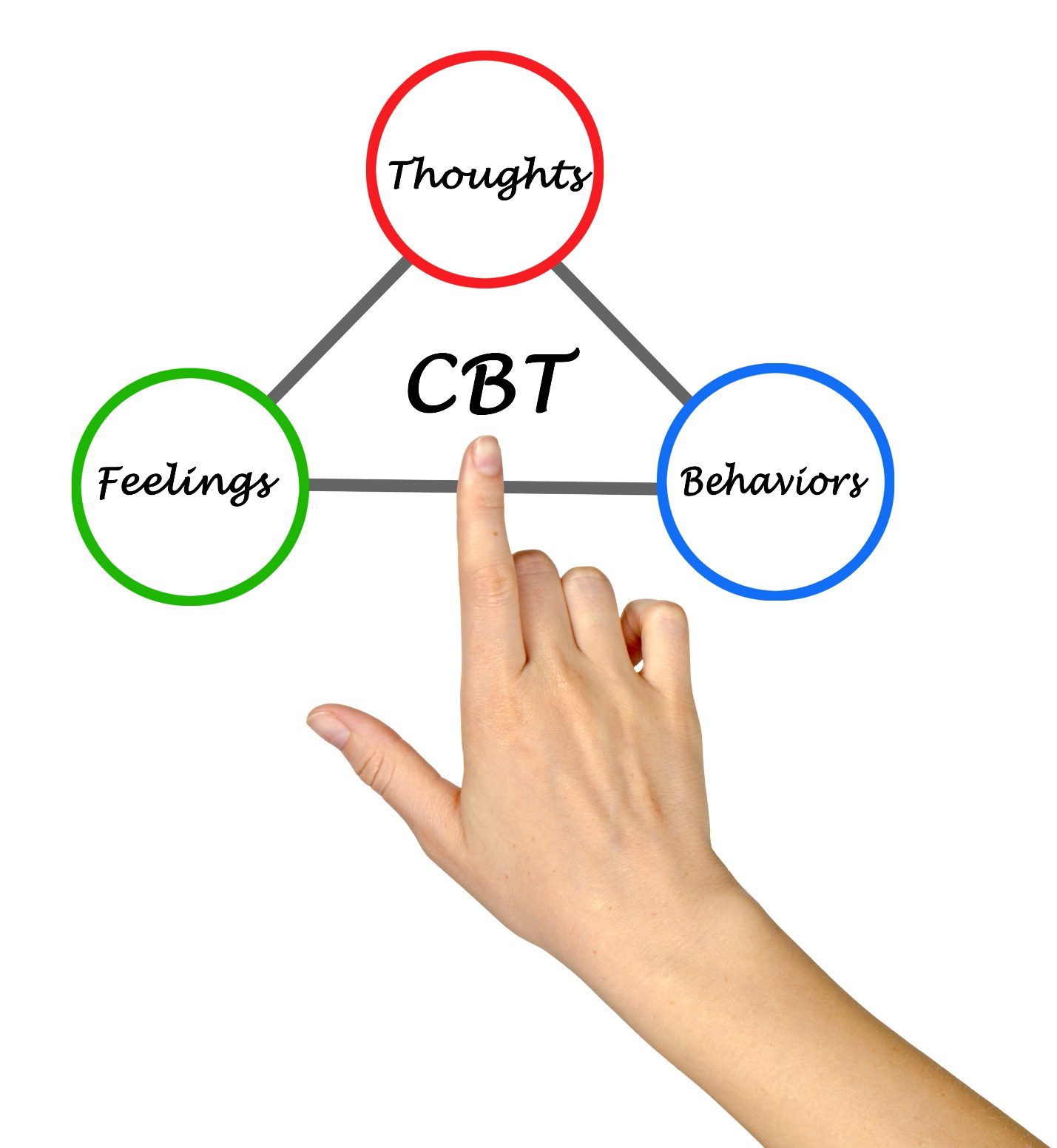
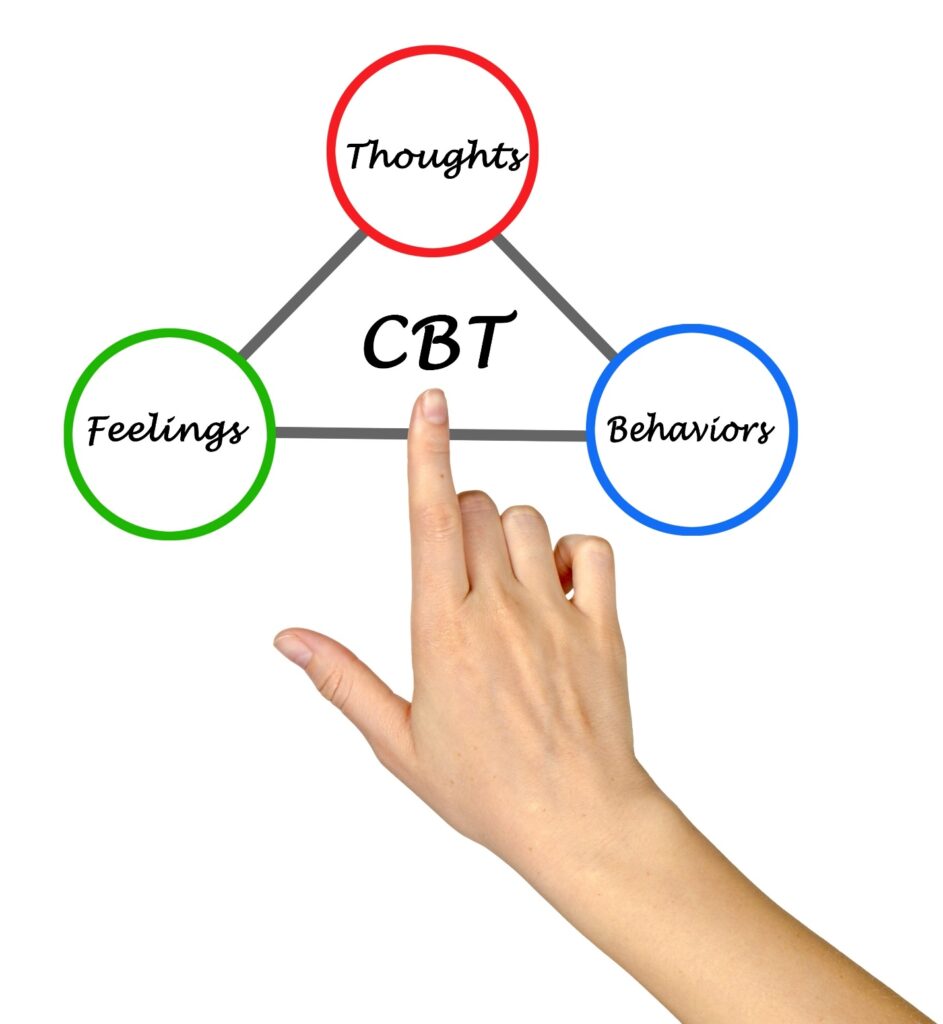
1. Identifying the Cognitive Triad (Thoughts, Feelings, Behaviors)
The addiction pattern is fueled by the interconnectedness of these three elements:
- Trigger/Situation: An event, emotion, or person (e.g., stress at work, feeling lonely).
- Automatic Thought (Distortion): The mind’s immediate, faulty narrative (e.g., “I can’t cope with this feeling,” or “I deserve a break”).
- Behavior (The Addiction): The coping mechanism (e.g., drinking, compulsive shopping, binge-eating).
- Consequence: Temporary relief followed by shame, guilt, and worsening of the original feeling, which restarts the cycle.
2. Challenging Faulty Beliefs and Distortions
The first scientific step in letting go is to expose the lies the addiction tells. We must challenge the automatic thoughts that lead to the addictive behavior.
| Cognitive Distortion | Addiction-Based Thought | CBT Reframe (The Truth) |
| All-or-Nothing Thinking | “I already had one chip, so the whole diet is ruined. I might as well eat the bag.” | “One mistake is a slip, not a collapse. I can choose to stop and restart right now.” |
| Emotional Reasoning | “I feel terrible and anxious, so using this must be the only way to feel better.” | “Feelings are not facts. The craving is temporary, and I can endure this emotion without resorting to old patterns.” |
| Catastrophizing | “If I don’t give in to this craving, I’ll never relax or feel happy again.” | “This craving will pass in 10 minutes. I have successfully overcome worse moments than this.” |
| Mind Reading | “My friends think I’m weak for being sober, so I need to fit in.” | “I cannot know what others think. My health and sobriety are my top priority, regardless of others’ judgment.” |
| Filtering/Discounting the Positive | “I’ve been sober for three months, but the relapse last year means I’m a failure.” | “My sobriety for three months is concrete proof of my capability. The past is information, not a destination.” |
| Should Statements | “I should be able to drink socially like everyone else; if I can’t, something is wrong with me.” | “My path is unique. I owe it to myself to prioritize my health, which means choosing sobriety over comparison.” |
By replacing these distortions with Balanced Thoughts, we interrupt the mental domino effect that leads to the addictive behavior.
Phase 2: Spiritual Acceptance – Embracing Radical Surrender
Where CBT provides the “how-to” for changing the mind, Spiritual Acceptance provides the “why”—a framework for enduring discomfort and finding meaning beyond the addiction. This involves accepting what you cannot control.
1. The Core of Acceptance: Powerlessness
This concept, central to many recovery paths, is often misunderstood. It is not about weakness; it is about recognizing and surrendering to reality:
- Accepting the Past: You cannot change what happened or the conditions that led to the addiction.
- Accepting Others: You cannot control the actions, thoughts, or feelings of other people.
- Accepting Current Reality: You cannot control the craving that arises, only your response to it.
2. The Serenity Principle (Focusing on What You Can Control)
Spiritual acceptance focuses energy on the only place change is possible: the present moment and your own will. For more information on the science of addiction and the brain, consult the National Institute on Drug Abuse (NIDA).
| Category | Principle of Acceptance | Actionable Practice |
| Things I Cannot Change | The craving, the past, others’ opinions, the immediate emotion. | Pause, breathe, and verbally state: “I accept this feeling (or craving) and choose not to act on it.” |
| Things I Can Change | My thoughts, my behavior, my boundaries, my focus. | Redirect attention through Vagus nerve stimulation (deep breathing, cold water splash) or behavioral activation (calling a sponsor). |
By truly accepting that the craving is merely a temporary sensation that holds no power over your choice, you weaken the addiction’s authority.
Phase 3: Integrating CBT and Spiritual Practices
The most powerful healing occurs when these two disciplines work in tandem.
1. Mindfulness and Decentering
CBT utilizes mindfulness to help the individual observe thoughts and feelings without judgment or reaction. This is where spiritual acceptance is applied practically.
- The Practice: When a craving or trigger arises, don’t try to stop it or fight it. Instead, observe it as an external event.
- CBT Language: “I am noticing the thought, ‘I need a drink.’ This is a thought, not a command.”
- Spiritual Language: “This feeling is passing through me. I accept its presence, but it is not who I am.”
2. Self-Compassion and Kindness
Addiction often carries immense shame and guilt. CBT identifies self-criticism as a major trigger for relapse. Spiritual Acceptance teaches radical self-kindness.
- Replacing the Inner Critic: When you have a slip or feel ashamed, use CBT reframing (Phase 1) to challenge the “failure” thought, and then apply self-compassion:
- “This is painful. I am struggling right now, but I am still worthy of kindness and recovery.”
3. Behavioral Activation for Meaning and Purpose
A crucial part of long-term recovery is replacing the void left by addiction with activities that provide genuine purpose. This is the behavioral outcome of spiritual growth.
- Commitment: Commit to activities that align with your deepest values (e.g., volunteering, building community, spending time in nature).
- The Result: These activities reinforce the reframed belief that you are capable and valuable, weakening the core “unworthiness” belief that often fuels addiction.
Phase 4: Neuroplasticity and Relapse Prevention
Sustained recovery relies on the brain’s ability to rewire itself (neuroplasticity). The more you practice new, non-addictive coping mechanisms, the stronger those neural pathways become, and the weaker the old addiction pathways become.
1. The 90-Second Rule (Emotional Tolerance)
This CBT principle teaches that intense, negative emotions (like anxiety or cravings) are simply chemical surges that peak and dissipate within approximately 90 seconds if you do not feed them with the addictive thought pattern or behavior.
- Action: When triggered, mentally acknowledge the physical sensation without judgment. Focus on a grounding technique (like deep breathing or listing five things you see) for 90 seconds. This allows the surge to pass without a behavioral response.
2. Setting Boundaries Against High-Risk Situations (HRS)
Relapse is often a choice made before the substance is used, by placing oneself in a high-risk situation. CBT requires identifying and pre-emptively managing these situations:
- Cognitive Prep: Use a Thought Record to challenge the thought that “I can handle just one drink/use.” Reframe it with the reality: “My brain is wired for addiction; one use will lead to relapse.”
- Behavioral Scripting: Practice scripts for politely saying “No” to invitations that compromise your sobriety (e.g., “I’m focusing on my health right now, but thanks for the invite,” or “I need to leave this environment now”).
3. Creating a “Triumphant Thought” Log
To reinforce neuroplastic change, consciously track and celebrate small victories. This strengthens the new, sober pathways:
| Trigger | Old Response (Addiction) | New Response (Acceptance + CBT) | Result/Win |
| Stressful email from boss | Binge eating for comfort | Used deep breathing and called a sober friend. | Feeling passed; did not compromise health goal. |
| Encountered alcohol at a party | Immediately left the event | Acknowledged the craving and chose safety. | Prioritized self-respect over social pressure. |
Phase 5: Cultivating Spiritual Health and Community
For long-term healing, the void left by the addiction must be filled with supportive structures and a sense of belonging. The “spiritual” aspect of acceptance is about connection—to self, others, and a sense of higher purpose.
1. The Principle of H.A.L.T. (Hungry, Angry, Lonely, Tired)
This common recovery axiom serves as a simple, CBT-friendly self-check. These four states are triggers for emotional reasoning and relapse.
- Action: When feeling overwhelmed, ask: Am I Hungry? Am I Angry? Am I Lonely? Am I Tired?Addressing the physical need (eating, resting, talking to someone) interrupts the cognitive trigger before the addiction cycle begins.
2. Service and Contribution (The “Higher Purpose”)
Shifting the focus from self-consumption (addiction) to self-contribution (service) is a powerful spiritual stabilizer.
- CBT Link: Service challenges core beliefs of unworthiness or selfishness. It provides real-time, behavioral proof of your value and contribution to the world, reinforcing positive self-identity.
- Practice: Commit to small acts of service (e.g., helping a neighbor, volunteering time, sharing your experience to help another person in recovery).
3. Building a Sober Support Network
Addiction thrives in isolation. Spiritual health is found in healthy community. For a list of national treatment and recovery resources, consult the Substance Abuse and Mental Health Services Administration (SAMHSA) helpline.
- Action: Actively seek and engage with a support group, sober community, or trusted friends. This provides accountability and challenges the distortion of Mind Reading (“They won’t understand”) with the reality of shared human struggle.
Phase 6: Rewriting the Core Identity (CBT and Belief Restructuring)
The deepest work in recovery is changing the core beliefs about oneself that made the addiction necessary in the first place. This phase uses the data collected from your CBT reframes and positive behaviors (Triumphant Log) to overwrite old, toxic self-concepts.
1. Identifying Core Beliefs of Addiction
Addiction is often rooted in deep-seated, painful beliefs about self-worth and safety, such as:
- “I am inherently flawed/unlovable.”
- “I cannot handle strong emotions.”
- “The world is unsafe and hostile.”
For further reading on the psychological factors of addiction, reference the National Institute of Mental Health (NIMH).
2. Evidence Collection and Affirmation
This is the ultimate intersection of CBT and Spiritual Acceptance. You use objective, real-life evidence (CBT) to validate a new, spiritually aligned belief (Acceptance).
| Old Core Belief | Evidence from Recovery (CBT Data) | New Core Belief (Spiritual Affirmation) |
| “I am inherently flawed/unlovable.” | I have maintained a job for X months; I have friends who rely on me; I chose sobriety today. | “My worth is intrinsic, not conditional. I am lovable and capable of healthy connection.” |
| “I cannot handle strong emotions.” | I survived three panic attacks without using; I processed anger using exercise (Behavioral Activation). | “I possess the resilience and tools to process all emotions safely.” |
| “The world is unsafe and hostile.” | I found a supportive community (Phase 5); I successfully set boundaries with a difficult relative. | “I am safe in this present moment, and I have the power to create a peaceful environment for myself.” |
3. Living the Reframed Identity
This final step involves consciously stepping into the “Thriver” identity. It’s not just believing you are worthy, but acting as a worthy, sober person would. This means continuing to use the CBT tools(Thought Records, Boundary Setting) while relying on the Spiritual Acceptance to maintain humility, gratitude, and a commitment to service.
Phase 7: The Role of Routine and Ritual in Sustained Sobriety
Addiction is often a ritual—a habit reinforced by routine. Replacing the addictive ritual with healthy, positive routines is critical for long-term maintenance, providing stability and preempting chaos.
1. Establishing a Non-Negotiable Morning Routine
The first hours of the day set the tone for emotional regulation. This routine should be simple, positive, and independent of external validation.
- CBT Link: Creates immediate behavioral momentum, reducing the opportunity for automatic negative thoughts to take hold.
- Practice: Dedicate 15 minutes to meditation, writing in a gratitude journal, or reading inspirational material before checking a phone or email.
2. Developing Mindful Transitions
High-risk moments often occur during transitions (e.g., commuting home, finishing a difficult task). Creating a brief ritual to shift gears can prevent an automatic relapse response.
- Action: Implement a “Five-Minute Decompression” ritual: park the car and practice 5×5 breathing (inhale 5, hold 5, exhale 5, hold 5) before walking inside. This physically switches the nervous system from fight-or-flight to rest-and-digest.
3. The Power of Reflection Rituals
Daily reflection reinforces the learning from CBT and the humility from spiritual acceptance.
- Practice: End the day by reviewing your Triumphant Thought Log and writing down one thing you are grateful for, one thing you could have done better, and one person you were able to help today. This builds self-awareness without devolving into self-criticism.
Conclusion: The New Freedom
The science of letting go is the art of choosing your response over your reaction. CBT gives you the clear, practical tools to restructure the mind’s machinery, while Spiritual Acceptance provides the strength and perspective to endure the emotional discomfort of change. By mastering this dual approach, you move beyond mere abstinence and step into a new identity defined by freedom, resilience, and genuine inner peace.
For a deeper dive into practical tools, see our resource on CBT Worksheets for Emotional Regulation and Boundary-Setting.
