Healing in a World That Never Slows Down: Nervous System Care for Modern Women
By BetterMindClub.com
In the modern era, “busy” is no longer just a schedule; it is an identity. For women, this busyness is frequently compounded by the “mental load”—the invisible, relentless labor of managing households, anticipating family needs, navigating corporate ladders, and maintaining the emotional glue of every relationship they touch.
Recent statistics highlight the weight of this burden. According to a 2023 Pew Research Center study, in dual-income households, women still spend about 2.5 hours more per day on housework and caregiving than men. Furthermore, data from the American Psychological Association (APA) indicates that women consistently report higher stress levels than men (an average of 5.2 out of 10 compared to 4.8) and are more likely to report physical and emotional symptoms of stress, such as fatigue and headaches.
Beneath the surface of a seemingly high-functioning life, millions of women are living in a state of chronic high alert. If you struggle with “tired but wired” energy, sudden irritability, or a sense of permanent overwhelm, the issue isn’t your personality or a lack of “hustle”—it is your nervous system. By integrating Cognitive Behavioral Therapy (CBT) with Somatic Care, you can move from a state of mere survival to one of thriving.
The Biological Reality of “Modern Burnout”
Our nervous systems were designed for a world that no longer exists. Evolutionarily, the human stress response was an exquisite survival mechanism developed to handle acute, physical threats—the proverbial saber-toothed tiger. When the threat appeared, the body mobilized; when the threat was gone, the body returned to baseline.
Today, the “tiger” never leaves the room. It has been replaced by the 6:00 AM smartphone alarm, the pings of Slack notifications, the passive-aggressive tone of an email, and the crushing societal expectation for women to be “perfect” in every domain. Because these triggers are constant, the nervous system never receives the “all-clear” signal required to reset. This is especially true for those navigating complex roles, such as single mothers, who often benefit from a unique CBT journey for healing and overcoming challenges.
Understanding the Polyvagal Theory: The Map of Your Safety
To heal, we must understand the “map” of our internal threat-detection system. Developed by Dr. Stephen Porges, Polyvagal Theory describes three primary states of the Autonomic Nervous System (ANS). Think of this as a ladder:
- Ventral Vagal (Safe & Social): This is the top of the ladder. Your heart rate is steady, your breath is deep, and you feel connected to others. This is the only state where true cellular healing, digestion, and rational, creative thinking occur.
- Sympathetic (Fight or Flight): This is the middle of the ladder. When you perceive a threat (or a deadline), your body floods with cortisol and adrenaline. You feel frantic, anxious, or “on edge.” Your blood shunts away from your digestive organs to your limbs, preparing you to run or fight.
- Dorsal Vagal (Freeze/Shutdown): This is the bottom of the ladder. If the stress is too intense or lasts too long, the body “pulls the breaker.” You feel numb, exhausted, depressed, or “checked out.” This is the biological equivalent of a circuit breaker tripping to prevent a fire.
For the modern woman, the transition between these states has become “stuck.” We often oscillate between the frantic Sympathetic energy of the workday and the heavy Dorsal shutdown of the evening couch session, rarely—if ever—climbing back into the Ventral Vagal state of genuine rest. Creating a safe space for mindset change is essential to re-learning how to reach that top rung.
The Hormonal Interplay: Why Women’s Nervous Systems Are Unique
To truly understand nervous system care for women, we must look at the endocrine system. The nervous system and the hormonal system (the endocrine system) function as a constant feedback loop. For women, fluctuations in Estrogen and Progesterone significantly alter the “threshold” for stress.
The Estrogen-Stress Connection
Estrogen is neuroprotective. It helps maintain the health of the neurons and supports the production of Serotonin and Dopamine. When estrogen levels drop—such as during the luteal phase (the week before a period) or during perimenopause—the nervous system becomes more sensitive to Sympathetic triggers.
CBT Reframe for Hormonal Sensitivity:
- Initial Thought: “I am losing my mind; I can’t handle anything today.”
- The Reframe: “My nervous system has a lower threshold for stress today due to my hormonal cycle. I am not weak; I am navigating a biological shift. I will reduce my sensory input today.”
Why Women Face Unique “Nervous System Debt”
Societal conditioning places women in a position of constant Hyper-Vigilance. From a young age, girls are socialized to be the emotional “thermometers” of their environments. This creates a pattern of Over-Responsibility, where you feel responsible for everyone else’s emotional state. Over time, this results in “Nervous System Debt,” which manifests as:
- Chronic Fatigue: No amount of sleep feels like enough because your cells aren’t in “rest and digest” mode.
- Brain Fog: Your prefrontal cortex goes offline when the survival brain takes over.
- Emotional Volatility: Your Window of Tolerance shrinks, making small inconveniences feel like catastrophes.
For those facing extreme pressures, such as single mothers managing stress, the load can feel insurmountable without structured strategies. According to the NIH’s 7 Steps to Manage Stress, recognizing these signs is the first step toward building resilience.
The Gut-Brain Axis: Feeding the Vagus Nerve
A critical component of regulation is the Microbiome. Approximately 90% of the body’s Serotonin is produced in the gut. If your gut is inflamed due to high-stress eating or poor nutrition, your Vagus Nerve—the highway of the Parasympathetic system—will send “danger” signals to the brain.
Nutrition for Regulation
To move out of a chronic Sympathetic state, the body needs specific building blocks:
- Magnesium: Known as “nature’s relaxant,” magnesium helps regulate the HPA (Hypothalamic-Pituitary-Adrenal) axis.
- Omega-3 Fatty Acids: These are essential for insulating the nerves and reducing neuro-inflammation.
- Complex Carbohydrates: These aid in the transport of Tryptophan to the brain, the precursor to Serotonin.
Phase 1: Identifying Your “Stress Signature”
CBT begins with the pillar of Awareness. You cannot regulate what you do not recognize. Your nervous system sends physiological signals long before your conscious mind realizes you are stressed. By mapping your emotional triggers, you can intervene before a surge turns into a meltdown.
Common Stress Signatures in Women
- The Tightened Core: A persistent clenching in the stomach or diaphragm. This restricts the vagus nerve and prevents deep breathing.
- The Shallow Breath: Breathing only into the upper third of the chest. This tells the brain: “We are running out of oxygen.”
- The Jaw Lock: Clenching the jaw or “bracing” the tongue against the roof of the mouth. This is a primitive reflex to protect the airway during a fight.
- The Urgent Pace: Doing every task—brushing teeth, walking to the car—with a sense of frantic speed.
Activity: For the next 24 hours, set an alarm every three hours. When it goes off, do a “Body Scan.” Are your shoulders at your ears? Is your jaw clenched? Documenting these physical cues is the first step in Cognitive Restructuring. You can find templates for this in our Free Downloadable CBT Tools.
Phase 2: Using CBT to Interrupt the Stress Loop
While somatic tools work from the “body up,” CBT works from the “mind down.” As noted by the NIMH on Psychotherapies, CBT is a gold-standard approach for managing emotional regulation.
The 3-Step CBT Reframe for Overwhelm
Identify the distortion, examine the facts, and create a balanced thought.
| The Stressful Situation | Initial Automatic Thought (Distortion) | The CBT Reframe (Accurate Thinking) |
| The Messy House:Toys and dishes everywhere. | “I am a failure; I can’t keep my life together.” (Labeling) | “The house is messy because it is a high-activity day. A messy room is not a moral failing.” |
| Work Email: “Can we talk?” from your boss. | “I’m going to get fired. I messed up.” (Catastrophizing) | “I have no evidence of poor performance. I will know the facts once the meeting happens.” |
| Self-Care Guilt:Resting for 20 minutes. | “I should be doing the laundry. I’m lazy.” (‘Should’ Statements) | “Rest is a biological requirement, not a reward. Resting now ensures I have energy later.” |
| A Disappointed Friend: Canceling plans. | “She’s going to be so mad at me.” (Mind Reading) | “I am setting a boundary to protect my health. A true friend will understand.” |
Phase 3: Somatic Tools to Signal Safety
There is a biological limit to CBT. Once the Amygdala has fully taken over, the “thinking brain” is essentially disconnected. You must speak the Language of the Body. The CDC’s guidance on healthy coping emphasizes the importance of these actions:
- The Physiological Sigh: Inhale deeply through the nose. At the top, take a second, shorter “sip” of air to fully inflate the lungs. Then, exhale very slowly through the mouth. This offloads Carbon Dioxide, signaling the heart to slow down via the vagus nerve.
- Vagus Nerve Stimulation: Gentle humming, gargling, or even singing. Alternatively, use a cold compress on the side of your neck for 30 seconds. These vibrations and temperature shifts trigger the “relaxation response.”
- Proprioceptive Input: Use a weighted blanket or place a firm hand on your own chest and another on your belly. Firm pressure sends signals to the brain that the body is “contained” and safe in space.
Phase 4: Building Your “Glimmer” Library
In trauma-informed care, we often talk about “triggers.” However, the path to healing requires us to cultivate the opposite: Glimmers. A Glimmer is a micro-moment that signals safety and connection to your nervous system.
How to Practice Glimmer Mapping
You cannot wait for glimmers to happen; you must actively “prime” your brain to see them. This is a form of Behavioral Activation, supported by clinical overviews on stress management.
- Visual Glimmers: The afternoon sun hitting a corner; the sight of a colorful flower; a photo of a pet.
- Auditory Glimmers: The sound of wind chimes; a song that makes you feel nostalgic; the rhythm of your own steady breath.
- Tactile Glimmers: The texture of a soft sweater; the warmth of a coffee mug; the feeling of grass under your feet.
Case Study: From “Dorsal Shutdown” to “Ventral Safety”
The Baseline: Sarah, a 42-year-old manager, arrived in a state of Dorsal Vagal Shutdown. She felt numb, used caffeine to “wake up” her nervous system, and felt “impending doom” regarding her to-do list.
The 30-Day Protocol:
- Week 1: Sarah practiced the Physiological Sigh three times a day.
- Week 2: Using the Body Scan, she realized her “Stress Signature” was a locked jaw. She placed a “Check-In” sticker on her laptop as a cue.
- Week 3: Sarah began using the 3-Step Reframe. When she felt guilt, she spoke the balanced thought: “Rest is biological maintenance.”
- Week 4: Sarah documented 3 glimmers a day. By the end of the month, her Window of Tolerancehad expanded. She could handle a stressful meeting without falling into a 3-hour “Dorsal” slump afterward.
The Role of Sleep Architecture in Regulation
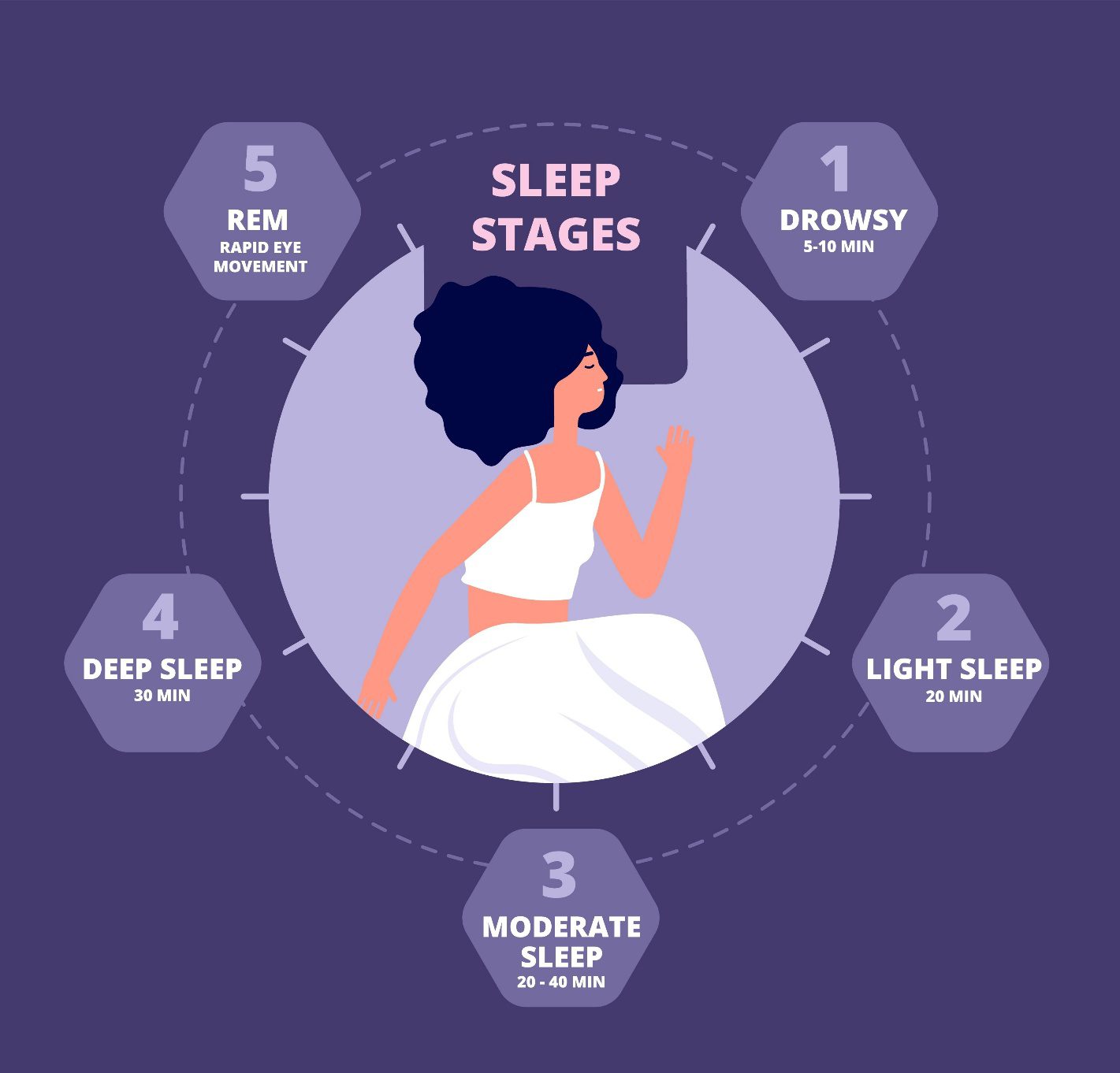
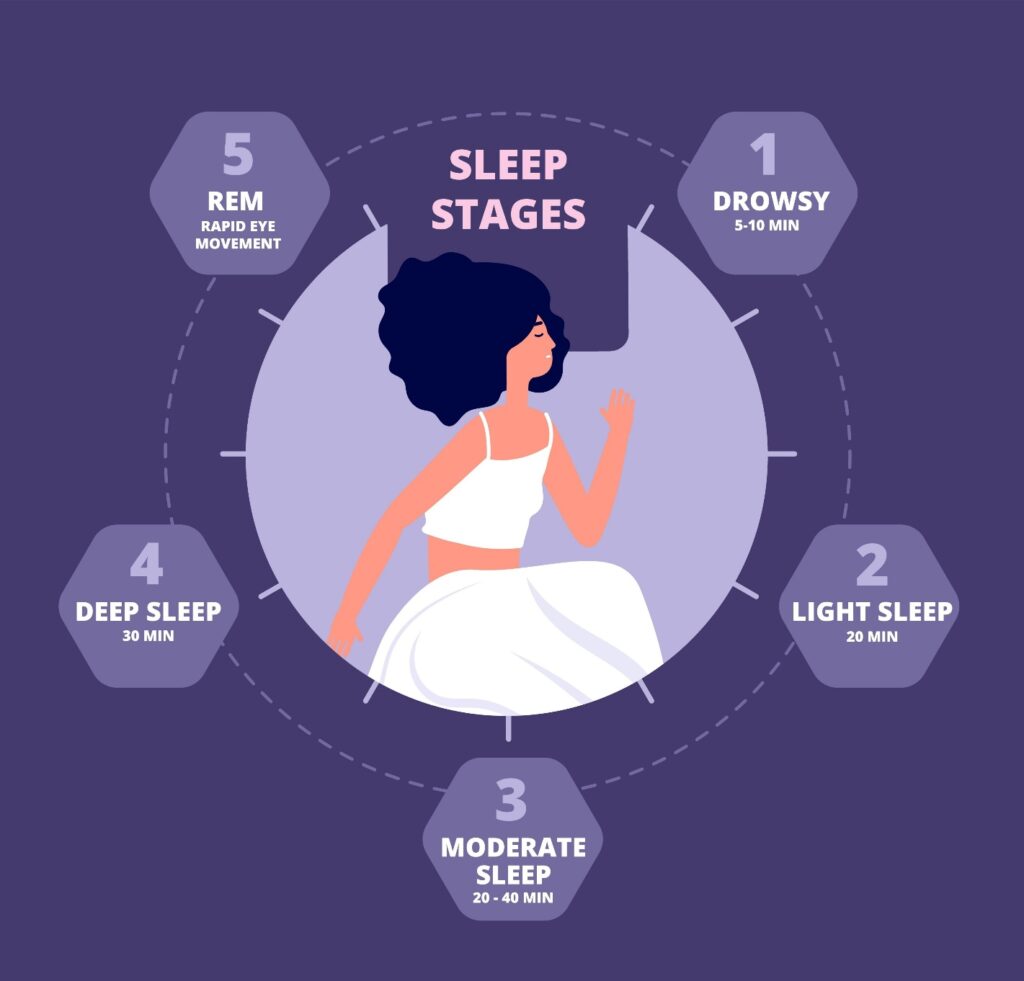
Chronic stress destroys Sleep Architecture, specifically reducing REM (Rapid Eye Movement) and Deep Sleep. When a woman is “tired but wired,” she is often stuck in Light Sleep, meaning her brain never fully “washes” away the metabolic waste of the day.
The “Wind-Down” Somatic Routine
- Blue Light Minimums: Turn off screens 60 minutes before bed to allow Melatonin production.
- Legs Up the Wall: A yoga pose that encourages blood flow back to the heart and triggers the Parasympathetic response.
- The Brain Dump (CBT Tool): Write down every “to-do” item to externalize the mental load, allowing the Prefrontal Cortex to “sign off.”
Healing the Collective: Statistics and Demographics of Stress
It is important to acknowledge that “Nervous System Care” is not an equal-opportunity challenge. Socioeconomic and racial factors play a massive role in Allostatic Load (the biological wear and tear).
- Racial Disparities: According to the National Institutes of Health (NIH), Black women in the U.S. exhibit higher levels of allostatic load than White women of the same age and income level. This is often linked to the “Weathering Hypothesis”—the biological aging caused by systemic stress. Black women are also 20% more likely to report serious psychological distress.
- Income and Stress: Women in the lowest income brackets are 60% more likely to report “extreme stress” than those in the highest brackets, often due to “financial hyper-vigilance.”
- The Sandwich Generation: Women aged 35–55, caring for both children and aging parents, show the highest rates of Dorsal Vagal Shutdown (burnout). This group reports a 30% higher incidence of stress-related headaches.
For broader support, the CDC Mental Health Overview provides a comprehensive look at emotional well-being resources.
Real-World Tools for Nervous System Recovery
To make this actionable, keep this table as a “First Aid Kit” for your emotional health.
| Tool Type | Practice | Best Used For… |
| Somatic | The 4-7-8 Breath | When you can’t fall asleep or feel a panic surge. |
| Cognitive | The “90-Second Rule” | When someone makes you angry. Wait for the chemical flush to pass. |
| Environmental | Sensory Minimums | When feeling overstimulated. Dim the lights and reduce noise. |
| Behavioral | The “Time Buffer” | When someone asks for a favor. Say: “Let me check my schedule.” |
| Somatic | Peripheral Vision | When stuck in a “tunnel vision” stress loop. Soften your gaze. |
Frequently Asked Questions
Can I heal my nervous system while still working a high-stress job?
Yes. Healing is not about the absence of stress; it is about Resilience. Resilience is the ability to move down the Polyvagal ladder when needed and climb back up quickly. By practicing “Micro-Recoveries”—taking 60 seconds for a physiological sigh between meetings—you prevent the accumulation of stress.
Is this just another word for “Self-Care”?
No. Modern “self-care” (bubble baths, wine) is often just a temporary distraction. Nervous system care is Biological Maintenance. It is about understanding the electrical signals of your body and providing the specific inputs required to change those signals.
What if I feel “nothing” during these exercises?
If you feel numb, you are likely in a Dorsal Vagal (Freeze) state. Try “External Orientation”: Name 5 blue things you see, 4 textures you can touch, and 3 sounds you hear. This gently pulls your brain back into the present moment without demanding an emotional response.
Conclusion: You Are the Guardian of Your Peace
In a world that profits from your exhaustion and benefits from your “busyness,” resting is a radical act of rebellion. Healing your nervous system is not about “fixing” a flaw in your character; it is about honoring the sophisticated biological system that has kept you alive through every challenge you’ve ever faced.
By combining the evidence-based logic of CBT (the wisdom of the mind) with the profound wisdom of Somatic Care (the wisdom of the body), you are doing more than just “managing stress.” You are reclaiming your biological birthright: the ability to feel safe in your own skin. You are moving from a life of “shoulds” to a life of “is”—where you are present for the glimmers, resilient in the face of the tigers, and finally, truly, at home in yourself.
The renovation of your life begins with the renovation of your response.
SEO Meta Data
- Meta Title: Healing the Nervous System for Women | CBT & Somatic Tools
- Meta Description: Learn how to regulate your nervous system in a high-stress world. Explore Polyvagal Theory, CBT reframes, and somatic techniques designed for modern women.
- URL Slug: /nervous-system-care-modern-women
- Keywords: nervous system regulation for women, CBT for stress management, polyvagal theory for beginners, somatic healing for burnout, emotional regulation techniques.
