
Activate Your Life: A CBT Guide to Overcoming Depression
By: Mary Walden for BetterMindClub.com
Introduction: Stepping Out of the Shadows with CBT
Depression can cast a long, heavy shadow over your life, draining energy, joy, and hope. It’s more than just feeling sad; it’s a persistent state that can affect your thoughts, feelings, behaviors, and physical well-being. But the good news is: you don’t have to navigate this journey alone, and you can reclaim your light. This article, presented by BetterMindClub.com, is your empowering CBT guide to overcoming depression, designed to help you understand its mechanisms and provide actionable strategies to break free from its grip. We believe in your inherent strength and your capacity for change. With proven Cognitive Behavioral Techniques, you can learn to challenge negative patterns, build healthier habits, and truly activate your life.
Your Mindset: The Starting Point of Your Recovery
The first powerful step in overcoming depression is recognizing the profound influence of your thoughts and actions on your mood. Cognitive Behavioral Therapy (CBT) offers a structured, evidence-based roadmap to change these patterns. It empowers you to become an active participant in your healing, shifting from a passive experience of depression to a proactive journey of recovery. You have the power within you to reshape your narrative. For a broad understanding of mental health and prevention, refer to the CDC’s resource on Mental Health Basics at CDC Mental Health Basics.
I. Understanding Depression Through a CBT Lens
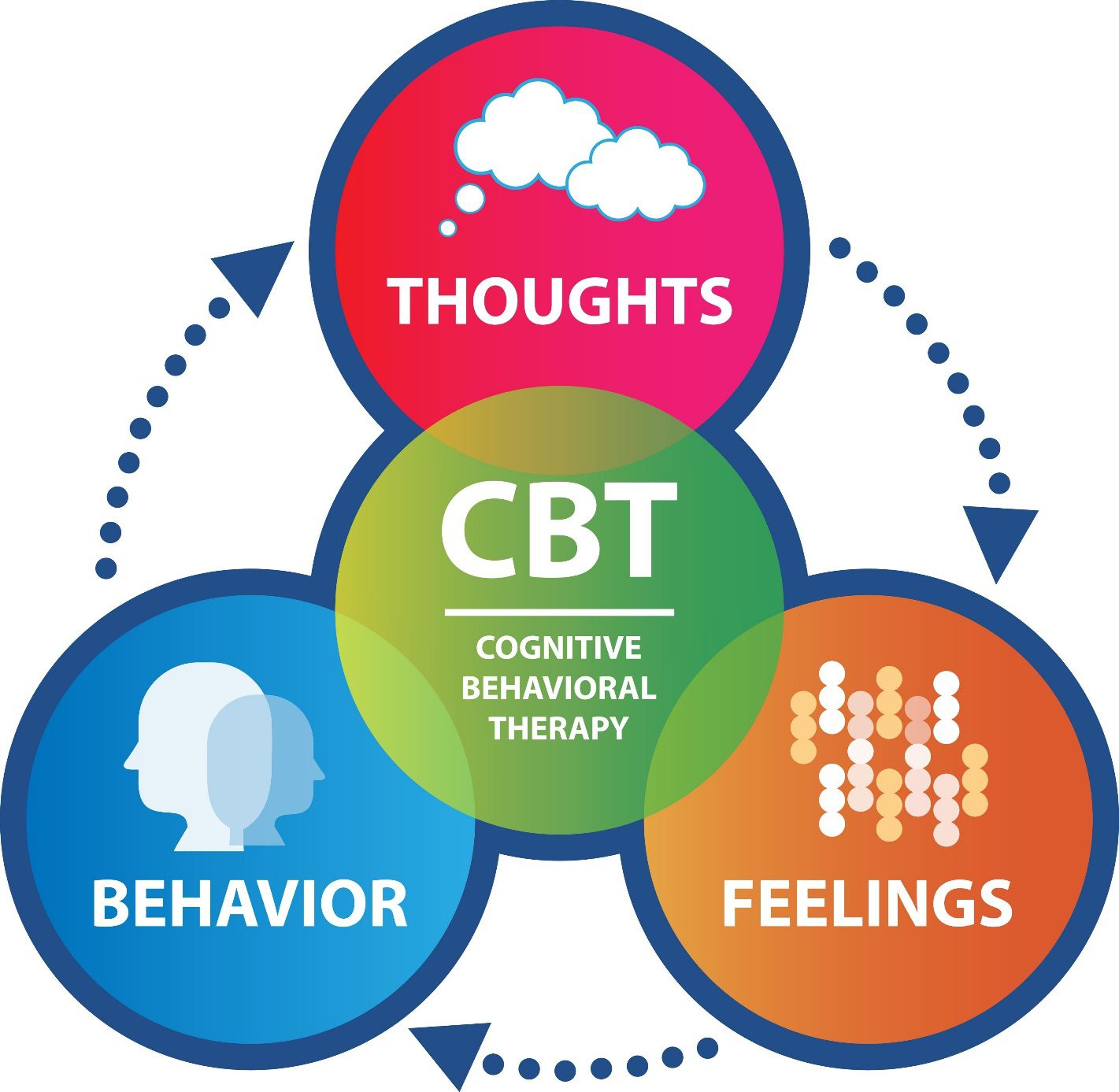
To overcome depression, it’s crucial to understand how it operates within your mind and body. CBT helps demystify depression by breaking it down into interconnected components: thoughts, feelings, and behaviors.
The Vicious Cycle of Depression: Thoughts, Feelings, Actions
Depression often thrives in a self-perpetuating cycle:
- Negative Thoughts: “I’m a failure,” “Nothing will ever get better,” “I’m unlovable.” These thoughts lead to…
- Negative Feelings: Sadness, hopelessness, worthlessness, anxiety. These feelings, in turn, lead to…
- Unhelpful Behaviors: Withdrawal from social activities, procrastination, avoiding responsibilities, staying in bed. These behaviors then reinforce the…
- Negative Thoughts: “See? I am a failure because I didn’t do anything today.”
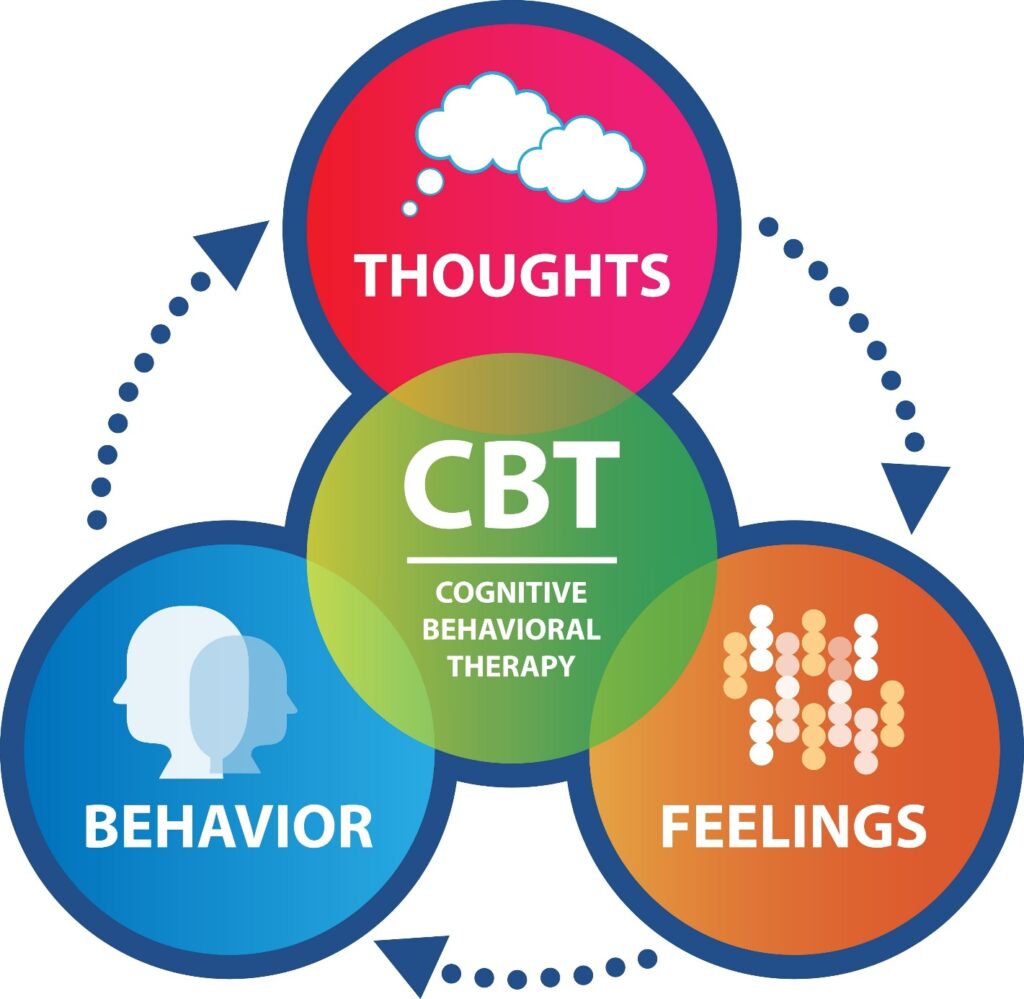
This cycle drains your energy and makes change feel impossible. CBT directly targets each of these points to dismantle the cycle.
The Cognitive Model of Depression Explained
At its core, the CBT approach posits that our feelings and behaviors are not dictated by external situations, but by how we interpret those situations through our thoughts. Depression often locks individuals into negative thought patterns, creating distortions that automatically interpret events in the worst possible light. By isolating this connection between thoughts and feelings, CBT provides the leverage necessary to interrupt the depressive cycle, offering a pathway toward more balanced emotional responses and actions.
Recognizing Cognitive Distortions in Depression
Depression often warps thinking patterns into cognitive distortions—irrational or exaggerated thoughts that aren’t based in reality. Common ones include:
- All-or-Nothing Thinking: Seeing things in extremes (“If I’m not perfect, I’m a total failure”).
- Overgeneralization: Drawing sweeping conclusions from a single event (“I messed up one task, so I’ll mess up everything”).
- Mental Filter: Focusing only on the negatives and ignoring the positives.
- Catastrophizing: Expecting the worst possible outcome.
- Should Statements: Rigid rules for how you or others “should” behave, leading to guilt or anger.
Identifying these distortions is the first step toward challenging them.
Identifying Automatic Negative Thoughts (ANTs)
Automatic Negative Thoughts (ANTs) are quick, habitual, and often subconscious judgments that occur in response to daily events. In depression, ANTs are usually critical and self-defeating, constantly reinforcing feelings of hopelessness and worthlessness. Recognizing these instantaneous thought patterns—which often fall into the category of cognitive distortions—is the foundational skill taught in CBT, preparing you to use Thought Records for systematic cognitive restructuring later in your healing process.
II. Phase 1: Activating Behavior for Mood Improvement (Behavioral Activation)
CBT for depression often begins with Behavioral Activation (BA), a powerful technique that focuses on changing what you do to change how you feel. When depressed, the natural inclination is to withdraw, but this perpetuates the cycle. BA helps you re-engage with life, even when you don’t feel like it.
The Power of Small Steps: Scheduling for Success
Behavioral Activation isn’t about suddenly becoming a different person; it’s about scheduling small, achievable activities that provide either Pleasure or Mastery.
Step 1: Identify Meaningful Activities
Think about what used to bring you joy or a sense of accomplishment, or what you genuinely value, even if it feels distant now.
- Pleasurable Activities: Reading a book for 10 minutes, listening to your favorite music, taking a warm bath, calling a supportive friend, going for a short walk in nature.
- Mastery Activities: Doing a load of laundry, organizing a small drawer, finishing a simple work task, paying a bill, learning a new recipe.
Step 2: Schedule and Track
Commit to specific times for these activities in your calendar. Start incredibly small—5 or 10 minutes. After each activity, note down how it made you feel (e.g., “Slightly less tense,” “A small sense of achievement”). This positive feedback directly challenges the depressive belief that “nothing helps.”
The Importance of Tracking Pleasure and Mastery
Tracking the emotional outcome of scheduled activities is a non-negotiable step in Behavioral Activation because it provides undeniable, real-world evidence that positive feelings and competence are still accessible, even when depression insists otherwise. By measuring the slight lift in mood or the sense of accomplishment after a mastery task, you create factual data to directly refute the depressive belief that efforts are pointless, thereby restoring motivation and self-efficacy.
Overcoming Avoidance and Procrastination
Depression often leads to avoiding tasks and social interactions. Behavioral Activation explicitly counters this by encouraging deliberate action. Even a tiny step, like sending one email, can build momentum and provide a sense of control, weakening the hold of avoidance. To find more in-depth strategies for breaking the cycle of avoidance, explore the BetterMindClub.com resource on Overcoming Procrastination and Apathy.
III. Phase 2: Reshaping Your Thoughts (Cognitive Restructuring)
Once you’ve started to shift your behaviors, you can more effectively tackle the negative thought patterns that fuel depression. This is the heart of cognitive restructuring in CBT.
Technique 1: Thought Records – Becoming Your Own Detective
A Thought Record is a structured way to identify, challenge, and reframe negative automatic thoughts. To truly activate your change process by combining cognitive and behavioral strategies, explore the BetterMindClub.com resource on CBT Self-Motivation Therapy.
| Situation | Emotion (and Intensity) | Automatic Thought(s) | Evidence AGAINST the Thought | CBT Reframe (Balanced Thought) |
| My friend didn’t reply to my text for hours. | Sad (80%), Worried (70%) | “She’s ignoring me. She probably doesn’t want to be friends anymore.” | She’s usually busy. She replied to me yesterday. I have no concrete proof she’s angry. | “She’s likely busy, and I’ll hear from her when she has time. Her not replying immediately doesn’t define our relationship.” |
| I didn’t finish all my tasks today. | Guilty (90%), Worthless (85%) | “I’m a failure. I’ll never get anything done.” | I did finish 2 tasks. I took a necessary break. Everyone has unproductive days sometimes. | “I accomplished some things today. It’s okay that I couldn’t get everything done, and I can prioritize for tomorrow without judgment.” |
| My boss sent me feedback on a report. | Anxious (75%), Inferior (60%) | “The feedback means I’m bad at my job and they’ll fire me soon.” (Catastrophizing) | The feedback was constructive and specific to one section. He still assigned me a new project. My performance review was good last month. | “The feedback is standard professional coaching. It’s a guide for improvement, not proof of failure. My job is secure.” |
| I feel too tired to go to the gym. | Hopeless (95%), Exhausted (80%) | “I should be stronger. I’m lazy, and I’ll never get healthy.” (“Should Statement” / Labeling) | I am currently battling depression, which causes physical fatigue. My body needs rest right now. | “I need to be compassionate with my fatigue. I am not lazy; I am unwell. I will try a 10-minute gentle stretch instead of the gym.” |
This process helps you gain perspective and replace rigid, negative thoughts with more realistic, balanced ones.
Mastering the Socratic Method for Self-Challenge
Challenging automatic thoughts requires mastering the Socratic Method, which involves asking probing questions rather than accepting the thought as fact. This technique encourages objective, logical analysis, forcing the depressed mind to consider alternative explanations and evidence that contradict the negative thought. By learning to be your own gentle, yet rigorous, detective, you systematically dismantle the distorted cognitive framework that depression relies upon, weakening its power over your emotions.
Technique 2: “What If” Questions for Catastrophic Thinking
When depression leads to catastrophizing (“What if I lose my job? Then I’ll be homeless and alone!”), asking “What if” questions can help bring you back to reality:
- “What if that does happen? What’s the actual worst-case scenario?”
- “What would be the most likely outcome?”
- “If the worst did happen, how would I cope? What resources would I have?”
- “What advice would I give a friend in this exact situation?”
This process helps dismantle the exaggerated fear and move towards problem-solving. If your catastrophic thoughts are linked to overwhelming anxiety or panic, you may also benefit from the BetterMindClub.com guide on CBT Grounding Techniques for Anxiety.
IV. Sustaining Your Recovery: Resilience and Long-Term Well-being
Overcoming depression isn’t a one-time event; it’s an ongoing journey of applying your CBT skills and fostering long-term resilience.
Building Your “Wellness Toolbox”
Think of your CBT strategies as tools in a personal wellness toolbox. Regularly incorporate practices that support your mental health:
- Mindfulness & Self-Compassion: Practice being present and treating yourself with kindness, especially during difficult moments. You are worthy of gentleness.
- Problem-Solving Skills: Apply CBT’s logical approach to daily challenges, reducing overwhelm.
- Healthy Habits: Prioritize sleep, nutrition, and regular physical activity – these are foundational for mood regulation.
- Strong Social Connections: Nurture relationships with supportive friends and family. Even small interactions can make a difference.
Integrating Self-Compassion into Daily Practice
For lasting recovery, the most profound step is replacing the harsh inner critic—often amplified by depression—with consistent self-compassion. This practice, reinforced through dedicated CBT exercises, involves recognizing your suffering and responding to it with kindness and understanding, rather than judgment. Cultivating this inner kindness creates an internal secure base, acting as a crucial buffer against depressive relapse and ensuring that minor setbacks are viewed as opportunities for learning, not confirmation of worthlessness.
Your Journey: A Testament to Your Strength
Remember that your path out of depression is a testament to your incredible strength and courage. Each time you challenge a negative thought or take an activating step, you are actively reshaping your brain and reclaiming your life. The skills you gain are not just for managing depression; they are for building an empowered, fulfilling future.
For resources and support outside of this club, the National Institute of Mental Health(NIMH) offers authoritative information on depression treatments at NIMH Depression Resources. For information on finding substance abuse and mental health services, the Substance Abuse and Mental Health Services Administration (SAMHSA) is a vital resource.
You are capable. You are resilient. You are ready to activate your life.
ACTIVATE YOUR LIFE TODAY: Start Your CBT Journey
Don’t let depression hold you back any longer. The tools and guidance you need to reshape your thoughts and reclaim your energy are available now.
👉 Start Your Journey: Explore Free CBT Programs and Tools at BetterMindClub.com and take control of your well-being today.
❓ Frequently Asked Questions (FAQs) About Depression & CBT
This section addresses common questions, helping readers find quick answers and further boosting the article’s search visibility for specific queries.
- Q: How long does it take for CBT to work for depression?
- A: CBT is considered a relatively short-term therapy. While individual results vary, most people begin to see noticeable improvements in their mood and functioning within 8 to 16 weekly sessions. Consistency in applying the Behavioral Activation and cognitive restructuring techniques learned in the program is key to faster progress.
- Q: Can I use CBT without seeing a therapist?
- A: Yes. Self-help CBT resources, like the structured guides and programs offered by BetterMindClub.com, can be highly effective for mild to moderate depression. These programs teach you the same fundamental skills a therapist would. However, if your depression is severe, or if you are experiencing thoughts of self-harm, professional medical guidance is essential.
- Q: Is depression just a chemical imbalance?
- A: No. While changes in brain chemistry (like neurotransmitter levels) play a significant role, current research views depression as a complex condition caused by a combination of biological, psychological, and social factors. CBT is effective precisely because it addresses the psychological and behavioral factors (the negative thought patterns and avoidance behaviors) that perpetuate the chemical imbalance.
- Q: What is the most effective CBT technique for low energy?
- A: Behavioral Activation (BA) is specifically designed to combat the low energy and apathy common in depression. By scheduling activities that create feelings of Pleasure or Mastery, BA helps you overcome the inertia of low mood, leading to a gradual increase in energy and motivation.
