What Healing Looks Like When You Understand the Cycle: A CBT Perspective
By BetterMindClub.com
In the journey of mental health, the word “healing” is often romanticized. Popular media and social trends frequently depict it as a linear climb—a steady, sun-drenched ascent from the dark valley of distress to a permanent peak of “happiness.” We are led to believe that one day, we will simply arrive at a destination where negative thoughts no longer exist and old triggers have lost all their heat.
However, anyone who has actually navigated the rugged terrain of a recovery journey knows the gritty truth: healing is not a straight line. It is a complex series of loops, spirals, and biological echoes.
At Better Mind Club, we believe that true transformation begins with a fundamental shift in perspective. To find healing and happiness through the science of positive change, you must move from being a victim of your cycles to being an objective observer of them. When you understand the cycle, “bad days” stop feeling like moral failures and start feeling like data. This is the essence of Cognitive Behavioral Therapy (CBT).
Phase 1: The Anatomy of a Negative Cycle
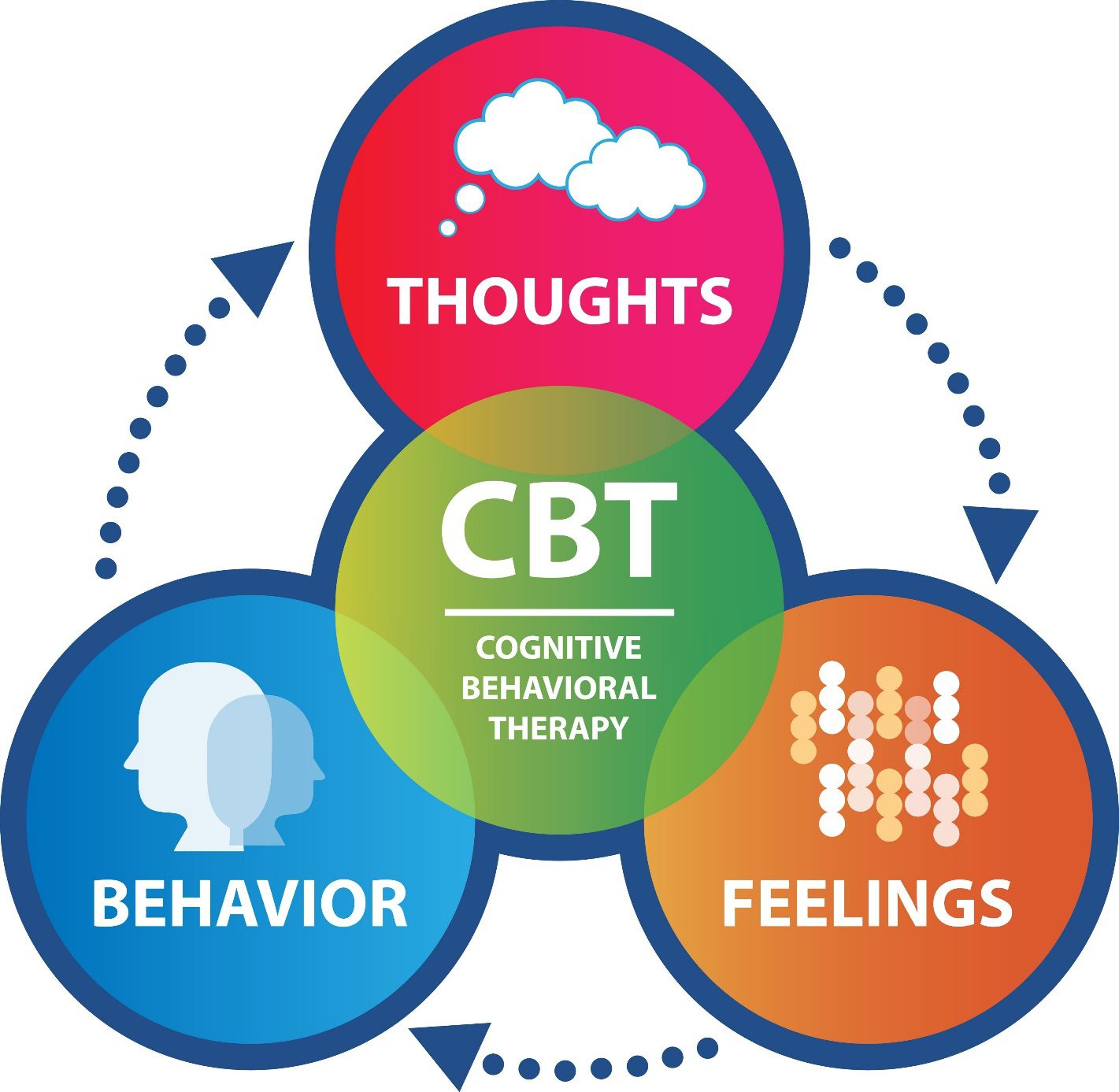
Before we can heal, we must identify exactly what we are healing from. In CBT, the primary obstacle to well-being is the Maintenance Cycle. This is a self-reinforcing loop where your thoughts, feelings, physical sensations, and behaviors lock together to trap you in a specific state of distress.
The Five Components of the Loop
To understand your cycle, you must be able to pull it apart into its constituent elements:
- The Trigger: This is the catalyst. It can be an external event, such as a sharp word from a manager, or an internal event, such as a sudden intrusive memory or a physical sensation of fatigue.
- The Interpretation: This is where the cycle gains its power. It is the automatic negative thought (ANT) that flashes through your mind. Examples include: “I’m not good enough,” “They are going to leave me,” or “I can’t handle this.”
- The Emotional Response: The interpretation creates an immediate emotional chemical surge—usually anxiety, shame, hopelessness, or intense anger.
- The Physiological Symptom: Because the brain perceives a threat, the body reacts. This manifests as a racing heart, shallow breathing, fatigue, “brain fog,” or muscle tension.
- The Safety Behavior: This is the action you take to stop the discomfort. While it feels helpful in the moment, it actually “maintains” the cycle. Common behaviors include avoidance, procrastination, social withdrawal, or seeking constant reassurance from others.
By healing your mind with CBT, you learn to interrupt this loop at the “Interpretation” phase. You learn that just because a thought occurs, it doesn’t mean it represents reality. Interrupting the interpretation prevents the emotional spiral before it gains enough momentum to crash your day.
Phase 2: Healing is Not the Absence of the Cycle
A major milestone in mental health recovery occurs when you realize that success isn’t the total disappearance of negative thoughts. It is the reduction of their power over your actions.
From “The Loop” to “The Spiral”
In the early stages of struggle, you are inside the cycle. You are the cycle. You feel the anxiety, you believe the thought as if it were an absolute truth, and you perform the safety behavior without a second thought.
Healing looks like moving to the outside of the circle. This is a process known as Cognitive Defusion. You still see the cycle happening, but you are no longer spinning with it. You might think, “Ah, there is that ‘I’m a failure’ thought again. My chest is getting tight. My brain is trying to get me to hide. I recognize this cycle.”
According to the National Institute of Mental Health (NIMH), developing these meta-cognitive skills—the ability to monitor and regulate your own thinking—is a primary factor in long-term psychological resilience. It is the difference between being a passenger in a car driven by fear and being the driver who notices a “low fuel” light but keeps their hands on the wheel.
Phase 3: The CBT Technique of “Functional Analysis”
To break a cycle, you must first understand its “function.” In the world of CBT, we assume that every behavior, even one that seems destructive or “crazy,” originally served a purpose.
Why We Self-Sabotage
Procrastination is rarely about laziness; it is often a cycle meant to protect the ego from the acute fear of failure or judgment. If you don’t finish the project, you can’t be judged as “not good enough”—you can only be judged as “unfinished.”
Mapping the Cycle with Data
Healing involves taking a “detective” approach to your distress. By using a Functional Analysis, we move away from “Why am I like this?” and toward “How does this work?” We look at:
- Antecedents: What were the environmental factors? Were you hungry, tired, or in a specific location?
- Behavior: What exactly did you do? Did you scroll on your phone for three hours? Did you snap at your partner?
- Consequences: What was the short-term payoff? (e.g., Avoidance made the anxiety go away for ten minutes). What was the long-term cost? (e.g., The anxiety returned ten times stronger the next morning).
When you map your cycles this way, the shame disappears. You realize you aren’t “broken”; you are simply using an outdated survival strategy that no longer fits your current life.
Phase 4: Integrating the Shadow
Sometimes, the cycles we repeat are rooted in parts of ourselves we have tried to hide, deny, or suppress because they were deemed “unacceptable” in childhood or past relationships. True inner transformation and CBT-informed growthoften require “Shadow Work.”
Curiosity Over Contempt
Shadow work in a CBT context involves looking at recurring patterns of pain and self-sabotage with curiosity instead of contempt. For example, if you have a cycle of pushing people away when they get too close, the “Shadow” might be a younger version of you that learned that closeness equals pain.
Healing looks like:
- Acknowledging the hidden part of you.
- Understanding why it created the cycle to protect you.
- Gently Teaching your nervous system new ways to feel safe in the present moment.
Phase 5: The Role of Emotional Safety in Breaking Cycles
Healing cannot happen in a vacuum of high stress. The human brain is biologically incapable of complex cognitive restructuring when it is in a constant state of “survival mode.”
Creating the Container for Growth
Breaking long-standing cycles requires a safe space for resilient growth. When you understand the cycle, you realize that you need an environment—and a community—that supports emotional regulation rather than constant triggers.
In a safe environment, your prefrontal cortex (the logical brain) can stay online. This is the part of the brain responsible for impulse control, planning, and objective reasoning. Without physical and emotional safety, the brain remains locked in the “amygdala hijack,” making the application of CBT tools nearly impossible. Healing looks like intentionally curating your environment to favor safety over chaos.
Phase 6: Practical Examples of the Healing Reframe
To move toward true sovereignty, we must move from the Automatic Narrative (where we are victims of the cycle) to the Intentional Narrative (where we are the authors of the response).
| Stage of the Cycle | The “Unhealed” Response | The “Healing” Response (CBT Reframe) |
| Trigger | “Here we go again. I’m failing. I’ll never change.” | “I recognize this trigger. My ‘smoke detector’ is going off because of a memory.” |
| Physical Sensation | Panicked breathing; feeling trapped and impulsive. | “This is just adrenaline and cortisol. It will pass in 90 seconds if I don’t feed it thoughts.” |
| Thought | “I need to give up/hide/run away.” | “This thought is a suggestion, not a command. Is it helpful right now?” |
| Behavior | Shutting down, withdrawing, or lashing out. | Opposite Action: Reaching out for support or taking one small, values-aligned step. |
Deep-Dive Reframing Examples
Healing is built on the ability to challenge the “distorted” signal. Below are common scenarios of the cycle in action and how the CBT Reframe breaks the loop.
- Scenario: A friend doesn’t text back for 24 hours.
- The Cycle: Thought: “They’re tired of me.” → Feeling: Abandonment/Anxiety → Behavior: Texting a passive-aggressive follow-up or “ghosting” them first to protect yourself.
- The Reframe: “I am noticing a story that they don’t like me. The evidence is only that they haven’t texted. They could be busy, tired, or overwhelmed. My value isn’t tied to their response time.”
- Scenario: You make a mistake on a work project.
- The Cycle: Thought: “I’m a fraud. They’re going to find out I’m incompetent.” → Feeling: Dread/Shame → Behavior: Procrastinating on the fix because looking at the mistake is too painful.
- The Reframe: “I am practicing ‘All-or-Nothing’ thinking. One mistake is not a measure of my entire career. This mistake is a signal of a specific area that needs attention, not a sign that I am a failure.”
- Scenario: A partner asks for “alone time.”
- The Cycle: Thought: “They are pulling away. This is the beginning of the end.” → Feeling: Panic → Behavior: Clinging, asking “are we okay?” repeatedly, or causing a fight to get an emotional reaction.
- The Reframe: “This is a boundary, not a rejection. Their need for space is about their own battery, not my worthiness. I can use this time to practice my own self-regulation.”
Phase 7: The “Relapse” vs. “Lapse” Distinction
One of the most important aspects of understanding the cycle is how you handle a setback. Many people abandon their healing journey the moment they “slip up,” believing that one bad day has erased six months of progress.
According to the CDC, mental health is dynamic and non-linear. To maintain growth, we must distinguish between two types of setbacks:
- A Lapse: A temporary, brief return to an old behavior (e.g., one night of overthinking or one day of avoidance). A lapse is a “glitch” in the system.
- A Relapse: A total abandonment of your tools, your mindset, and your community, resulting in a return to the old lifestyle.
Healing looks like treating a “lapse” as a learning opportunity rather than a catastrophe. You ask: “What triggered the cycle this time? Was I HALT (Hungry, Angry, Lonely, Tired)? Was it a boundary violation I ignored? How can I adjust my ‘Check Engine’ lights for next time?”
Phase 8: Interoceptive Awareness—The Early Warning System
As your healing progresses, you will find that your “early warning system” becomes more sensitive. This is the development of interoception—the ability to sense the internal state of your body.
Instead of realizing you are in a cycle after you have already spent three hours in bed avoiding the world, you begin to notice the very first signs. You feel the specific “twinge” in your chest or the sudden “hollowness” in your stomach.
In this phase, healing is about Somatic Regulation. You use physical tools—like the “dive reflex” (splashing cold water on your face) or weighted blankets—to settle the nervous system before the cognitive cycle even starts. You stop fighting the mind with the mind and start using the body to calm the brain.
Phase 9: The Power of Community in Breaking Loops
Isolation is the fuel that keeps negative cycles running. When we are alone, our distorted thoughts have no “reality check.” We fall into Emotional Reasoning, believing that because we feel like a failure, we are a failure.
Healing looks like bringing your cycles into the light of a supportive community. When you share your “maintenance loop” with others who understand CBT, they can help you spot the distortions you are too close to see. This external perspective acts as a mirror, showing you that the “intruder” in your mind is actually just a very tired, very scared part of your own history.
Conclusion: Reclaiming Your Sovereignty
Ultimately, healing means you have developed Self-Sovereignty. Sovereignty is not the power to stop the storm; it is the absolute confidence that you can sail the ship regardless of the weather.
You are no longer terrified of your own mind. You understand that the “Cycle” is simply a habit of the nervous system—a series of neural pathways that were burned into your brain during times of stress. Because the brain is neuroplastic, these habits can be reshaped through consistent CBT practice, radical self-compassion, and the courage to look at your patterns without blinking.
You are not your cycles. You are the observer of them, and that makes all the difference.
Take Your Next Step Toward Transformation
Healing is a practice, not a one-time event. At Better Mind Club, we provide the tools to help you stay on the path.
- Immediate Support: If you are feeling overwhelmed or in crisis, please visit our Emergency Support Page.
- Deepen Your Practice: Explore our comprehensive guide on overcoming overthinking and self-sabotage with CBT.
- Personal Growth: Are you ready to dive deeper into your personal cycles? Contact me to start your personalized healing process.
👉 BetterMindClub.com – Empowering Your Journey to Authentic Living
