
The 5-Minute Mindfulness Reset for Busy Women & Moms (Science-Backed Micro-Mindfulness Techniques)
By: Mary Walden for BetterMindClub.com
Introduction: The Overwhelm of Modern Life
The Motherhood and Career Tax
For many women—especially mothers—modern life doesn’t just “get busy.” It becomes a dense web of overlapping responsibilities: career expectations, parenting tasks, household coordination, mental load management, and the silent emotional labor of caring for everyone else’s needs.
This invisible strain creates what psychologists call a chronic stress loop, where your mind is constantly scanning for the next task, the next problem, or the next fire to put out. Over time, this can lead to:
- irritability
- overthinking
- burnout
- emotional exhaustion
- trouble sleeping
- difficulty focusing
- a sense of “mind clutter”
And the hardest part? You rarely get a moment to reset. Your nervous system stays stuck in reactive mode—leaving you feeling like you’re always behind, always tense, and never fully present.
The Power of Micro-Mindfulness
The good news: You don’t need long meditations, yoga sessions, or a full morning routine to reclaim your equilibrium.
Micro-mindfulness is the art of inserting small, powerful pauses into the rhythm of your day. These practices:
- take 2–5 minutes
- can be done anywhere
- require no equipment
- offer immediate nervous system relief
They work because they use the principles of Decentering—the ability to observe your thoughts without being swept away by them.
When you can step back from mental noise—even briefly—you instantly regain the clarity needed to respond wisely instead of reacting automatically. This article shares five evidence-based 5-Minute Mindfulness Resets that busy women and moms can use anytime, anywhere.
The Mechanism: Why 5 Minutes Works for Stress Management
Even a short pause can completely recalibrate your brain. The biological effects of micro-mindfulness are well-documented in clinical psychology and neuroscience, demonstrating rapid functional changes (Source: American Psychological Association (APA)).
Instant Activation of the Prefrontal Cortex
The Prefrontal Cortex (PFC)—responsible for focus, clarity, self-control, and planning—gets overshadowed when you’re stressed. Micro-mindfulness switches it back online, restoring the mental stability needed to process emotions and solve problems.
Rapid Amygdala Deactivation
When you’re overwhelmed, the amygdala (the brain’s fight-or-flight center) becomes hyperactive. A 5-minute mindful practice—especially one involving slow exhalation breathing—tells your body: “We’re safe. Calm down.” (Source: NIH research on slow breathing and stress response)
This:
- slows your heart rate
- reduces cortisol
- quiets emotional intensity
- softens tension in the body
Creating the Psychological Separation (Decentering)
The biggest shift happens when you create a gap between: the stressful thought, and your identity and reaction. This process is the core of effective thought management. (For more on this crucial skill, see our guide: Spiritual Growth & Alignment Through Practice).
Example:
Instead of “I’m failing at everything,”
you shift to: “I’m having the thought that I’m failing.”
This tiny shift transforms stress from a command into a mental event that you can choose to engage with—or not.
Addressing the Mental Load: The Quiet Destroyer of Peace
The Mental Load is the invisible, constant cognitive labor of managing household logistics, schedules, and future planning. For busy women, this load often manifests as relentless internal chatter—a form of chronic rumination.
Mindfulness and Cognitive Offloading
Micro-mindfulness helps here in two ways:
- Spotlighting the Chatter: By pausing and observing the “mind clutter,” you realize it’s a list of tasks, not a personal flaw. This creates immediate emotional distance.
- Prioritized Action: After a 5-minute reset, your restored PFC capacity allows you to quickly offload the most pressing thoughts onto a list or calendar, rather than letting them endlessly swirl and deplete your energy.
A brief reset allows you to move from passive rumination (“I have so much to do”) to structured clarity (“What is the one thing I can actionably do right now?”). To better manage mental clutter, read: Healing Your Mind with CBT: Overthinking, Procrastination, and Growth Mindset.
Overcoming Self-Judgment: The Myth of “Earning” the Break
The biggest psychological barrier for busy women is the guilt that says, “I don’t have time,” or “I haven’t earned this break.” This self-judgment is often rooted in the Should Statement distortion: I should always be productive.
Reframing Self-Care as Performance
A 5-minute mindfulness reset is not a luxury; it is a necessary performance tool. Instead of viewing the break as taking away from your tasks, view it as recharging the cognitive battery required to successfully complete them. Your mental clarity is your safety protocol. By choosing the reset, you are choosing intentional productivity over stressed-out reaction. This resilience is key to CBT Single Mother Support for Stress Management.
Five 5-Minute Mindfulness Resets
These are specifically crafted for moments of transition: before school drop-off, between meetings, before entering the house, while waiting in line, or when shifting from work mode to mom mode.
1. The Pause and Name Technique (2 Minutes)
Best for stopping spirals of Automatic Negative Thoughts (ANTs) before they start.
| Step | Action Detail | Focus/Mindfulness Benefit |
| 1. Stop | Pause your activity. Plant your feet. Take three slow breaths, extending the exhale longer than the inhale. | Anchor to Present. Calms the nervous system immediately. |
| 2. Name | Identify the dominant thought or emotion: “Stress,” “Irritation,” “Rushing,” “Overwhelm.” | Decentering. Naming creates emotional distance and clarity. |
| 3. Reframe | Tell yourself: “I am experiencing this emotion; it is not who I am.” Keep breathing slowly. | Cognitive Defusion. Decreases thought fusion and reactivity. |
Export to Sheets
Use this whenever you feel tension rising—during homework time, before a meeting, or when your brain is overloaded.
2. The Mindful Hand Wash (3 Minutes)
Turn a daily chore into a sensory reset. This transforms a mundane task into a grounding ritual, perfect when transitioning from one environment to another.
- Focus on the Water: Feel temperature, pressure, and movement.
- Attune to the Soap: Notice the scent, lather, and texture as it moves across your skin.
- Observe the Release: Watch the suds disappear down the drain and imagine the stress leaving your body.
This sensory immersion stops rumination and brings you into presence.
3. Body Scan: The Power of Gravity (5 Minutes)
Best for tension, anxiety, overstimulation, or emotional overload. When the mind is overwhelmed, the body follows. This practice uses gravity to pull you back into the present moment check resource at Harvard Health on using body scan for anxiety.
- Anchor Point: Sit or lie down comfortably.
- Tune into your body weight: Focus on the heaviness of your hips, legs, feet, and shoulders.
- Release: With each exhale, consciously allow tension in that specific area to be pulled down and released by gravity into the floor or chair.
By anchoring into weight and physical pressure, your nervous system receives a powerful “safe to relax” signal.
4. The 5-4-3-2-1 Grounding Technique (3 Minutes)
Resets sensory overwhelm and stops panic in its tracks. This is one of the fastest ways to redirect the brain from fear to presence here at Mindfulness research on trauma and grounding.
- 5 things you can see
- 4 things you can feel
- 3 things you can hear
- 2 things you can smell
- 1 thing you can taste
Your brain cannot simultaneously be in active sensory awareness and stuck in a thought spiral. This technique forces calm.
5. Mindful Transition: The Doorway Ritual (1 Minute)
Perfect for switching roles without carrying emotional residue. Every doorway becomes a reset button.
- Pause: Before crossing the threshold, pause and place a hand on the door frame, feeling its texture.
- Check-In: Inhale: “Leaving behind the last task/role.” Exhale: “Entering the next space with intention.”
- Cross Consciously: Step through with the energy you want in the next moment.
This tiny ritual dramatically reduces emotional carryover and helps you reset between work, parenting, and personal time.
When to Use Each Reset: A Quick Guide
| Stress State/Moment | Recommended 5-Minute Reset | Why It Works |
| Sudden Panic/Overload | 4. 5-4-3-2-1 Grounding | Instantly interrupts the fear cycle by overwhelming the brain with present-moment sensory data. |
| Before a Hard Conversation | 1. Pause and Name Technique | Decenters you from anticipatory anxiety and allows you to choose your words deliberately. |
| Transitioning Home from Work | 5. Doorway Ritual | Creates a firm boundary, preventing work stress from bleeding into family time. |
| Physical Tension/Fatigue | 3. Body Scan: Power of Gravity | Releases deep, unconscious muscle tension built up from stress. |
| Doing a Routine Chore | 2. Mindful Hand Wash | Replaces mental rumination with sensory engagement, refreshing focus. |
Export to Sheets
Applying the CBT Reframe: From Reaction to Clarity
Mindfulness creates the necessary space (Decentering) for your rational mind (PFC) to engage. Once you’ve paused, you can apply Cognitive Behavioral Therapy (CBT) reframing tools to actively challenge the stressful thought.
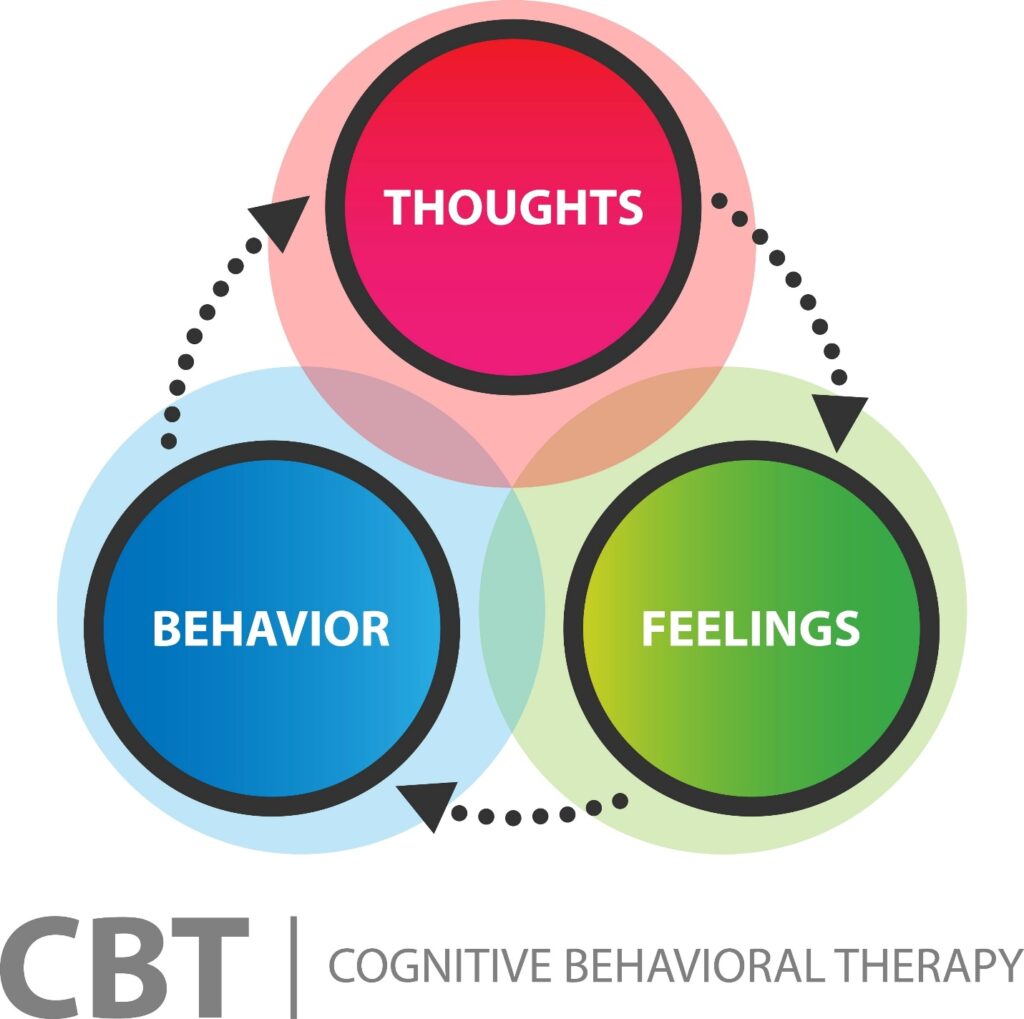
Thought-Feeling-Behavior Alignment
The moment you pause, you gain control over the cycle shown in the CBT Triangle. This is where you leverage the clarity from mindfulness to change unhelpful thought patterns. For a deeper dive into this alignment, check out: The CBT Mindset: Healing, Happiness, and the Science of Positive Change.
| Stressful Thought (Unchallenged ANT) | Cognitive Distortion | Balanced CBT Reframe (Realistic Outcome) |
| “I snapped at my child. I am a terrible mother and I’ve ruined their day.” | All-or-Nothing Thinking, Emotional Reasoning | “I am a loving parent who made a mistake under pressure. I can apologize and model healthy conflict resolution. This momentary lapse does not define my competence.” |
| “If I take a break now, everything will fall apart and I’ll be behind all week.” | Catastrophizing, Should Statements | “Taking a planned, five-minute reset is an investment that increases my focus and efficiency. The entire week will not collapse because I prioritized my energy.” |
| “My boss’s email was short; she must be disappointed in my work and think I’m incompetent.” | Mind Reading | “My boss is likely busy, and the email was purely logistical. I have received positive feedback recently, which is the actual evidence of my performance.” |
| “I should be able to handle all these demands without feeling stressed or needing help.” | Should Statements, Perfectionism | “No one can handle this level of complexity alone without feeling stress. It is healthy and responsible to recognize my limit and delegate or ask for help.” |
Export to Sheets
This combination—mindfulness first, CBT second—is one of the most effective ways to break lifelong stress patterns.
The Ripple Effect: Long-Term Benefits of Micro-Mindfulness
While the 5-minute resets offer immediate relief, their most profound impact is cumulative, creating long-term positive change.
Enhanced Response Flexibility
The more you practice Decentering, the larger the gap becomes between trigger and reaction. Over time, you stop reacting with anger or stress automatically and begin choosing a thoughtful response. This behavioral change improves all your interpersonal relationships—with your spouse, children, and colleagues—by replacing habitual emotional outbursts with calm, deliberate communication. This links directly to mastering your awareness: Emotional Intelligence: Mastering Your Emotions to Master Your Life.
Lasting Reduction in Chronic Rumination
By consistently interrupting the cycle of worrying and future-gazing with sensory anchors, you literally rewire the neural pathways associated with repetitive, unhelpful thought loops. This frequent disengagement trains your brain to quiet the Default Mode Network (DMN), the area responsible for mental wandering, making your default mental state naturally calmer and quieter.
Sustainable Energy Management
Micro-pauses prevent the deep troughs of energy that lead to burnout. Instead of powering through until exhaustion, which requires substantial recovery time, you maintain a consistent, manageable baseline of energy and patience throughout the entire day. This proactive energy management is the key to preventing chronic exhaustion, allowing you to be present and engaged when it matters most.
Next Steps: Deepening Your Practice
The Practice of Self-Compassion
Mindfulness and CBT are powerful when paired with self-compassion. After a challenging moment, instead of using your mental clarity to analyze your failings, use it to offer yourself kindness. Recognize that having stress or making mistakes is a normal part of being a human managing a busy life. This foundational self-acceptance removes a major barrier to mental peace.
The Power of Habit Stacking
To make these 5-minute resets a true habit, link them to an existing activity. This is called “habit stacking.” For instance, pair the Mindful Hand Wash with every trip to the bathroom, or use the Body Scan every time you sit down in your car before turning the ignition. By attaching the new habit to an old cue, you significantly increase your consistency.
Mindfulness is the foundation (Decentering). CBT is the toolkit (Reframe) you build on top of it.
Once you’ve used a micro-mindfulness reset to calm your system, you gain access to your rational mind—the part capable of challenging distorted thoughts.
For example, after labeling an emotion with the Pause and Name Technique, you can apply a CBT question like:
- “Is this thought a fact or a feeling?”
- “What evidence supports or contradicts it?”
- “Am I catastrophizing or mind-reading?”
👉 Ready to go deeper? Download our FREE CBT Tools & Worksheets and learn how to manage your thoughts with clinical-grade clarity—anytime, anywhere.
