
How Mindfulness Strengthens Your Ability to Manage Thoughts (Decentering + CBT Techniques Explained)
By: Mary Walden for BetterMindClub.com
Introduction: The Tyranny of the Automatic Mind
The Cycle of Automatic Negative Thoughts (ANTs)
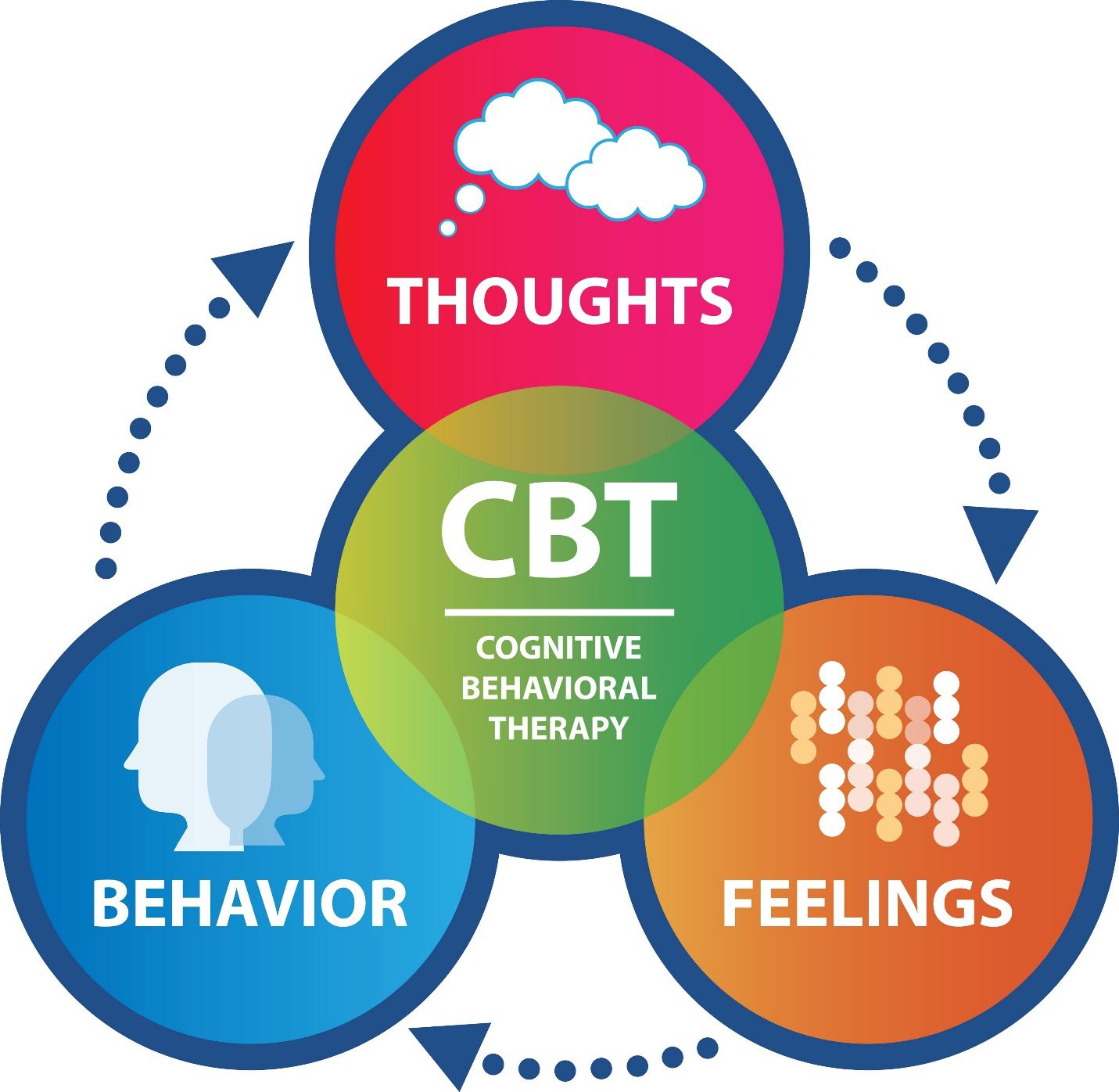
We often think of our minds as helpful tools, but for many, the mind can feel like a tyrannical boss, constantly delivering negative critiques and urgent worries. This relentless cycle is driven by automatic negative thoughts (ANTs), which trigger stress, anxiety, and unhappiness. If you struggle with breaking these cycles, you can explore our comprehensive guide on therapy types and methods for better mental clarity.
The Goal: Changing Your Relationship with Thoughts
The key to escaping this cycle is not to eliminate thoughts (an impossible task), but to fundamentally change your relationship with them. This is where mindfulness steps in. Mindfulness is the practice of paying attention, non-judgmentally, to the present moment. By practicing this simple act, you build a powerful mental distance, allowing you to manage your thoughts rather than being controlled by them.
Introducing Decentering
This article explores the core mechanism behind mindfulness’s thought-management power—the process of Decentering—and provides practical techniques, including CBT reframing, to help you gain control over your internal narrative. For more resources on mental health challenges, consult the National Institute of Mental Health (NIMH).
The Core Mechanism: Decentering and Psychological Space
Defining Cognitive Defusion
Mindfulness strengthens your ability to manage thoughts by developing a skill called Decentering (or Cognitive Defusion). This is the critical shift from seeing your thoughts as absolute truth to viewing them simply as passing mental events.
The Shift from Believer to Observer
When you are fused with a thought, you are inside it, treating the thought and reality as the same thing. For example, if you think, “I am a failure,” you instantly feel like a failure, and the feeling is accepted as truth.
Decentering creates a psychological gap between you and the thought. You move from:
- Believing: “I am a failure.”
- Observing: “I am having the thought that I am a failure.”
Harnessing Meta-Awareness
This subtle linguistic shift is immensely powerful. By observing the thought, you are using your meta-awareness—the ability to be aware of your own awareness. This distance allows your reflective mind to engage and allows you to choose how to respond, rather than reacting automatically to the thought’s content.
The Neuroscience of Thought Management
Decentering isn’t just a philosophical concept; it reflects measurable changes in how your brain processes information, moving control from the reactive centers to the reflective centers. This neuroplastic change is well-documented in clinical research, including work supported by theNational Institutes of Health (NIH).
Reduced Amygdala Activity
Regular mindfulness practice reduces activity in the amygdala, the brain’s alarm bell. This is why you experience less intense fear or shame when a negative thought arises, giving you time to apply management tools like CBT.
Increased Prefrontal Cortex (PFC) Control
The PFC is responsible for decision-making, planning, and executive control. Mindfulness increases connectivity and activity in the PFC, strengthening its ability to override the automatic, emotional signals sent by the amygdala. This is the neuroscientific basis for your ability to catch a thought and choose your response.
Quieting the Default Mode Network (DMN)
The DMN is the brain network active when your mind is wandering, often associated with rumination and self-referential negative chatter. Mindfulness trains you to disengage from the DMN, literally reducing the brain activity associated with getting stuck in repetitive loops of ANTs.
Four Ways Mindfulness Rewires Thought Management
The regular practice of mindfulness (like meditation or the body scan) strengthens the brain’s ability to activate Decentering in high-stress moments.
1. Increases Attentional Control
By repeatedly bringing your attention back to the breath, you strengthen the prefrontal cortex—the brain’s executive control center. This heightened control means you can “catch” the thought before it spirals.
2. Reduces Emotional Reactivity
Mindfulness practices calm the amygdala. This decreases the intensity of the emotional response associated with a triggering thought, leading to a mild, manageable feeling rather than strong fear/shame.
3. Fosters Non-Judgmental Acceptance
Mindfulness teaches you to observe your internal experience without immediate criticism, preventing the trap of being angry at yourself for having negative thoughts.
4. Breaks the Rumination Cycle
By using the Labeling Technique (“Thinking,” “Worrying”), you interrupt the compulsive dwelling on negative thoughts, transforming the thought from an all-consuming reality into a mental object you can choose to put down.
Identifying Cognitive Distortions
Before you challenge a thought with CBT, mindfulness helps you identify what kind of unhelpful thinking pattern is at play. These are known as Cognitive Distortions—biased ways of viewing the world.
The Mindfulness Advantage
Mindfulness provides the stillness and awareness to see the pattern of the thought, not just its content. For example:
- Mindfulness Catch: You notice your mind jumping immediately to the worst conclusion after a minor setback.
- CBT Identification: You realize this is Catastrophizing.
Once the pattern is identified, you can select the most appropriate CBT tool for reframe.
| Cognitive Distortion | Definition (The Mistake) | Example Thought |
| All-or-Nothing Thinking | Seeing things in only black or white extremes (perfect or failure). | “I missed one deadline, so this whole week is a total disaster.” |
| Mind Reading | Believing you know what others are thinking without concrete proof. | “My coworker didn’t smile at me, so they must hate me and think I’m incompetent.” |
| Should Statements | Rigid rules about how you and others must behave, leading to guilt or anger. | “I should be able to handle all these tasks by myself without feeling stressed.” |
Bridging the Gap: Using CBT After Decentering
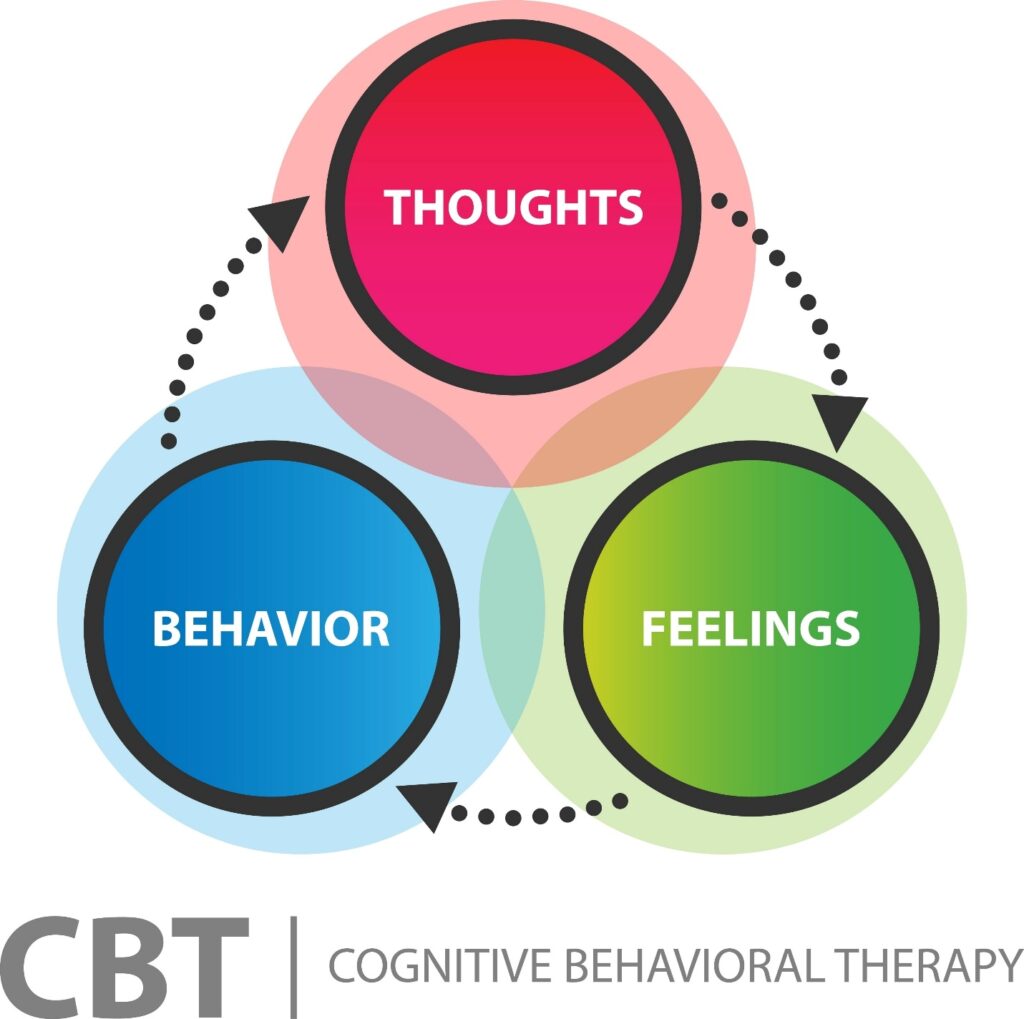
Mindfulness provides the space needed to manage a thought; Cognitive Behavioral Therapy (CBT) provides the tools to restructure or dismiss that thought. Once you’ve successfully Decentered, you can apply these CBT techniques instead of automatically reacting.
1. The Evidence Test (Challenging Fact vs. Opinion)
This technique forces you to test the validity of a negative thought against concrete, observable facts.
| Automatic Negative Thought (ANT) | The Evidence Test (CBT Question) | Balanced Cognitive Reframe |
| “I’m a terrible employee because my boss gave me a correction.” | What is the proof I am ‘terrible’? The boss praised the other 90% of the project. A correction is a normal part of work, not proof of global failure. | “I am a competent employee. This feedback is specific to one section, which I can improve.” |
Export to Sheets
2. Cognitive Reappraisal (Shifting Interpretation)
This helps you find a non-catastrophic, functional alternative to your initial negative interpretation.
| Distorted Thought (Problem-Focused) | The Reappraisal Question (CBT Question) | Balanced Cognitive Reframe (Solution-Focused) |
| “I’ll never finish this giant project; it’s hopeless.” | What is another, more balanced way to look at this difficulty? | “This project is challenging and requires a plan. I will break it down into four manageable steps and focus only on Step 1 today.” |
3. De-catastrophizing (“So What?”)
This technique confronts the worst-case fear and neutralizes its emotional impact by calculating the actual, long-term consequences.
| Catastrophic Prediction (Worst-Case) | The Consequence Question (CBT Question) | Balanced Cognitive Reframe (Realistic Outcome) |
| “If I say ‘no’ to my friend’s request, they will be furious and end the friendship.” | If they got mad, what is the realistic, lasting impact?Have they ended a friendship over a ‘no’ before? No. | “It is uncomfortable to say ‘no,’ but a good friendship can tolerate an occasional boundary. I will say ‘no’ politely and offer an alternative time.” |
Integrating Decentering into Daily Life
The power to manage thoughts comes not just from formal sitting meditation, but from applying mindful awareness throughout your day.
Mindful Pauses
Intentionally set an alarm or reminder to take three slow, deep breaths several times throughout your day. Use this brief pause to check in: “What am I thinking right now?” Simply observing the thought without analysis is a micro-practice of Decentering.
Mindful Transitions
Use routine transitions (like opening a door, switching tasks, or waiting for coffee) as an anchor. Focus your attention entirely on the physical sensations of that transition. This interrupts the autopilot mode where ANTs thrive and forces the PFC to engage with the present.
Overcoming the Biggest Obstacle: Restlessness
Many beginners quit mindfulness because they find it boring or feel more restless. This is actually a positive sign that you are noticing the usual “doing” mode of your mind.
The Acknowledgment and Release Technique
When restlessness or boredom arises during practice, use this two-part technique:
- Acknowledge: Mentally label the sensation or thought: “Restlessness” or “Boredom.” (Decentering)
- Release: Gently shift your attention back to your breath or body anchor, releasing the need to act on the feeling. (Attentional Control)
By treating restlessness as a passing sensation rather than an order to stop, you strengthen your management muscles precisely when they are being challenged.
Long-Term Benefit: Cultivating Self-Compassion
When you decouple your identity from your negative thoughts, the result is often a profound increase in self-compassion.
The Decoupling Effect
Decentering helps you recognize that negative self-talk is a common, often inherited, mental habit—not a reflection of your worth. You realize the thought is the enemy, not you.
The Active Challenge
By using the CBT evidence test, you actively challenge the self-critical narratives that cause emotional pain. This replaces self-judgment with self-correction.
Result: Kindness in Setbacks
The combination allows you to treat yourself with the same kindness and understanding you would offer a struggling friend, transforming the way you approach setbacks and internal conflicts.
Practical Exercise: The “Thoughts as Clouds” Technique (How-To)
This simple technique is a direct application of Decentering to manage intrusive thoughts in real time.
- Anchor: Sit comfortably and take a few deep breaths, focusing on the feeling of air entering and leaving your body. This is your anchor to the present moment.
- Visualize: Imagine your mind is the vast, open sky. Now, imagine each incoming thought, no matter how urgent or negative, as a cloud.
- Observe: Watch the thought-cloud as it slowly drifts across the sky of your awareness. Note its shape, color, and size (its urgency, its content), but do not follow it.
- Allow to Pass: Do not try to hold onto the cloud or push it away. Simply let the cloud continue to drift until it disappears on its own.
- Return: Once the cloud has passed, gently return your attention to your breath (your anchor) and the vast, open sky of your awareness.
By consistently practicing techniques like this, you teach your brain that thoughts are temporary atmospheric events, not solid realities, significantly strengthening your ability to manage them effectively.
Frequently Asked Questions (FAQs)
Q: How long does it take for mindfulness to start managing my thoughts?
A: While some people notice a subtle difference in awareness (the ability to Decenter) within the first week of daily practice, measurable changes in emotional reactivity (amygdala reduction) typically take 8 to 12 weeks of consistent practice (10-20 minutes per day). The key is consistency, not duration.
Q: Can mindfulness replace traditional therapy (CBT)?
A: Mindfulness is a powerful supplement, not a replacement. Mindfulness (Decentering) gives you the space to observe the thought. CBT gives you the tool (like the Evidence Test) to analyze and restructure the thought’s content. The two modalities work best when used together.
Q: What should I do if a negative thought feels 100% true?
A: This is a perfect time to use the CBT Evidence Test. Separate the feeling from the fact. Even if the thought has some basis in reality (e.g., “I did make a mistake”), use Cognitive Reappraisal to find a balanced perspective: “Making a mistake doesn’t define my entire competence; it just means I have an opportunity to learn.”
Take Control: Start Your Practice Today
Mindfulness isn’t about emptying your mind; it’s about shifting your identity from the contents of your thoughts to the awareness that observes them. This power to observe, label, and let go is the ultimate path to cognitive freedom and sustained emotional resilience. By using mindfulness to create space and CBT to challenge content, you gain complete control over your internal narrative.
Ready to build the foundation for lasting mental clarity?
👉 Download our FREE CBT Tools and Worksheets to start challenging your thoughts today!
