
Recognizing Emotional Triggers: Your First Step to Self-Mastery and Resilience
By: Mary Walden for BetterMindClub.com
Introduction: Why Triggers Hold the Key to Your Emotions
Everyone has moments where a seemingly small event—a critical comment, a sudden change of plans, or a particular tone of voice—sends their emotions spiraling. These moments are driven by emotional triggers, which are stimuli that activate intense, often disproportionate, emotional responses based on past experiences.
At BetterMindClub.com, we teach that achieving true emotional resilience begins not with controlling your feelings, but with understanding their roots. This guide will provide you with the CBT-based techniques necessary for recognizing emotional triggers, allowing you to reframe negative thoughts and take back control of your reactions. Mastering this first step is crucial for profound personal growth and lasting mental wellness.
The Core Value of Awareness
Indeed, identifying a trigger is the process of turning an automatic, subconscious reaction into a conscious piece of data. Consequently, without this awareness, you are perpetually reacting to external events. Therefore, recognizing the trigger acts as an internal circuit breaker, creating the necessary pause to apply strategies from Cognitive Behavioral Therapy (CBT) and choose a measured response. For authoritative context on this approach, see resources from the National Institute of Mental Health (NIMH) on psychotherapies.
Analyzing the Reaction Gap: From Subconscious to Conscious Control
Furthermore, this “circuit breaker” function is where genuine self-improvement begins. By inserting a beat of awareness—the Reaction Gap—between the trigger and the resulting emotional storm, we introduce the opportunity for conscious intervention. This move from an automatic, limbic system response to a deliberated, prefrontal cortex action is the very definition of emotional regulation, allowing for the deployment of sophisticated CBT techniques instead of reflexive behavior. Cultivating this self-awareness fundamentally reduces your vulnerability to disruptive emotions.
The Anatomy of an Emotional Trigger: What’s Happening Inside?
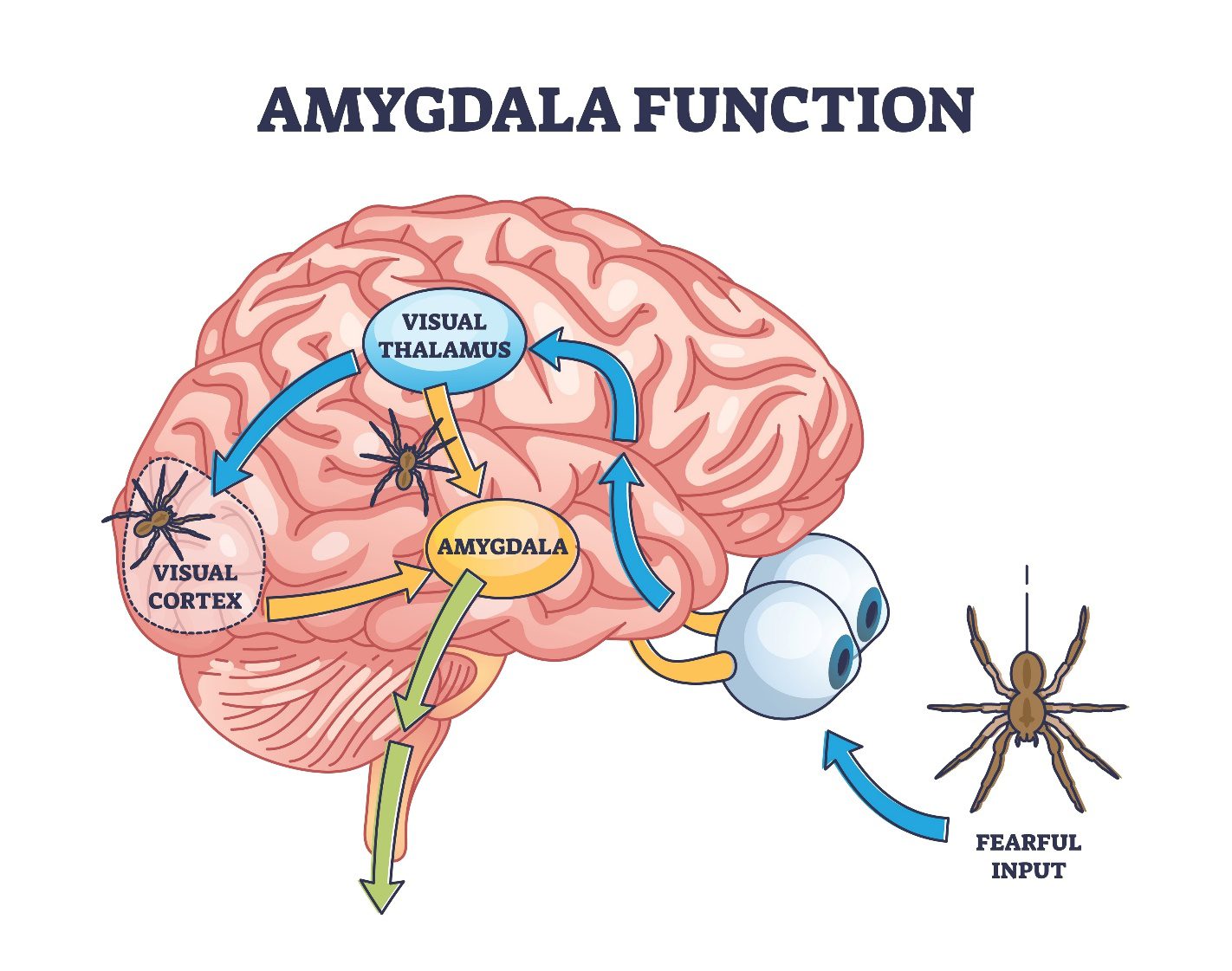
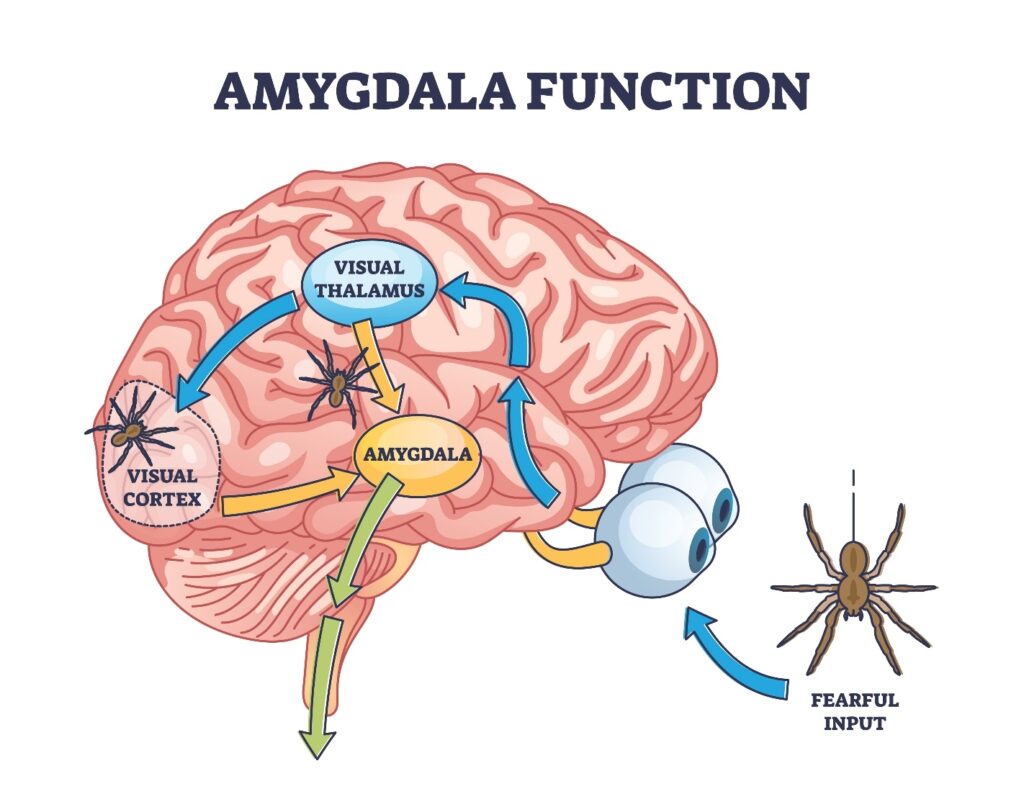
An emotional trigger is rarely about the present event; it’s an echo of the past. The stimulus (the trigger) bypasses your rational mind (prefrontal cortex) and activates the brain’s emotional center (amygdala), leading to an immediate, powerful emotional reaction.
External vs. Internal Triggers
To effectively begin recognizing emotional triggers, you must categorize them:
| Trigger Type | Description | Common Examples |
| External | Events, people, or situations outside of you. | A loud noise, a demanding email, being late, encountering a specific person. |
| Internal | Thoughts, memories, physical sensations, or images inside of you. | A sudden memory of a past failure, physical fatigue/hunger, feelings of loneliness, certain smells or sounds. |
Furthermore, understanding this distinction is foundational for self-improvement. Ultimately, while you cannot control external triggers, you can absolutely control your internal responses and develop coping mechanisms for both.
The Role of the Vicious Cycle: Reinforcing Negative Patterns
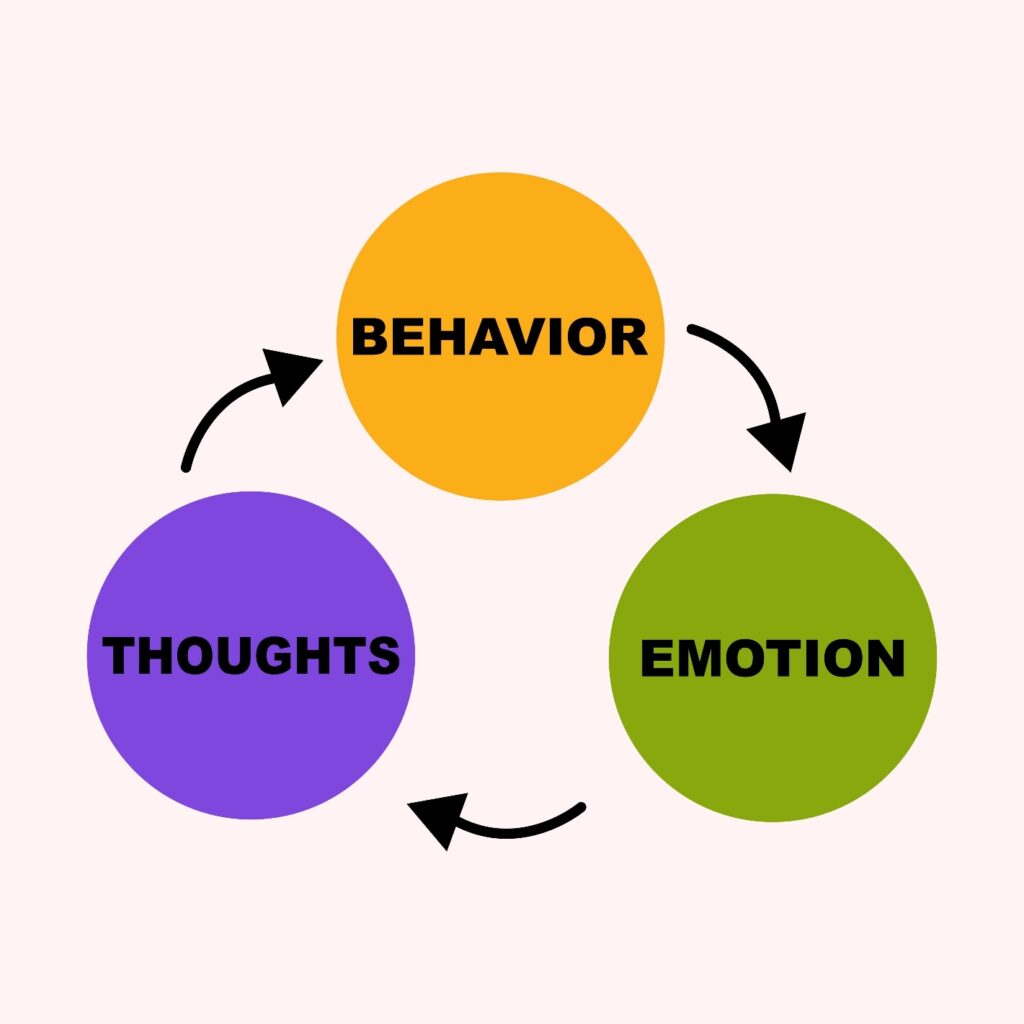
Importantly, unresolved internal and external triggers often feed a Vicious Cycle. For instance, an external trigger (a demanding email) can create an internal trigger (the thought: “I am overwhelmed and incompetent”), which then reinforces the urge to avoid work, thereby strengthening the original self-limiting belief. Recognizing emotional triggers means identifying both sides of this cycle to break the loop, which is essential for achieving mental wellness and preventing burnout. This is core to developing stress tolerance.
Three CBT Steps for Recognizing Emotional Triggers
The most effective way to identify and neutralize triggers is through structured introspection, a core component of Cognitive Behavioral Therapy (CBT).
1. The Retrospective Review (The “Catch”)
The first step is a technique called Retrospective Review—analyzing an event shortly after the intense emotional reaction has passed. This is where you connect the dots between the situation and your feeling.
Consequently, this review process should be systematic. Ask yourself, “What was the single moment or phrase that immediately preceded the intense feeling?” Often, it’s not the entire meeting, but a specific word, gesture, or implied criticism. By pinpointing the exact micro-event, you isolate the true emotional trigger.
Actionable Examples (Expanded):
| Situation | Immediate Feeling (Intensity) | The Exact Trigger |
| Example 1: Colleague gave performance feedback. | Feeling: Shame/Anger (9/10) | Trigger: The phrase: “You missed a critical detail, which shows a lack of diligence.“ |
| Example 2: Partner was quiet during dinner. | Feeling: Abandonment/Panic (7/10) | Trigger: The sight of them scrolling on their phone while not making eye contact. |
| Example 3: Boss added an urgent task late Friday. | Feeling: Rage/Resentment(8/10) | Trigger: The use of the word “must” in the email subject line (felt controlling). |
| Example 4: Failed to get a desired job interview. | Feeling: Hopelessness/Worthlessness(10/10) | Trigger: The sudden memory of being cut from a high school team years ago (internal trigger). |
| Example 5: Friend gave unsolicited advice about finances. | Feeling: Defensiveness/Insecurity(7/10) | Trigger: The patronizing toneand the phrase, “I think you need to be more realistic.” |
Developing Enhanced Self-Awareness
Beyond the immediate capture of the stimulus, this technique cultivates genuine self-awareness. Specifically, by repeatedly logging these emotional incidents, you move past the surface feeling (like “anger”) and start to grasp the deeper, more vulnerable emotions (like “fear of rejection”). This practice of emotional fluency is crucial for bolstering your internal stress tolerance and becoming an active participant in your own mental wellness.
2. Identifying the Underlying Core Belief
Once you have isolated the trigger, you use CBT techniques to uncover the Core Belief—the deep-seated rule you hold about yourself or the world that the trigger violates.
In addition, common Core Beliefs that fuel triggers include: “I must be perfect to be accepted,” “I am unlovable,” or “The world is unsafe.” Therefore, when the trigger hits (“lack of diligence”), it confirms your deepest fear (Core Belief: “I must be perfect…”), causing the intense emotional flood.
Specifically, to find your core belief, use the “Down Arrow” technique: take the trigger-thought and ask, “If this were true, what would that mean about me?” Keep asking until you hit a fundamental, painful self-judgment. (Internal Link: [Download Our Free CBT Thought Record Worksheet for this exercise])
Mapping Internal Vulnerabilities
Furthermore, mapping these internal vulnerabilities is an act of deep self-improvement. This is because the emotional trigger is simply the delivery mechanism for the Core Belief. Consequently, understanding that the partner’s phone use triggers a belief of “I am not important” (Core Belief: “I am unlovable”) transforms the conflict from external (the phone) to internal (the belief), allowing you to focus your energy on cognitive change rather than fighting an external behavior. This process shifts the locus of control entirely inward, leading to profound personal growth.
3. Proactive Trigger Mapping and Anticipation
The final step in recognizing emotional triggers involves mapping them out and using anticipatory coping.
Furthermore, once you know your common triggers (e.g., loud arguing, feeling ignored, or sudden unexpected tasks), you can stop being a victim of them. Instead, you proactively label the situation before it happens: “I am about to enter a meeting where I know my boss critiques work publicly (Known Trigger: Public Criticism).”
Moreover, this simple pre-labeling gives your rational brain the warning it needs. Thus, you switch from reacting automatically to deploying an immediate coping strategy, like the “3-Breath Pause” or a pre-planned cognitive reframe (e.g., “This critique is about the project, not my worth”). This consistent practice significantly builds emotional fortitude.
Mastering Proactive Self-Regulation
By adopting this proactive stance, you shift your mindset from merely reacting to intentionally regulating. Ultimately, this repeated exposure to known triggers while successfully applying CBT coping skills diminishes the amygdala’s automatic fear response. This practice of anticipating the emotional spike and deploying a strategy beforehand is the highest level of self-management and leads to verifiable increases in psychological durability. This is the pathway to true self-mastery.
Reframing the Trigger: From Threat to Opportunity
The goal of recognizing emotional triggers is not to eliminate your emotions, but to reframe negative thoughts so the trigger no longer controls you. This is where CBT’s Cognitive Restructuring is applied.
| The Trigger-Activated Thought | The Reframe (High Emotional Resilience) |
| Trigger Thought: “The criticism means I’m incompetent.” (Catastrophizing) | Balanced Reframe: “Criticism is feedback on an action, not judgment of my entire competence. I will focus on the data and ignore the tone.” |
| Trigger Thought: “The silence from my friend means they hate me.” (Mind Reading) | Balanced Reframe: “I don’t know what they are doing. I will assume they are busy and wait 24 hours before sending a neutral follow-up text.” |
| Trigger Thought: “Being told what to do means I am controlled and powerless.” (External Locus of Control) | Balanced Reframe: “I have the power to choose how I respond to instructions. I will complete the task efficiently and then regain control of my schedule.” |
| Trigger Thought: “The job rejection proves I’m a failure and should give up.” (Global Labeling) | Balanced Reframe: “This rejection is data for improvement, not a verdict on my worth. I will review the feedback and apply to two more jobs by the end of the week.” |
Ultimately, this conscious choice to reframe negative thoughts and challenge automatic assumptions is the essence of personal growth. For more professional resources on effective coping mechanisms, review the American Psychological Association (APA) guide on managing emotions.
The Neuroplasticity Benefit: Rewiring the Brain
The consistent application of Cognitive Restructuring provides a profound neuroplasticity benefit. Each time you successfully interrupt the automatic trigger-response cycle with a balanced reframe, you weaken the old neural pathway (amygdala reactivity) and strengthen the new one (prefrontal cortex control). Over time, this literally rewires the brain for calmness, meaning that the old emotional triggers eventually become neutral stimuli, solidifying your emotional resilience and establishing self-mastery as the default setting.
Action Plan: Mastering Your Triggers for Mental Wellness
Recognizing emotional triggers is an ongoing practice that fuels your self-improvement journey. Integrate these steps into your daily routine for sustained mental wellness:
- Start a Trigger Journal: Immediately after an emotional reaction (e.g., anger, intense shame), log the exact trigger and the corresponding Core Belief it violated.
- Practice The 3-Breath Pause: Whenever you feel a trigger starting, physically stop and take three deep breaths. This creates the window needed to choose a reframe.
- Use Proactive Labeling: Before entering a potentially triggering situation (e.g., a family gathering, a deadline review), label the expected trigger and plan your rational response in advance.
By consistently applying these CBT techniques, you transition from being a passive recipient of your emotions to an active manager of your internal life.
Consistency is Key: Building Psychological Durability
To ensure the long-term effectiveness of your Action Plan, focus on consistency rather than perfection. Missing a day of journaling or reacting strongly to a trigger is not failure; it is data. The cumulative effect of these small, daily acts of self-management is what builds true psychological durability and lasting emotional resilience. Commitment to this systematic practice is the non-negotiable factor in achieving self-mastery over your emotional landscape.
The Power of Weekly Review: Data-Driven Self-Improvement
Finally, to accelerate your personal growth, dedicate 15 minutes each week to review your Trigger Journal. Look for recurring patterns—are most triggers related to fear of rejection (a core belief) or unpredictability (an external factor)? By systematically analyzing your logged data, you move beyond mere tracking to data-driven self-improvement, allowing you to continuously fine-tune your coping strategies and achieve a higher level of mental wellness with documented evidence of your progress.
Conclusion: The Path to Emotional Self-Mastery
Recognizing emotional triggers is more than just a technique; it is a declaration of self-respect and commitment to emotional resilience. Every trigger identified is one less moment where your past dictates your present.
At BetterMindClub.com, we are here to support every step of your journey toward self-improvement and lasting mental wellness. Take control of your narrative by understanding where your emotional story truly begins.
Ready to start mapping your path to emotional self-mastery? 👉 Explore our CBT resources and download your Free Thought Record Worksheet today! (Internal Link: Bettermindclub.com/cbt-resources)
Additional Authoritative Resources for Mental Wellness
To further your understanding of the clinical basis of these practices, we recommend reviewing the following organizations:
- American Psychological Association (APA): For comprehensive research and information on psychological health.
- National Institute of Mental Health (NIMH): For resources on psychotherapies and managing anxiety and depression.
- National Alliance on Mental Illness (NAMI): For support and educational materials related to severe mental health conditions.
