

Emotional Labor: The Invisible Weight Single Mothers Carry
By: BetterMindClub.com
In the traditional discourse on parenting, we often focus on the “visible” labor: packing lunches, driving to soccer practice, and managing household chores. But for single mothers, the most exhausting part of the job is often the work that no one sees.
This is Emotional Labor. It is the constant “mental load” of anticipating needs, regulating the household’s emotional temperature, and managing the psychological well-being of children—all while suppressing one’s own stress. Over time, this invisible weight can lead to Caregiver Burnout and a loss of self-identity.
By integrating Cognitive Behavioral Therapy (CBT), single mothers can move from being “emotional sponges” to “emotional architects,” reclaiming their mental energy and building a more sustainable life.
To explore our broader mission of mental resilience, visit our About Me page or browse our All Writingsfor resource-heavy guides on navigating life’s transitions.
1. Defining Emotional Labor in a Single-Parent Context
Emotional labor, a term first coined by sociologist Arlie Hochschild, refers to the effort required to keep your emotions in check to make others feel comfortable or cared for. In a household, this means being the “buffer” for everyone else’s bad moods while never having a buffer for your own.
The Mental Load vs. Emotional Labor
While the Mental Load is the logistical “project management” of the home (remembering doctor appointments, school spirit days, and grocery lists), Emotional Labor is the heart-work. It’s the effort spent soothing a child’s anxiety about a distant father, managing the guilt of being the “only” parent, and maintaining a calm exterior when you feel like you are crumbling.
The Psychological Cost of Presence
For single mothers, emotional labor involves a high degree of Emotional Regulation. You are not just raising children; you are managing the fallout of a broken structure. This requires constant vigilance. You aren’t just making dinner; you are assessing your toddler’s mood to prevent a meltdown, while simultaneously processing your own grief or exhaustion in silence so as not to “burden” the kids.
The Impact of “Always-On” Mode
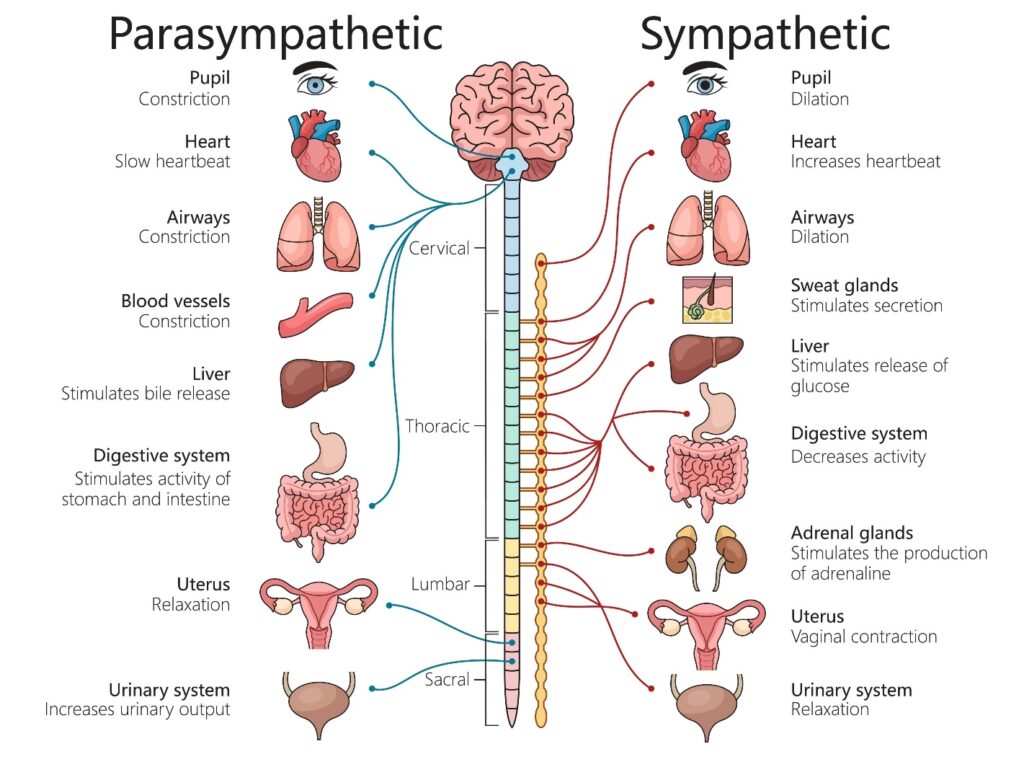
Research from the American Psychological Association (APA) highlights that single parents report significantly higher levels of chronic stress than partnered parents. This is because there is no “off-shift.” When a single mother is the sole emotional regulator, her nervous system rarely leaves a state of high alert. This chronic activation of the Sympathetic Nervous System can lead to long-term health complications.
2. The Cognitive Distortions of the “Supermom”
CBT teaches us that our suffering is often amplified by Cognitive Distortions—biased ways of thinking that fuel negative emotions. For single mothers, several specific distortions often drive the “Supermom” myth, making the invisible weight feel twice as heavy.
The Tyranny of “Should” Statements
“I should be able to do this all without complaining.” or “I should be happy to spend every second with my kids.” These “shoulds” create a toxic cycle of guilt. They ignore the biological reality of human limits. When you fail to meet an impossible standard, the “should” turns into a whip, leading to depression and feelings of inadequacy.
All-or-Nothing Thinking
This distortion convinces you that if you aren’t a perfect mother, you are a complete failure. “If the house is messy, I’ve lost control of my life.” This binary thinking leaves no room for the “messy middle” where most of life actually happens. It keeps the single mother in a state of perfectionistic paralysis.
Emotional Reasoning and Catastrophizing
“I feel overwhelmed right now, therefore my life is a disaster.” Emotional reasoning mistakes a temporary feeling for an objective fact. This often leads to Catastrophizing, where one bad afternoon results in a mental spiral: “My child is crying today, which means they will grow up traumatized because I’m a single parent.”
Activity: The Responsibility Pie Chart
In CBT, we use the Responsibility Pie to combat the distortion that you are 100% responsible for everyone’s happiness. Draw a circle and divide it based on the actual evidence.
How much of the “emotional weight” is truly yours? How much belongs to external circumstances like inflation, a co-parent’s choices, or a lack of societal safety nets? Visualizing that you are only responsible for your response—not the entire situation—can provide immediate cognitive relief.
3. CBT Technique: Cognitive Reframing for Caregiver Guilt
Guilt is the primary fuel for excessive emotional labor. Mothers often over-function because they fear their children are “missing out” due to the absence of a second parent. This “over-functioning” is a maladaptive coping mechanism to soothe the mother’s own anxiety.
Identifying “Hot Thoughts”
A “Hot Thought” is an emotionally charged belief that triggers an immediate physiological reaction. For single moms, these thoughts usually center on the children’s future or the mother’s perceived lack of “strength.”
Moving from Guilt to Grace
To rebuild your internal sanctuary, use the following CBT Reframes to challenge your inner critic:
| The “Hot” Thought | The Distortion | The Evidence-Based Reframe |
| “My kids are damaged because I’m a single mom.” | Labeling / Fortune Telling | “Research shows children thrive in stable, loving environments regardless of the number of parents. My love is enough.” |
| “I have to be both mom and dad.” | Overgeneralization | “I am one person. I will provide a loving home, and my children will find other role models in teachers, coaches, and family.” |
| “Self-care is selfish when they need me.” | Emotional Reasoning | “Self-care is a biological necessity. A regulated mother is the best gift I can give my children. I cannot pour from an empty cup.” |
| “If I ask for help, I’m admitting defeat.” | Mind Reading | “People generally value being asked to help. Utilizing a support system is a sign of resourcefulness, not weakness.” |
For more on integrating spiritual presence into these reframes, see our guide on Prayer, Presence, and Emotional Regulation.
4. Somatic Grounding: Regulating the Regulator
You cannot regulate your children if your own nervous system is stuck in “Fight or Flight.” Emotional labor often manifests as physical tension—headaches, chronic back pain, or a “tight” chest. This is the body keeping the score of the invisible weight.
The Science of the Vagus Nerve
The Vagus Nerve is the “superhighway” of the parasympathetic nervous system. When we are stressed, this nerve is suppressed. By using somatic techniques, we can “reset” the Vagus Nerve, moving the body from a state of panic to a state of calm.
The 5-Minute “Oxygen Mask” Ritual
Use Somatic Grounding to drop the invisible weight throughout the day:
- Box Breathing: Inhale for 4 counts, hold for 4, exhale for 4, and hold for 4. This rhythm sends a direct signal to the brain that there is no immediate physical threat, allowing the prefrontal cortex to come back online.
- Progressive Muscle Relaxation (PMR): Tense and then release each muscle group, starting from your toes and moving to your jaw. This helps you identify where you are “carrying” your emotional labor physically.
- Sensory Anchoring (5-4-3-2-1): Name 5 things you see, 4 you feel, 3 you hear, 2 you smell, and 1 you taste. This pulls you out of the “future-tripping” mental load and anchors you in the safety of the present moment.
5. Setting “Emotional Boundaries” Using Behavioral Activation
Many single mothers fall into the trap of Enmeshment, where their emotional state is entirely dependent on their child’s mood. If the child is sad, the mother feels she has failed and must “fix” it immediately. This is exhausting and prevents children from learning their own regulation skills.
Reclaiming the “Self”
Behavioral Activation—a core CBT tool—helps you reclaim your identity outside of motherhood. It involves intentionally choosing activities that provide a sense of Pleasure or Mastery.
Creating Small Pockets of Self-Reliance
- Identify a Values-Based Action: What did you love before you were “just” a mom? (e.g., Reading, hiking, art, or learning a language).
- Schedule It: Treat a 15-minute hobby as a non-negotiable appointment. Even if the laundry isn’t done, the appointment stands.
- Observe the Resistance: When the “guilt” thoughts arise, label them: “There is the ‘Mother-Guilt’ thought again. I am acknowledging it, but I am choosing to fulfill my own needs anyway.”
This practice builds Self-Efficacy, the belief that you can manage your own life and needs independently of your role as a parent. This reduces the resentment often tied to heavy emotional labor.
6. Statistics: The Reality of the Single Motherhood Gap
The weight you feel is not “all in your head.” It is a structural reality backed by hard data. Acknowledging this can help reduce the personalization of your stress.
The Mental Load Disparity
According to Pew Research, even in two-parent households, mothers perform a disproportionate share of the cognitive labor. In single-parent homes, that figure jumps to 100%. There is no one to “hand the baton to” when you are tired.
Financial Stress and “Survival Labor”
Statistics from the U.S. Census Bureau indicate that single-mother families are nearly five times as likely to live in poverty as married-couple families. This adds a layer of Survival Labor—the emotional work of hiding financial stress from children—to an already heavy load.
Long-term Health Impact
Chronic stress isn’t just a feeling; it’s a physiological taxing. A study published in the Journal of Women’s Health found that the chronic stress of single motherhood is linked to a 40% increase in the risk of cardiovascular issues. This makes emotional regulation and CBT tools a matter of physical survival, not just “self-improvement.”
7. Advanced CBT: Managing the “Invisible” Expectations
Single mothers often face an “audience” in their heads—judging eyes from society, ex-partners, or their own parents. This leads to Self-Monitoring, where you act out the role of the “perfect parent” to avoid criticism.
Identifying the Audience
Ask yourself: “Whose voice is telling me I’m not doing enough?” If that voice belongs to an ex-partner or a critical parent, you are carrying their emotional labor.
The “Drop the Ball” Technique
In CBT, we sometimes use Behavioral Experiments. Try “dropping a ball” on purpose—something minor, like letting the dishes sit for a night. Observe the results. Did the world end? Did your children stop loving you? Usually, the answer is no. This helps break the cognitive link between “Perfection” and “Safety.”
8. Overcoming the “Spiritual Bypassing” of Suffering
In many spiritual communities, single mothers are told to “just pray about it” or that their “strength is a blessing.” While well-intentioned, this can lead to Spiritual Bypassing—using faith to ignore the very real need for clinical tools, boundaries, or community support.
The Trap of “The Strong Black Woman” or “Sacrificial Mother”
These archetypes can be incredibly damaging. They suggest that your value lies in your ability to suffer silently. CBT challenges these labels. You are allowed to be vulnerable. You are allowed to be “weak.”
Healthy Integration: CBT + Spirituality
A healthy spiritual life acknowledges that you are a human being with a biological brain. CBT provides the “tools” for the brain (the how), while spiritual practice provides the “meaning” for the soul (the why). If you are struggling with the transition to single parenthood after a toxic relationship, exploring our resources on Awakening After Abuse can help you navigate the 7 phases of recovery and empowerment.
9. Building a Sustainable “Support Schema”
We often have a Schema (a deep-seated belief) that “I am the only one I can count on.” This is often born from the very betrayal or abandonment that led to single motherhood.
Challenging the Isolation Schema
If you believe you must do it alone, you will subconsciously reject help even when it’s offered.
- Step 1: List three people who have shown up for you in the past.
- Step 2: Identify one small task you could delegate (e.g., asking a neighbor to watch the kids for 20 minutes while you walk).
- Step 3: Perform the “Request.” The goal isn’t just to get help; it’s to prove to your brain that you aren’t alone.
FAQ: Managing the Invisible Weight
Is it normal to feel resentful of the emotional labor?
Absolutely. Resentment is a primary symptom of boundary depletion. It is a “data point” telling you that you are over-functioning and under-supported. Instead of feeling guilty for the resentment, use it as a cue to practice Cognitive Reframing or to ask for help.
How can I explain the “Mental Load” to my children without scaring them?
Use age-appropriate analogies. You might say: “I am the captain of our ship, and sometimes the captain needs the crew to help tidy the deck so I can focus on steering us safely through the waves.” This invites cooperation rather than creating anxiety.
What if I have absolutely no external support system?
When external support is zero, internal Self-Monitoring and Somatic Grounding become your lifeline. You must become your own “safe harbor.” Use our CBT Emotional Regulation Tools to stay grounded when the waves feel overwhelming.
Conclusion: Putting Down the Weight
Emotional labor is a heavy burden, but it doesn’t have to be a crushing one. You were not meant to be a bottomless well of emotional support without ever being refilled.
By identifying your cognitive distortions, practicing somatic grounding, and setting firm emotional boundaries, you can begin to lighten the load. You are more than a “provider,” a “caregiver,” or a “Supermom”—you are a whole person deserving of rest, joy, and peace. The most important emotional labor you can perform is the work of learning to love and care for yourself as much as you do for your children.
